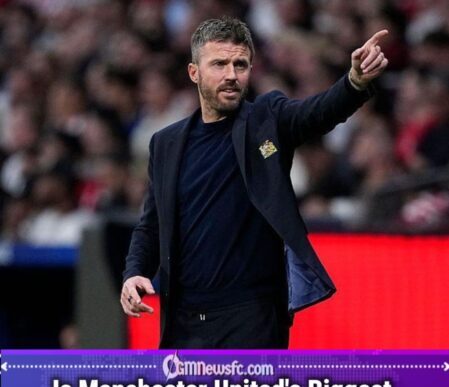











Former England striker and respected television pundit Ian Wright has delivered a scathing assessment of Manchester United’s leadership, accusing the club’s hierarchy of failing to act decisively amid growing controversy surrounding captain Bruno Fernandes. Wright’s now widely quoted remark — “You shut that down” — was aimed squarely at United’s executives, whom he believes allowed damaging narratives to fester.
Speaking during a televised discussion, Wright argued that elite clubs must control discourse around key players, especially captains. In his view, silence from above has only intensified scrutiny on Fernandes, placing unnecessary pressure on a player already carrying significant on-field responsibility.
The Bruno Fernandes Drama Explained
Fernandes has found himself at the center of mounting debate, with criticism ranging from leadership style to performances during difficult spells for the team. As United’s captain, every gesture and reaction has been magnified, feeding a cycle of analysis that has dominated headlines and talk shows.
While Fernandes remains one of United’s most productive and influential players statistically, the absence of firm public backing from the club’s leadership has left room for speculation. Wright suggested that this vacuum has allowed external voices to shape a narrative that should have been firmly addressed internally and publicly.
Wright’s Call for Stronger Leadership
Wright’s critique went beyond Fernandes himself and focused sharply on governance. According to the former striker, decisive leadership at boardroom level is non-negotiable when a club faces turbulence. Protecting senior players, he argued, is part of maintaining authority and stability.
By failing to “shut it down,” Wright believes United’s chiefs have sent the wrong signal — not just to Fernandes, but to the entire squad. In elite environments, such ambiguity can erode trust, weaken unity, and deepen existing fractures during periods of poor form.
Old Trafford’s Fragile Environment
The backdrop to Wright’s comments is a tense atmosphere at Old Trafford, where expectations remain sky-high despite inconsistent performances. Fan frustration has grown louder, and scrutiny of players and management alike has become relentless.
In such conditions, leadership silence can be interpreted as uncertainty or indecision. Wright’s remarks resonate with supporters who feel the club has too often allowed situations to escalate instead of setting clear boundaries and direction from the top.
Fernandes’ Role and Responsibility as Captain
As captain, Fernandes occupies a uniquely exposed position. His emotional style, visible reactions, and constant involvement in play make him an easy focal point for criticism. Yet Wright and other pundits have noted that those same traits also underpin Fernandes’ influence and drive.
The failure to contextualize his leadership publicly, Wright implied, amounts to a lack of institutional support. At clubs of Manchester United’s stature, captains are traditionally shielded — not isolated — when results falter.
Wider Implications for Manchester United
Wright’s intervention highlights a recurring criticism of modern Manchester United: a perceived leadership void at executive level. Repeated episodes of unresolved player narratives have contributed to an image of drift rather than direction.
Unless addressed, such patterns risk undermining authority within the dressing room and confidence outside it. Ian’s message was simple but damning — elite clubs act quickly, clearly, and decisively. In his view, Manchester United’s failure to do so in the Fernandes saga speaks volumes about the challenges still facing the club’s hierarchy.