










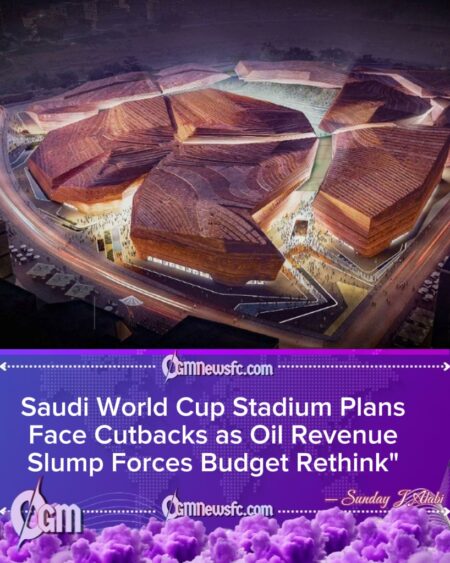
Saudi Arabia’s bold plans to host the 2034 FIFA World Cup are encountering significant obstacles as the kingdom’s Public Investment Fund (PIF) moves to dramatically reduce construction costs amid falling oil revenues. The Guardian has learned that multiple architecture firms awarded lucrative stadium contracts have been instructed to resubmit their designs, with several told their original proposals are financially unsustainable.
The financial pressures have already caused tangible delays across the massive infrastructure project. Contractors who were scheduled to break ground next year have been informed that construction timelines are being pushed back, raising questions about whether the kingdom can deliver on its ambitious promises to FIFA. The developments mark a stark reversal from the confidence displayed just months ago when Saudi Arabia’s bid was approved by acclamation at FIFA’s extraordinary congress last December.
Industry insiders suggest the challenges run deeper than mere cost overruns. At least one major architectural firm has reportedly been warned it could lose its contract entirely unless it produces “significant cost savings,” signaling that PIF is prepared to take drastic measures to bring the project back within budget. The sovereign wealth fund, which bankrolls Crown Prince Mohammed bin Salman’s sweeping Vision 2030 economic transformation program, finds itself squeezed by lower oil prices that have undermined the financial assumptions behind Saudi Arabia’s infrastructure boom.
Stadium Plans Under the Microscope
The original Saudi bid promised an unprecedented 15 stadiums spread across four major cities—Riyadh, Jeddah, Al Khobar, and Abha—plus the futuristic Neom Stadium. Of these, eleven were planned as entirely new constructions, with four existing venues earmarked for renovation and expansion. This represented one of the most ambitious World Cup infrastructure projects in history, surpassing even Qatar’s eight-stadium setup for the 2022 tournament.
Now, widespread speculation within the construction industry suggests Saudi Arabia may dramatically scale back these plans, potentially reducing the number of venues closer to the sixteen that will be used for the expanded 48-team format debuting at the 2026 World Cup across the United States, Mexico, and Canada. Such a reduction would still allow Saudi Arabia to meet FIFA’s requirements while providing substantial cost relief to the kingdom’s strained finances.
The most eye-catching element of Saudi Arabia’s bid—the Neom Stadium—faces particular uncertainty. Designed to sit within The Line, a proposed 500-meter-high linear city powered entirely by renewable energy, the stadium’s fate is intertwined with a mega-project that itself has faced skepticism about its feasibility and timeline. Construction of three venues has already commenced, but sources indicate even these early-stage projects are experiencing delays as financial constraints ripple through the entire program.
Global Architecture Giants Feel the Squeeze
Some of the world’s most prestigious architecture and engineering firms have been enlisted for Saudi Arabia’s World Cup preparations, including British giants Foster + Partners and Arup, alongside American design powerhouse Populous. These companies, accustomed to delivering landmark projects worldwide, now find themselves navigating an increasingly difficult financial and political environment as they attempt to preserve both their contracts and their design visions.
The instruction to resubmit tenders and slash costs places these firms in an uncomfortable position. Architecture companies must balance maintaining the spectacular designs that won them the contracts—and which Saudi Arabia showcased to FIFA—against the hard financial realities now being imposed by PIF. The process of redesigning stadiums to meet tighter budgets without compromising structural integrity, capacity, or the wow factor expected at a World Cup represents a significant technical and creative challenge.
For their part, PIF officials characterize the situation as standard practice rather than crisis management, noting that with nine years remaining until the tournament’s expected November-December 2034 window, many key decisions remain fluid. However, industry observers point out that major stadium projects typically require at least five to seven years from design to completion, meaning delays now could create serious time pressures later, potentially forcing rushed construction or compromised designs.
Oil Economics Behind the Squeeze
The current predicament stems directly from Saudi Arabia’s economic foundation and the challenges facing its primary revenue source. Vision 2030, Crown Prince Mohammed bin Salman’s signature initiative launched in 2016, aims to diversify the Saudi economy away from oil dependency toward tourism, hospitality, property development, and other industries. Yet this transformation is itself financed by PIF, which remains fundamentally reliant on revenues from the kingdom’s vast petroleum reserves.
Recent market conditions have proven particularly unfavorable. Saudi Arabia’s state oil company Aramco reduced prices this month in response to weakening global demand and oversupply among OPEC members, the Organization of the Petroleum Exporting Countries. Lower oil prices translate directly to reduced government revenues, which in turn limits the funds available to PIF for financing ambitious capital projects like World Cup stadiums and supporting infrastructure.
This economic squeeze affects virtually all major Saudi capital projects under the Vision 2030 umbrella, but the World Cup preparations carry additional pressure due to their fixed deadline and international visibility. Unlike domestic developments that can be quietly delayed or scaled back, the kingdom’s World Cup commitments are subject to FIFA oversight and global scrutiny. The challenge for Saudi Arabia is managing costs without damaging its international reputation or failing to deliver on promises that helped secure the tournament in the first place.
Questions Mount Over Saudi Arabia 2034 Delivery
The confluence of financial pressures, construction delays, and potential scope reductions raises legitimate questions about Saudi Arabia’s readiness to host the world’s premier football tournament. While nine years may seem like ample time, the history of World Cup preparations is littered with cautionary tales of countries struggling to complete venues and infrastructure on schedule, from Brazil in 2014 to Russia in 2018 and even wealthy Qatar in 2022.
Critics of Saudi Arabia’s World Cup bid have long questioned whether the kingdom’s promises were realistic, pointing to the country’s extreme summer heat, limited football infrastructure, and concerns over human rights and labor conditions. The current financial and construction challenges add a new dimension to these concerns, suggesting the technical and logistical obstacles may prove as formidable as the political controversies.
Nevertheless, PIF’s position that major decisions remain outstanding and adjustments are normal at this stage carries some weight. The 2034 tournament is still nearly a decade away, and the November-December timing means construction could theoretically continue right up until late 2033 if necessary. Whether Saudi Arabia ultimately delivers fifteen world-class stadiums, scales back to a more manageable number, or finds other cost-saving solutions, the next several years will reveal whether the kingdom’s World Cup ambitions can survive contact with economic and practical realities. For now, the global construction industry watches nervously as one of the most lucrative infrastructure projects of the decade hangs in the balance.