








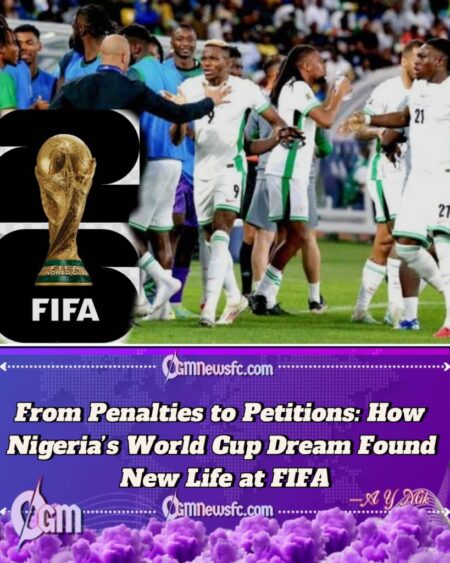
Nigeria’s fading hopes of qualifying for the 2026 FIFA World Cup have been unexpectedly revived—not by goals, but by documents, statutes, and a formal petition now sitting on FIFA’s desk. After a painful playoff defeat to DR Congo, the Nigeria Football Federation (NFF) has gone to football’s highest authority, alleging that the Congolese side fielded players who did not meet nationality requirements.
At the centre of this renewed optimism is Shehu Dikko, Chairman of Nigeria’s National Sports Commission (NSC), who has publicly described Nigeria’s case as “strong” and “tight.” For Super Eagles fans, long accustomed to last-minute heartbreak, the drama has shifted from the pitch to the courtroom—where VAR is replaced by legal precedent.
From Penalty Pain to Paper Protest
Nigeria’s elimination came after a tense playoff encounter that ended in a draw before DR Congo edged the Super Eagles on penalties. On the surface, it looked like another familiar chapter of Nigerian football anguish: valiant effort, cruel ending, and missed chances replayed endlessly on television.
However, even as the dust settled, officials at the NFF were reportedly already scrutinising DR Congo’s matchday squad. According to multiple reports, concerns had been raised before the game about the eligibility of some Congolese players, particularly regarding their nationality status and documentation.
What followed was not a social-media rant or emotional press conference, but a formal petition to FIFA, supported by legal arguments and references to FIFA statutes. In football terms, Nigeria may have lost the match—but they believe the contest is not yet over.
The Core of Nigeria’s Allegations
At the heart of Nigeria’s complaint is the claim that DR Congo fielded several players who may not have satisfied nationality requirements under both FIFA regulations and Congolese national law. The NFF alleges that some players retained foreign citizenships in a country whose constitution does not recognise dual nationality.
Nigeria’s argument is not that FIFA rules prohibit players with foreign backgrounds—many Super Eagles stars are diaspora-born themselves—but that domestic nationality laws must align with FIFA eligibility clearances. Where that alignment is missing, Nigeria argues, eligibility becomes questionable.
The petition also raises concerns about timing and transparency, alleging that some players were cleared close to the match date, prompting doubts over whether due process was fully observed. For Nigerian officials, this is less about technicalities and more about fairness—though, as football history shows, technicalities often decide the biggest outcomes.
Why Shehu Dikko Says the Case Is “Strong”
NSC Chairman Shehu Dikko has been unusually confident in his public remarks, insisting that Nigeria’s petition is not speculative or emotional. According to him, the complaint is built on verifiable legal provisions, not fan frustration.
Dikko has stressed that Nigeria is not asking FIFA to “bend rules” or rewrite results arbitrarily. Instead, the request is for FIFA to apply its own statutes consistently, particularly where national laws intersect with international eligibility regulations.
In a football culture where post-match excuses are common, Dikko’s tone has been notably restrained. His message is clear: if FIFA’s rules were breached, consequences should follow—no matter how uncomfortable or inconvenient they may be.
DR Congo Pushes Back: ‘No Back-Door Victory’
Unsurprisingly, DR Congo’s football authorities have rejected Nigeria’s claims outright. They insist that all players were properly cleared by FIFA and accuse Nigeria of attempting to overturn a sporting result through administrative channels.
Congolese officials have framed the petition as an effort to “win from the back door,” a phrase that has quickly entered the football discourse surrounding the case. In their view, the match was settled on the pitch, and penalties—harsh as they are—remain part of the game.
This clash of narratives has added spice to an already sensitive issue. One side sees a legitimate legal challenge; the other sees sour grapes. Somewhere in between sits FIFA, armed with statutes, precedents, and the unenviable task of keeping both federations calm.
What FIFA Can—and Cannot—Do
FIFA has acknowledged receipt of Nigeria’s petition, though it has not set a public timeline for a decision. If the world football body upholds Super Eagles’s complaint, possible outcomes range from forfeiture of the match to sanctions against DR Congo, depending on the severity of any breach found.
However, football lawyers are quick to caution that a successful petition does not automatically guarantee Super Eagles a World Cup spot. FIFA could order a replay, adjust standings, or impose disciplinary measures without directly reinstating the Super Eagles.
In short, while Nigeria’s hopes have been rekindled, they are not yet ablaze. The process may be lengthy, technical, and—like extra time—emotionally exhausting.
A Familiar Story, With a Legal Twist
For Nigerian fans, this episode feels both new and familiar. The stakes are enormous, the emotions high, and the outcome uncertain. The difference this time is that the drama is unfolding in meeting rooms rather than stadiums.
There is also a broader lesson for African football: eligibility rules matter, documentation matters, and governance lapses can undo hard-fought victories. Whether Nigeria ultimately benefits or not, the case could set a precedent that echoes far beyond this single playoff.
For now, the Super Eagles wait—not for kickoff, but for a verdict. And in Nigerian football, waiting has always been the hardest part.