





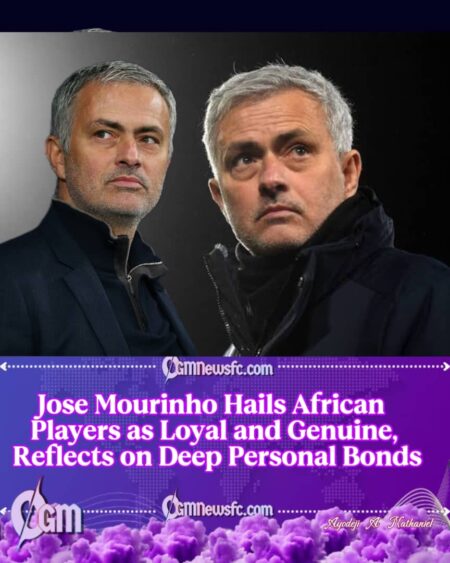
José Mourinho has never been shy about speaking his mind, but his recent reflections on Africa offered a rare blend of humor, humility, and heartfelt admiration. Speaking candidly, the renowned coach admitted that traveling to Africa has become nearly impossible for him—not because of controversy or caution, but because of overwhelming affection from fans across the continent.
Mourinho’s remarks underline the global reach of his career and the emotional connections forged beyond trophies and tactics. For him, Africa represents more than a football market or talent pool; it is a place of genuine human bonds, where admiration flows freely and respect is mutual.
His comments also reflect the reality of football’s cultural power, particularly in Africa, where European football figures are embraced not just as professionals but as extended family members.
A Legacy Built Through African Stars
Throughout his managerial journey, Mourinho has worked closely with some of Africa’s most celebrated footballers. Among them are Didier Drogba and Salomon Kalou from Côte d’Ivoire, players who were instrumental in defining his era at club level.
From Cameroon, Mourinho coached Geremi and the iconic Samuel Eto’o, while Nigeria was represented by John Obi Mikel. Ghanaian stars Michael Essien and Sulley Muntari further enriched his squads.
These players were not just tactical assets but central figures in Mourinho’s football philosophy, contributing passion, discipline, and an unyielding will to win.
Love Beyond Borders and Stadiums
Mourinho revealed that even outside Africa, the affection from African communities remains intense. In European cities with large African populations, he is frequently stopped, celebrated, and embraced—often making simple walks nearly impossible.
This cross-continental admiration speaks to a deeper narrative: African fans see in Mourinho someone who trusted their heroes, defended them publicly, and treated them with dignity. For many supporters, that loyalty has never been forgotten.
The relationship, as Mourinho suggests, is not transactional. It is emotional, built on years of shared success, adversity, and mutual respect.
“Papa”: A Symbol of Trust and Respect
One of the most striking aspects of Mourinho’s reflection is the personal nature of his bond with African players. He noted, with laughter, that many of them called him “Papa”—even when they were close to his age.
This term of endearment goes beyond humor. In many African cultures, such a title reflects trust, guidance, and familial respect. It suggests that Mourinho was seen not only as a manager, but as a protector and mentor.
Such relationships are rare in elite football, where pressure and ego often overshadow personal connections. Mourinho’s account offers a glimpse into a softer, more human side of the game.
Respecting Players as People First
Mourinho emphasized that African players responded positively because they felt respected—not just as athletes, but as individuals. He believes this respect is at the core of the loyalty and sincerity he associates with African footballers.
According to him, African players are “very loyal and very genuine,” qualities that he values deeply in a profession often defined by constant change. This mutual appreciation, he says, created lasting bonds that extended well beyond the pitch.
The feedback he continues to receive from African players, even years later, reinforces his belief that success in football is not measured solely in titles, but in relationships that endure.
A Bond That Transcends Football
Mourinho’s reflections serve as a reminder that football’s greatest legacy often lies off the field. His connection with Africa is not rooted in geography, but in shared respect, trust, and humanity.
In an era where football narratives are increasingly commercial, his words resonate as a testament to the power of authentic leadership. For Mourinho, Africa is not just a continent of fans—it is a community that embraced him as one of its own.
And perhaps that is why, as he jokingly admits, he still “can’t even walk” there.