


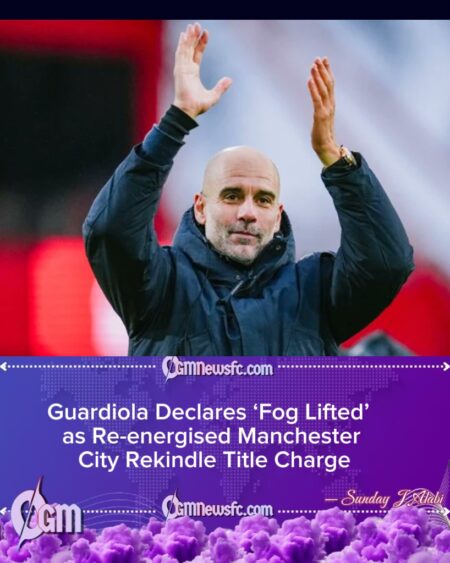
Pep Guardiola believes Manchester City have finally shaken off the mental and physical fatigue that defined last season, insisting renewed energy — rather than tactics or formations — has been the driving force behind their resurgence. After finishing last season without a major trophy for the first time since 2016–17, City are once again firmly in the Premier League title race, chasing a seventh league crown under their Catalan manager.
A run of six consecutive league victories and eight wins in all competitions has restored belief at the Etihad Stadium. A late strike from Rayan Cherki sealed a gritty 2–1 win at Nottingham Forest on Saturday, keeping City second in the table, just two points behind leaders Arsenal, as the title battle intensifies heading into the new year.
From Trophy Drought to Title Chase
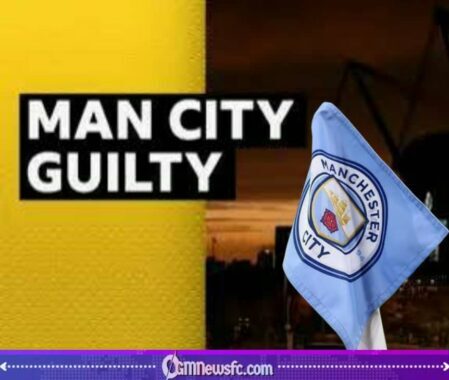
Last season marked a rare low point in Guardiola’s City reign. Finishing third, 13 points behind champions Liverpool, City failed to lift any major silverware, a sharp contrast to their previous four consecutive league titles. A run of just one win in 13 matches across competitions, including five straight defeats between October and November, derailed their campaign.
Their struggles were compounded by an early Champions League exit to Real Madrid in the knockout play-offs, their earliest departure from Europe’s elite competition in over a decade. For Guardiola, the disappointment was not merely tactical but deeply psychological, as the squad appeared drained after years of sustained success.
This season, however, the contrast has been striking. City’s renewed intensity has seen them grind out results even when performances have been imperfect, a hallmark of title-winning sides. Guardiola insists that this shift did not come from a dramatic overhaul, but from rediscovering a collective hunger that had gone missing.
Energy, Energy, Energy’: Guardiola’s Diagnosis
Guardiola has been unequivocal in identifying the root of last season’s problems. “Energy, energy, energy,” he repeated, stressing that the loss of intensity — starting with himself — was at the heart of City’s struggles. He dismissed tactical debates as secondary, bluntly stating that discussions about formations and systems were meaningless without the right mindset.
The City manager admitted he was personally drained, describing last season as one clouded by an intangible “fog” around the club’s training ground. “We missed something,” he said, rejecting the idea that managers can instantly fix such issues. “Managers are not magicians. You don’t click your fingers and everything becomes clear.”
Guardiola emphasised that recovery takes time and reflection. Winning, he acknowledged, helps accelerate that process, but it cannot substitute for honest self-assessment. Recognising what was missing, he argued, was the first step towards restoring City’s competitive edge.
Club World Cup: A Turning Point in the US
Guardiola pinpointed last summer’s Club World Cup in the United States as a critical moment in City’s revival, despite their last-16 exit. While the elimination itself was disappointing, he felt encouraged by the team’s performances and the atmosphere within the squad during the tournament.
Based in Boca Raton, the City camp became a place of reconnection rather than frustration. Guardiola described long dinners, open conversations, and detailed discussions about the future as vital in rebuilding unity. “Everyone was happy,” he recalled, highlighting how the relaxed environment fostered clarity and renewed purpose.
Those talks extended beyond players to the coaching and executive staff. Guardiola said it was during these exchanges that he sensed something had changed — a feeling rather than a statistic — suggesting the foundations for a stronger season had quietly been laid.
A New-Look Backroom Staff and Renewed Unity
The off-season also brought changes behind the scenes. Guardiola reshaped his coaching staff, adding former Liverpool assistant Pep Lijnders, ex-City defender Kolo Touré, and set-piece specialist James French. Alongside long-time adviser Manel Estiarte and football director Hugo Viana, the revamped setup injected fresh perspectives into the club.
Guardiola credited these additions with helping to create a healthier working environment, one focused on communication and shared responsibility. The emphasis was not on reinventing City’s footballing philosophy, but on restoring daily standards in training and competition.
The results have followed. City’s current eight-match winning streak across all competitions has reinforced Guardiola’s belief that while success is never guaranteed, recognising the team’s identity again is a crucial victory in itself.
Perspective, Pressure and the Road Ahead
As City prepare to face Sunderland at the Stadium of Light, Guardiola remains cautious despite their momentum. Arsenal, who host Aston Villa next, still hold a narrow lead at the top, and the title race promises little margin for error.
At 54, Guardiola insists he never doubted his energy would return, stressing that fluctuation is a natural part of both professional and personal life. “You’ll never be happy or sad all the time,” he said, framing City’s revival as part of a broader cycle rather than a miracle turnaround.
For Guardiola, the lesson is philosophical as much as tactical. The fog, he believes, has lifted not because of a secret formula, but because City rediscovered their hunger. Whether that renewed mindset delivers another Premier League trophy remains to be seen, but for now, Manchester City once again look unmistakably like themselves.