







Manchester United once again find themselves at the center of football’s most familiar storyline: the search for the right manager. Following the decision to part ways with Ruben Amorim, the club moved swiftly to explore high-profile alternatives, keen to avoid drifting into another prolonged period of uncertainty.
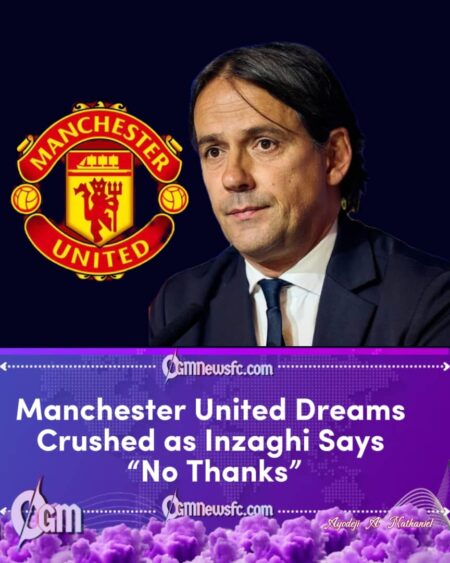
Among the first names contacted was Simone Inzaghi, a coach admired for his tactical discipline and calm authority. For Manchester United, the approach was both ambitious and symbolic—a signal that the club wanted experience and coherence rather than another experimental reset.
Why did Manchester United look to Inzaghi
From Manchester United’s perspective, Simone Inzaghi represented many of the qualities the club has lacked in recent seasons. His work in Italy demonstrated an ability to manage elite players, maintain structure, and compete consistently at the highest level.
At Old Trafford, those attributes are in high demand. United’s interest suggested a desire to restore tactical identity and authority in the dressing room, areas that have often appeared fragile during recent managerial transitions.
The Al-Hilal Factor Changes the Equation
Despite the appeal of Manchester United, Inzaghi’s reality lies elsewhere. The Italian coach has already committed to Al-Hilal, a club offering financial power, long-term planning, and a clearly defined sporting project..
Inzaghi’s rejection was reportedly respectful but decisive. Rather than entertaining prolonged talks, he chose stability over uncertainty. In modern football terms, it was a pragmatic decision—less romance, more realism.
Manchester United and the Problem of Perception
Manchester United remain a global giant, but reputation alone no longer guarantees success in managerial recruitment. Inzaghi’s decision reflects broader concerns shared by many elite coaches: constant scrutiny, boardroom pressure, and the short lifespan of recent tenures at Old Trafford.
For potential candidates, the United job is no longer seen as a guaranteed platform for legacy-building. Instead, it is viewed as high-risk, high-exposure—where patience is scarce and results are demanded immediately.
What Inzaghi’s Decision Says About the Club
The refusal does not suggest a lack of ambition from Manchester United, but it does underline the need for structural clarity. Coaches now seek projects with defined authority, recruitment alignment, and long-term backing.
Inzaghi’s choice highlights how the balance of power has shifted. Managers no longer chase big names blindly; they assess environments carefully, and United are still rebuilding trust in that regard.
Where Manchester United Go From Here
With Inzaghi unavailable, United must widen their search once again. Interim solutions may steady the ship, but history suggests they rarely deliver lasting success at Old Trafford.
There is mild humor in the predictability of it all—another call made, another polite decline—but the underlying issue remains serious. Until United present a coherent sporting vision, even the most attractive names may continue to pass them by.