










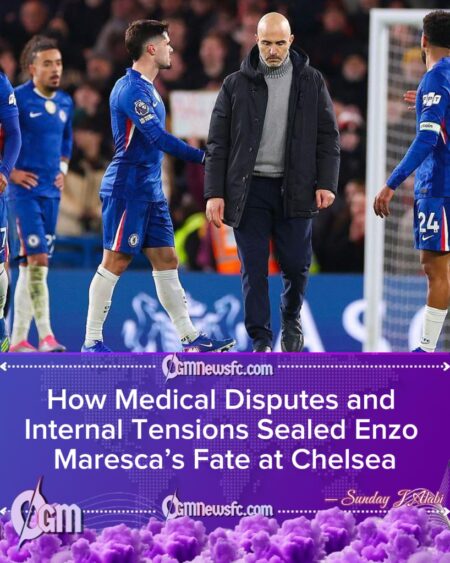
Chelsea’s decision to part ways with head coach Enzo Maresca earlier this month followed weeks of growing internal tension, culminating in decisive action by the club’s hierarchy. While the dismissal appeared sudden to the public, emerging details indicate that deep-rooted disagreements over player management, medical protocols, and authority within the club had placed the Italian coach under intense scrutiny long before his eventual exit from Stamford Bridge.
The former Leicester City manager, who spent 18 months at Chelsea, was relieved of his duties after a turbulent period marked by internal disputes and a public outburst in which he claimed a lack of institutional support. These developments ultimately paved the way for his replacement, Liam Rosenior, who has since been appointed on a long-term contract.
Medical Protocol Disputes and Breakdown in Trust
Central to Maresca’s fallout with Chelsea officials was his handling of players returning from injury. Club sources indicate that the Italian coach repeatedly ignored pre-agreed medical plans designed to manage players’ minutes as they eased back into competitive action. Despite clear instructions, Maresca allegedly refused to substitute several players during matches, even when limits had been set to prevent setbacks.
These decisions reportedly alarmed Chelsea’s medical and executive departments, particularly after two unnamed players suffered reinjuries. The incidents intensified concerns that medical advice was not being respected, prompting intervention from senior decision-makers at the club.
In response, Chelsea took the unusual step of assigning the club’s head of medical, Bryce Cavanagh, a place on the substitutes’ bench. While he did not sit directly alongside Maresca, Cavanagh was tasked with advising on player minutes during matches, reinforcing the club’s authority over medical matters both at home and away fixtures.
Club Intervention and the Stern Warning Letter
The presence of the head of medical on the bench was only one aspect of Chelsea’s broader efforts to rein in Maresca’s autonomy. According to reports, club executives also issued a formal letter to the coach, reminding him of his contractual obligations regarding player welfare and agreed recovery plans.
This correspondence reportedly served as a final warning, underlining the seriousness with which Chelsea viewed adherence to medical guidance. However, the relationship between the coach and the club hierarchy failed to improve, suggesting a fundamental breakdown in trust and communication.
By the final weeks of Maresca’s tenure, it had become increasingly clear that the working relationship was unsustainable. Internal confidence in his leadership reportedly waned, with officials concluding that decisive action was necessary to protect player health and maintain organisational cohesion.
Maresca’s Exit, Statement, and Chelsea’s New Direction
Maresca’s departure followed a controversial outburst in which he described experiencing his “worst 48 hours” at the club and alleged that he had received “no support” from Chelsea’s leadership. The comments further strained relations and are believed to have accelerated the decision to dismiss him.
In his farewell statement, Maresca struck a reflective tone, thanking Chelsea supporters, players, and staff while highlighting achievements during his spell, including qualification for the Champions League and success in the Conference League and Club World Cup. He expressed pride in his time at the club and wished his successor well.
Chelsea swiftly moved to appoint Liam Rosenior from French side Strasbourg, handing him a six-and-a-half-year contract. The appointment signals a desire for long-term stability and closer alignment between coaching staff, medical teams, and club executives as the Blues look ahead to the remainder of the season and beyond.