









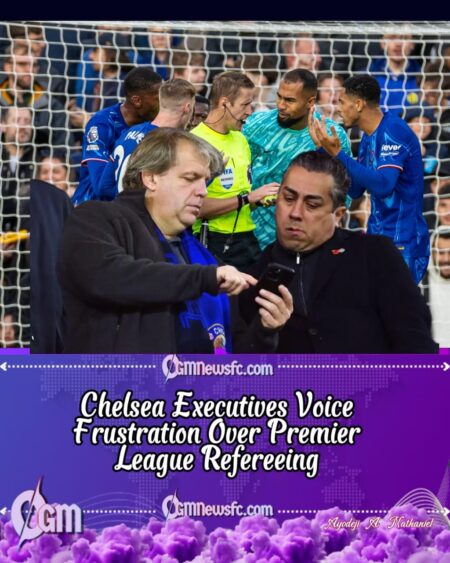
Chelsea executives have reportedly grown increasingly disillusioned with the standard of refereeing in the Premier League this season, expressing frustration with what they see as a series of obvious mistakes and inconsistent VAR interventions. The club is considering taking the unusual step of writing a formal letter to PGMOL (Professional Game Match Officials Limited) — the body responsible for appointing and overseeing referees and VAR officials — demanding greater clarity and accountability for decisions that have affected results.
The move underscores how sensitive officiating has become in English football, where even well-established decisions are frequently scrutinised by fans, pundits and clubs alike.
Controversial Incidents Fuel the Discontent
This dissatisfaction is not happening in a vacuum. Premier League matches this season have seen multiple high-profile VAR controversies, with pundits and commentators highlighting decisions that have frequently left supporters and professionals questioning consistency and interpretation. For example, analyses of VAR decisions — such as contentious offside calls, red cards and penalty reviews — continue to circulate across sports media platforms and specialist outlets.
Statistical overviews of prior seasons also illustrate how divisive VAR remains. One review of controversial decisions suggested that even in the previous campaign, clubs like Chelsea were involved in a significant number of VAR decisions that went against them, reflecting broader systemic criticism of technology’s role in officiating.
High-Profile Reactions and Expert Commentary
The debate around officiating quality extends beyond Chelsea alone. Former Premier League referee Howard Webb, now head of PGMOL, has publicly acknowledged that VAR decisions can be contentious and that even key decisions have gone against the guidance used to judge “clear and obvious” errors — such as the widely discussed disallowed goal for Fulham at Stamford Bridge earlier in the season, which he called a misjudgement.
Prominent football voices, including former players and broadcasters, have also criticised what they see as an over-complex officiating environment where VAR sometimes interferes in marginal situations or fails to correct clear errors — contributing to frustration among clubs and fans alike.
Tension Between Clubs and Refereeing Authorities
Clubs across the Premier League have occasionally clashed with refereeing authorities in recent seasons over decisions that they felt unfairly influenced match outcomes. For example, some clubs have previously sent official complaints to PGMOL about specific referees’ performances and even requested certain referees be excluded from officiating their fixtures.
Chelsea’s proposed approach — drafting a formal letter to PGMOL — would follow this pattern of clubs seeking official explanations for controversial decisions. It reflects a broader feeling among some teams that transparency around refereeing decisions and VAR implementation could be improved, and that accountability should be clearer when mistakes occur.
PGMOL’s Response and Wider Officiating Debate
PGMOL leaders have acknowledged the challenges of officiating in the Premier League and the need for continual review of VAR procedures. Discussions have involved potential adjustments to protocols, including refining how and when VAR should intervene. This highlights ongoing efforts to balance technological assistance with maintaining the flow and integrity of the game.
Nevertheless, critics argue that despite statistical assurances of improvement in some seasons, the perception of inconsistency — particularly in high-stakes decisions — persists. That perception is often amplified on social media and in fan commentary, and occasionally reflected in outspoken critiques by former referees or analysts.
What Chelsea’s Move Could Mean for the Premier League
Should Chelsea formally address their concerns with PGMOL, it could mark one of the more prominent challenges to the refereeing body by a top-flight club. Such action might prompt discussions within the Premier League and among officials about whether additional reforms are necessary — whether around transparency, VAR training and use, or the standardisation of key match decisions.
Whether this escalates into a wider review by clubs or league governance remains to be seen, but it would underscore the continuing tension between competitive integrity and officiating consistency in one of world football’s most watched leagues.