







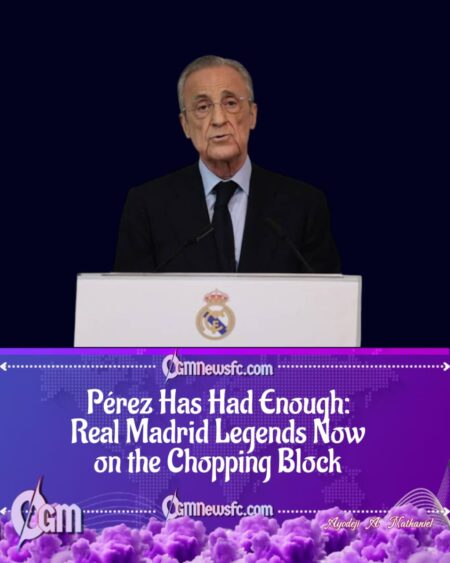
Real Madrid have never been a club that does “comfort zones.” At the Santiago Bernabéu, reputations are respected—but only until the next whistle blows. And now, according to growing reports around the Spanish capital, club president Florentino Pérez is increasingly dissatisfied with the output of several first-team players, including some of the squad’s more senior names.
With disappointment reportedly spreading through the boardroom, the message is becoming sharper: standards must rise immediately—or consequences will follow, including reduced minutes, lost status, and potential exits when the summer transfer window opens. At Real Madrid, even legends can become “transfer opportunities” overnight.
The Bernabéu Standard: “You Don’t Get Paid in Applause”
Real Madrid’s identity is built on dominance—on looking inevitable. Winning is expected, but winning while playing like Real Madrid is the true currency of approval. That is why the club’s internal mood has reportedly shifted from mild concern to sharper frustration: performances are being judged not only by results, but by intensity, personality, and authority on the pitch.
In recent weeks, Real Madrid’s displays have reportedly caused alarm among senior decision-makers. The feeling—according to sources close to the club—is that certain players are not matching the competitive demands of the shirt. At Real Madrid, “bad form” isn’t a phase; it’s a threat to the institution.
And perhaps most tellingly, the criticism is not aimed only at fringe squad players. Reports suggest even some senior figures are now being questioned, which is the football equivalent of hearing your boss say, “We need to talk.”
Boardroom Disappointment: When Patience Starts Timing Out
The Real Madrid board are famous for their calm exterior and ruthless interior. They can smile for the cameras while sharpening the axe behind the scenes. And right now, the mood inside the club is said to be one of sadness, surprise, and disappointment—a combination that rarely ends with a hug and a motivational quote.
The frustration reportedly comes from a belief that the squad contains enough quality to deliver far more convincing performances. The board’s disappointment is not simply emotional—it’s strategic. Madrid are a global business, and underperformance damages everything: trophies, prestige, commercial pull, and future recruitment.
Put bluntly: at Real Madrid, you can lose—but you must never look small while doing it. And some recent showings have reportedly felt too ordinary for a club that sees itself as football’s final boss.
Senior Players Under Review: “Form Over Fame” Era Returns
This is where things get uncomfortable. Reports indicate Pérez believes several players are falling short of the standards expected, including some with seniority. In other clubs, senior figures are protected. At Madrid, senior figures are tested more—because they’re meant to set the tone.
What makes this moment significant is the reported willingness to take decisive action even if it disrupts the hierarchy. That means reduced playing time for those not meeting expectations. Not a dramatic punishment—just the cold, surgical Madrid approach: you don’t perform, you don’t start.
And here’s the funny part: Real Madrid don’t usually “drop” players. They simply begin the process of replacing them—quietly, efficiently, and with a press release that reads like a thank-you note.
The Summer Window Warning: Madrid May Sell, Not Just Buy
Real Madrid are always linked to elite signings, but this story is as much about departures as arrivals. If performances don’t improve soon, the club could treat the summer as a reset button—moving players out to refresh intensity and rebalance the squad.
Real Madrid have historically proven that no one is too big to be sold. Big names have left before. Big names will leave again. If the club decides that certain players no longer fit the future, the exit plan can be swift—sometimes faster than fans can finish arguing about it on Twitter.
And there’s a practical logic here: new signings require space, wages, and tactical clarity. If the board wants to evolve the team, sales become part of the rebuild, not an afterthought.
Pressure Cooker Culture: Why Madrid Always React Fast
Some clubs tolerate a “transition season.” Madrid treat transitions like a disease that must be cured immediately. That is why this story has teeth: if the board feels standards are slipping, they won’t wait for the calendar to be kind.
Florentino Pérez is a president who values elite image, elite mentality, elite outcomes. The club’s DNA is unforgiving—because it has to be. That culture has produced trophies, but it also creates an environment where players live under permanent evaluation.
The irony is that Madrid’s greatness comes from this harshness. The pressure breaks some players—but it also creates monsters. The question now is: who rises, and who gets quietly escorted toward the exit door with a handshake and a highlight reel?
What Happens Next: A Squad on Notice
From this point onward, every match becomes a referendum. Every misplaced pass becomes evidence. Every poor performance becomes a “trend.” And every senior player knows what that means: the Bernabéu doesn’t forgive long-term underperformance.
If the team responds—improving intensity, cohesion, and results—this becomes a temporary storm. If not, it becomes the start of a summer overhaul. And at Madrid, overhaul doesn’t mean “a few tweaks.” It can mean status changes, leadership changes, and unexpected sales.
So yes, the squad may still be packed with talent—but talent without urgency is just expensive decoration. And Madrid didn’t build the Bernabéu to host decorations.