




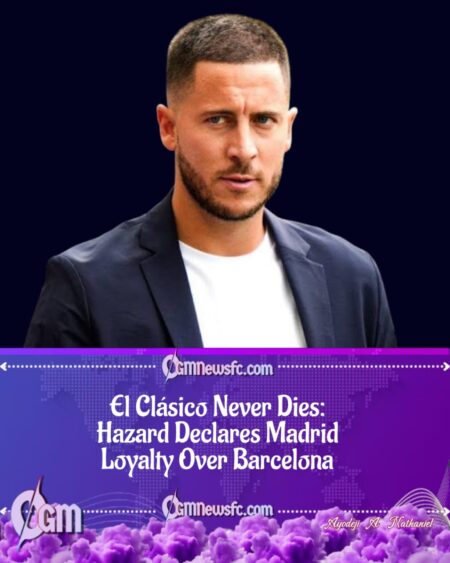
Former Real Madrid star Eden Hazard recently made headlines by weighing in on one of world football’s most enduring debates: Real Madrid vs FC Barcelona. Asked whether he regarded Barça as the better club, Hazard offered a candid response — one grounded in loyalty to the club he long adored rather than neutral football scholarship.
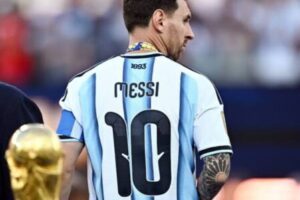
Hazard acknowledged Barcelona’s quality and historical brilliance — notably under the influence of icons like Lionel Messi — but insisted that when representing Real Madrid, it felt disingenuous to elevate their rivals as “better.” His remarks underscore the emotional and cultural weight the Madrid–Barcelona rivalry still carries for players and fans alike.
“Barça Is Top — But…”: How Hazard Framed It
In his recent interview, Eden said, in essence: “Barça is top, but you know when you play for Madrid you can’t really say Barça is better.” This balance mirrors his broader perspective — recognition of Barcelona’s historic style and success, but commitment to the identity and expectations tied to the Madrid shirt.
Hazard’s commentary reflects more than club loyalty; it echoes Real Madrid’s culture of self-confidence. Madrid players, past and present, are often expected to convey belief in their institution’s supremacy, regardless of rival achievements. This is a defining feature of the rivalry known as El Clásico, where pride and perception matter as much as trophies.
Context: Hazard’s Madrid Experience
Hazard’s remarks come years after his 2019 move from Chelsea to Real Madrid — a transfer that was meant to lift him into the pantheon of world-class talent but instead became an unhappy chapter marked by injuries and limited impact.
Despite that, he has repeatedly expressed that Madrid was his dream destination growing up, stressing that he always told his father he wanted to represent the Spanish giants rather than Barcelona — even though he respected Barça’s style and players like Messi.
This personal context makes his comment about not “really” calling Barça better more than a talking point; it reflects a lifelong attachment rather than casual fandom.
The Rivalry Revisited: Madrid vs Barça in 2026
Hazard’s statement lands in a period when La Liga’s historic balance of power continues to evolve. Barcelona and Real Madrid remain central protagonists in Spanish football, but the competitive gap has narrowed at times, with both clubs facing challenges domestically and in Europe.
Barcelona’s attractive, possession-oriented football is widely admired, while Madrid’s pragmatic, results-driven approach is equally respected. Hazard, having been entrenched in Madrid culture, chose to align with the latter — not out of dismissal of Barça, but out of respect for what it meant to wear the Madrid crest.
Reactions From Across the Football World
Opinions on Hazard’s comments have been mixed. Some applaud his honesty and appreciate his loyalty to Madrid’s ethos, while others see it as a predictable stance from someone who spent formative years at Real rather than Barcelona. Football culture specialists note that declarations of rivalry allegiance are common among former players and often reflect personal experience more than objective assessment.
Moreover, Hazard’s remarks sparked conversation about whether players should comment on rival clubs at all, especially in an era when football careers are global and allegiances are increasingly fluid. Still, for many fans, his balance — respect for Barça’s style with affirmation of Madrid’s status — captures the spirit of the rivalry: respect tinged with pride.
How Hazard’s Legacy Shapes This Narrative
Although Hazard didn’t fully live up to his potential in Madrid due to injuries and form issues, his emotional connection to the club remains evident. This comment — affirming Barça’s quality while underscoring Madrid’s prominence — encapsulates a personal football philosophy rooted in identity and loyalty.
It highlights an important truth in elite sport: perception is personal, and when a player wears the white shirt of Real Madrid, their public narrative often aligns with the club’s self-belief. That belief persists even when judging rival giants like FC Barcelona, still undeniably top names in world football.