



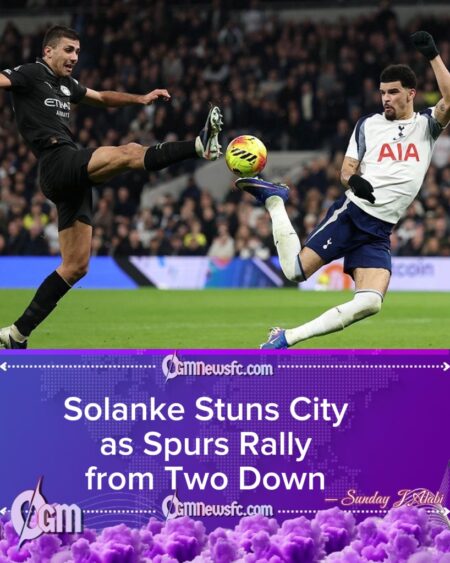
Tottenham Hotspur produced a dramatic second-half revival to draw 2–2 with Manchester City, inspired by a stunning brace from Dominic Solanke, including a spectacular scorpion kick that will be remembered as one of the goals of the season. Thomas Frank’s side, trailing 2–0 at half-time and short of options due to injuries, overturned the momentum after the break to deny City two crucial points in the Premier League title race.
City appeared in full control after first-half goals from Rayan Cherki and Antoine Semenyo, but Spurs emerged with renewed intensity after the interval. Solanke, who had not scored a league goal this season before Sunday, struck twice to seal a point that lifted Tottenham’s performance if not their league position, while raising fresh questions about City’s consistency under pressure.
City’s First-Half Control and Tottenham’s Early Struggles
Manchester City dominated the opening period, exploiting Tottenham’s defensive vulnerabilities and subdued atmosphere inside the stadium. Cherki opened the scoring with a calm finish after finding space inside the box, setting the tone for a controlled City performance. Spurs struggled to match City’s tempo, frequently second best in midfield and hesitant in possession.
Antoine Semenyo doubled the advantage before the interval, capitalising on another lapse in Tottenham’s defensive organisation. With City moving the ball sharply and pressing effectively, Spurs looked short of ideas, managing little more than speculative efforts from distance. The home crowd responded with boos at half-time, reflecting both frustration with the performance and broader discontent surrounding recent results.
Solanke’s Scorpion Kick and a Goal for the Ages
The second half belonged to Dominic Solanke. Tottenham started brighter, and their renewed urgency was rewarded when Solanke pulled one back early after the restart, giving the hosts belief. The equaliser, however, was the defining moment of the match.
As Conor Gallagher delivered a teasing cross from the right, Solanke anticipated the danger ahead of his marker. With Rodri unable to intervene, the striker improvised brilliantly, flicking the ball behind him with his heel. The audacious scorpion kick looped over goalkeeper Gianluigi Donnarumma and into the net, drawing comparisons with Olivier Giroud’s famous strike and sending the stadium into raptures. It was a goal that combined instinct, technique and perfect timing.
Tactical Changes Spark the Turnaround
Thomas Frank’s half-time adjustments proved decisive. Switching to a back four and introducing Pape Matar Sarr into midfield gave Spurs greater balance and improved their ability to contest central areas. The change allowed Tottenham to close down space more effectively and disrupt City’s rhythm.
With improved structure, Spurs circulated possession with more confidence and looked dangerous on the counter-attack. City, by contrast, began to show signs of fragility. In pushing forward to regain control, they left gaps that Tottenham exploited, particularly in transition. Errors in second-ball situations further undermined City’s authority and fuelled Spurs’ momentum.
Atmosphere Shifts as Belief Returns
The mood inside the stadium changed dramatically after the interval. From apathy and frustration, the crowd was re-energised by Solanke’s first goal and fully united by his second. Players and supporters fed off one another, and chants echoed around the ground as Spurs pressed for a winner.
A planned protest scheduled for the 75th minute never materialised, as fans chose to stay and back their team. Even with a limited bench — five substitutes had never previously played a Premier League minute — Tottenham’s resilience became a source of pride, at least for the afternoon.
Implications for Frank and the Title Race
For Thomas Frank, the result was another reminder of Tottenham’s unpredictability. Spurs remain 14th on 29 points, yet have now taken four points from Manchester City this season, a stark contrast to struggles against lower-ranked opponents. While defensive frailties persist, the second-half performance offered evidence of character and tactical flexibility.
For City, the draw could prove costly. Remaining second on 47 points, they now sit six points behind leaders Arsenal. Once again, a second-half drop-off has raised concerns about their ability to manage games under pressure. With the title race finely poised, City’s margin for error continues to shrink