








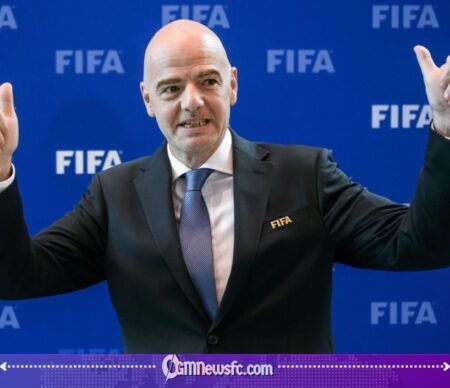
Fifa’s plan to expand the Club World Cup to 48 teams in 2029 will not be blocked by Uefa, marking a notable shift in European football’s stance toward the global governing body. The decision signals improved relations between Uefa president Aleksander Ceferin and Fifa president Gianni Infantino, following a period of tension over governance and the international calendar.
Uefa had previously opposed any expansion of the tournament, citing concerns that a larger competition could undermine the commercial and sporting standing of the Champions League. However, the European governing body is now prepared to support Fifa’s proposal, provided that the Club World Cup is not staged every two years. That condition appears to have reassured European officials wary of fixture congestion and competitive imbalance.
The proposed expansion follows discussions between leading European clubs and Fifa officials, as well as internal deliberations within both governing bodies. While the finer details remain subject to negotiation, the shift reflects a broader recalibration in football politics, with both presidents expected to seek re-election for fourth terms next year.
Uefa From Resistance to Conditional Backing
Uefa’s earlier resistance stemmed from fears that a significantly enlarged Club World Cup could diminish the stature and financial power of its flagship Champions League competition. Concerns were also raised by domestic European leagues about fixture congestion and the strain on players.
The debate intensified after Real Madrid proposed a biennial Club World Cup during talks with Fifa in Miami last June. That suggestion, however, failed to gain traction amid firm opposition from Uefa and leading European leagues. The idea of holding the tournament every two years is now widely regarded as unlikely.
In a related development, Real Madrid recently ended its five-year legal dispute with Uefa by formally withdrawing from the European Super League project. The move is widely interpreted as a sign that Europe’s most decorated club is seeking closer alignment with football’s established governance structure, which also includes figures such as Nasser al-Khelaifi, chairman of the European Club Association and president of Paris Saint-Germain.
For Uefa, backing expansion to 48 teams—while resisting a biennial format—represents a compromise. Officials privately acknowledge that while the financial incentives are substantial, maintaining calendar stability remains paramount.
Financial Incentives and Competitive Balance
Fifa has long signalled its desire to broaden the Club World Cup’s appeal and commercial reach. Before last summer’s edition in the United States, reports indicated that the global body was open to increasing participation beyond 32 teams to ensure greater representation from Europe’s elite clubs.
Several high-profile teams, including Barcelona, Liverpool and Manchester United, failed to qualify for the previous edition, underscoring the competitive constraints of the current format. Expanding to 48 teams would likely increase Uefa’s allocation from 12 clubs to as many as 16 in 2029.
The financial implications are considerable. Chelsea earned approximately £85 million from the tournament’s £774 million prize fund after lifting the trophy last year. Such sums have prompted debate within European football about competitive balance, as additional revenue for already wealthy clubs could widen existing disparities.
Nonetheless, some within Uefa view expansion as less disruptive than altering the tournament’s frequency. A larger but quadrennial event is seen as manageable within the broader international calendar, provided safeguards are agreed.
Political Detente and Legal Challenges
The improved tone between Uefa and Fifa marks a departure from last year’s strained relations. At a Fifa congress in Paraguay, Ceferin and several European delegates—including Debbie Hewitt, chair of the Football Association—staged a walkout in protest at Infantino’s delayed arrival following diplomatic engagements in the Middle East involving political leaders.
Since then, diplomatic efforts have sought to stabilise relations. With both Ceferin and Infantino expected to pursue renewed mandates, cooperation over major competitions may serve mutual interests in presenting institutional unity.
However, obstacles remain. Fifa faces legal action from the European Leagues lobby group, which has lodged a complaint with the European Commission regarding the international match calendar and governance decisions tied to the Club World Cup. The outcome of those proceedings could influence the final structure of the 2029 tournament.
For now, Uefa’s willingness to support expansion—on defined terms—represents a significant moment in football’s evolving governance landscape. Whether the enlarged Club World Cup strengthens global unity or reshapes competitive hierarchies in Europe will depend on the balance struck in the months ahead