






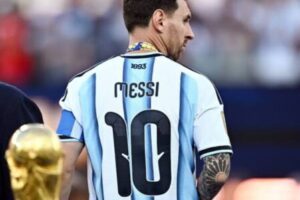



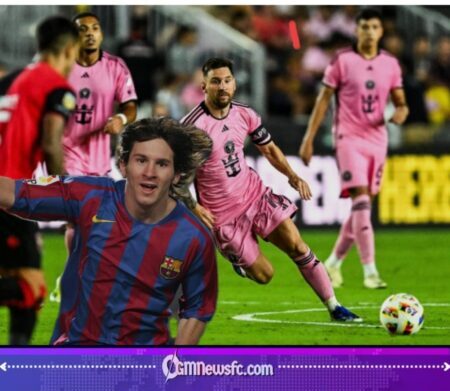
When Lionel Messi https://ogmnewsfc.com/people-thought-we-were-crazy-joan-laporta-opens/first arrived at FC Barcelona as a 13-year-old from Rosario, Argentina, the script did not immediately resemble a fairy tale. Yes, the talent was obvious. Yes, the left foot was already whispering promises of greatness. But the early chapters were more homesick diary than highlight reel.
In a recent interview reflecting on his formative years, Messi admitted that adapting to life in Spain was emotionally and professionally challenging. Leaving behind family, friends and familiar streets was not just a geographical move — it was a leap into uncertainty. For a teenager, even a gifted one, that is no small adjustment.
The image of Messi as football’s serene genius often overshadows the reality that his beginnings in Catalonia were marked by doubt, paperwork delays and injury setbacks. The myth was built later. The grind came first.
Bureaucracy, Benches and Broken Rhythm
Messi revealed that his first year at Barcelona was especially difficult due to administrative complications surrounding his transfer. Clearance issues kept him sidelined for months, unable to compete officially. For a young player eager to prove himself, watching rather than playing can feel like being invited to a feast and asked to admire the tablecloth.
Just when he gained eligibility and momentum, injury intervened. A tibia problem disrupted his rhythm, extending what he described as a “long” and frustrating first season. Progress stalled. Patience was tested.
Looking back, however, Messi views those interruptions as foundational rather than destructive. The obstacles hardened him, teaching resilience long before the trophies began arriving in batches.
Enter Guardiola: Excellence Without Mercy
If the early years were about survival, the arrival of Pep Guardiola marked the beginning of transformation. Guardiola’s methods were not gentle suggestions; they were firm directives wrapped in tactical brilliance.
Messi recalled what he described as Guardiola’s “brutal” message during matches: no easing off, no complacency, no sympathy for opponents once the scoreline looked comfortable. Respect, according to Guardiola, meant continuing to play at full intensity — scoring more, pressing harder, demanding perfection.
It was a philosophy that shaped Barcelona’s dominance. The team did not merely win; it overwhelmed. And Messi, evolving into the false nine under Guardiola’s guidance, became the embodiment of that relentless standard.
From Tough Beginnings to Tactical Revolution
Under Guardiola, Barcelona redefined modern football. Messi’s positional evolution — drifting centrally, linking play, exploiting spaces between defenders — became a masterclass in innovation. The once homesick teenager was now the focal point of a tactical revolution.
The trophies followed with mechanical regularity: league titles, Champions League triumphs, and individual accolades that cemented Messi’s place among football’s immortals. Yet the superstar narrative often omits the formative discomfort that preceded the glory.
Those early hardships, Messi suggested, helped him absorb Guardiola’s uncompromising demands. By the time the team was conquering Europe, the lessons of that difficult first year had already strengthened his foundation.
Perspective From a Legend
Now plying his trade with Inter Miami CF, Messi speaks of Barcelona with the calm clarity of distance. Memory has softened the frustration but preserved the lessons.
His reflections serve as a reminder that greatness rarely begins with ease. Behind every iconic goal lies a quieter story of adaptation, setbacks and discipline. Messi’s candid recollection offers a glimpse into the human side of a player often treated as myth.
And perhaps there is gentle irony in it all: the footballer synonymous with effortless brilliance admits that, at the beginning, nothing felt effortless at all.