







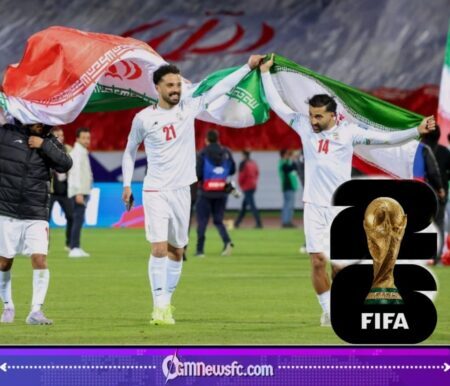
The road to the 2026 FIFA World Cup has hit an unexpected political pothole after Iran Sports Minister, Ahmad Donyamali, declared that the country would not be able to participate in the upcoming tournament. The global football event—organized by FIFA—is scheduled to take place across United States, Canada, and Mexico under the expanded 48-team format.
According to Iranian officials, escalating geopolitical tensions and security concerns have made participation in the tournament “impossible under current conditions.” The minister suggested that sending the national team to compete in a country involved in heightened political conflict with Iran would pose risks to players, officials, and supporters.
While the statement has stirred reactions in the football world, it also highlights a recurring dilemma in international sport: when politics decides to dribble onto the pitch. The announcement has already sparked debates among fans, analysts, and administrators about whether football can truly remain separate from global politics.
Iran’s World Cup Dream Meets Diplomatic Reality
Iran had already qualified for the 2026 edition of the FIFA World Cup, continuing a strong run of appearances on football’s biggest stage. The national team—commonly known as Team Melli—had been preparing to face formidable opponents in the group stage, including Belgium, Egypt, and New Zealand.
The team’s scheduled matches were expected to take place in major U.S. cities such as Los Angeles and Seattle, locations known for their passionate football crowds and diverse international communities. For many fans, the fixtures promised exciting clashes between different footballing cultures.
However, Iranian authorities argue that current diplomatic tensions make such travel and participation unrealistic. Officials emphasized that the decision is not about footballing ability but rather about ensuring safety and national dignity—an explanation that has sparked both sympathy and skepticism across the sporting world.
FIFA’s Delicate Balancing Act
For FIFA and its president, Gianni Infantino, the situation presents a delicate balancing act. On one hand, FIFA traditionally insists that politics should not interfere with football. On the other, the governing body must also respect international realities that sometimes refuse to stay outside the stadium gates.
Infantino has previously emphasized that the World Cup is meant to unite nations through sport, regardless of political differences. Yet the Iranian announcement raises questions about whether that ideal can hold when geopolitical tensions escalate beyond diplomatic disagreements.
Adding a political twist to the story, former U.S. President Donald Trump reportedly stated that Iran would still be welcome to participate in the tournament. Whether that reassurance will influence Tehran’s position remains uncertain, but the exchange highlights how global politics and football diplomacy often share the same field.
What Happens If Iran Officially Withdraws?
If Iran formally withdraws from the tournament, FIFA would face a logistical and competitive puzzle. The World Cup draw has already been conducted, and replacing a qualified team after the fact could require adjustments to the group structure.
One possibility is that another team from the Asian qualifying pathway could step in. Countries such as Iraq or the United Arab Emirates have been mentioned by analysts as potential replacements, depending on FIFA’s rules and rankings.
Such scenarios are rare but not unprecedented in international sport. Football history contains several examples where politics, sanctions, or conflicts forced teams to withdraw—though fans always hope the drama remains on the pitch rather than in diplomatic briefings.
Fans React: Football Frustration Meets Dark Humor
The news has triggered a wave of reactions across social media platforms, where football fans have expressed everything from disappointment to cautious understanding. For Iranian supporters, the decision represents a painful moment, as the national team had built strong momentum in recent international competitions.
Elsewhere, fans have responded with the kind of dark humor that often accompanies global football debates. Some joked that the World Cup draw committee might need “extra coffee and a calculator” if the group stage suddenly changes.
Yet beneath the jokes lies a genuine concern: football’s greatest tournament thrives on diversity and global participation. Losing a qualified team—especially one with passionate supporters—would inevitably alter the competitive and cultural atmosphere of the event.
The Bigger Question: Can Football Stay Above Politics?
The controversy surrounding Iran’s potential withdrawal once again raises the age-old question: can sport truly remain separate from politics? For decades, international competitions have been arenas where diplomacy, nationalism, and global identity intersect.
While administrators often insist that sport should unite people, geopolitical conflicts sometimes prove stronger than the unifying power of football. The situation involving Iran illustrates how quickly global tensions can spill into the sporting arena.
As preparations for the 2026 World Cup continue, organizers will hope that cooler heads prevail and that the tournament remains focused on the drama of goals, saves, and last-minute winners—not diplomatic standoffs.