
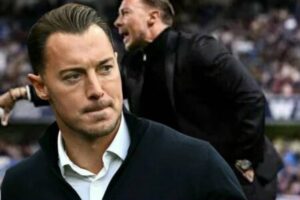

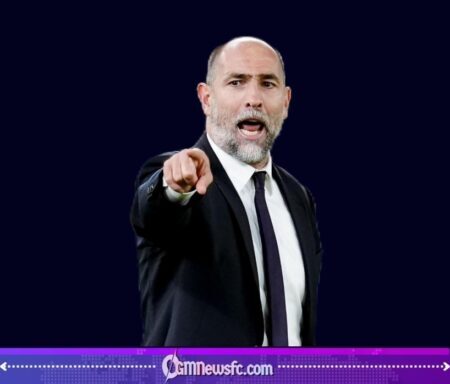
Tottenham Hotspur’s ownership group, Enic, has indicated it will not intervene directly in the decision regarding the future of manager Igor Tudor, despite the club’s troubling run of results since his appointment. Instead, responsibility for evaluating the manager’s position will remain with the club’s executive leadership, signaling a continued commitment to the internal governance structure established in recent months.
The development comes at a difficult time for Tottenham Hotspur, who are struggling to halt a slide in form under Tudor. With four defeats in four matches and mounting concerns inside the squad, pressure is intensifying on both the coaching staff and the club’s leadership as they attempt to stabilize performances during a challenging phase of the season.
A Difficult Start for Igor Tudor
Tudor’s tenure at Tottenham has begun under difficult circumstances. Since replacing Thomas Frank last month, the Croatian manager has overseen four consecutive defeats, with the team conceding 14 goals during that period. The results have left supporters and analysts questioning whether the managerial change has had the intended effect.
One of the most damaging setbacks came during Tottenham’s recent defeat to Atlético Madrid, where the North London side lost 5–2 in a Champions League encounter. The heavy loss has complicated Tottenham’s hopes of progressing to the quarter-finals of the UEFA Champions League and intensified scrutiny on the new manager’s tactical approach.
As Tottenham prepare for a crucial domestic fixture against Liverpool F.C., the club faces the alarming possibility of slipping into the relegation zone of the Premier League. Such a scenario would represent a dramatic downturn for a club that had previously been competing for European qualification.
Ownership Maintains Hands-Off Approach
Despite the growing pressure surrounding Tudor, Tottenham’s ownership group, Enic, has made it clear that it intends to maintain its traditional approach of allowing club executives to make operational decisions. According to sources familiar with the club’s structure, the ownership has historically refrained from direct involvement in day-to-day football matters.
Responsibility for evaluating Tudor’s performance rests primarily with chief executive Vinai Venkatesham and sporting director Johan Lange. Both figures played leading roles in the decision to appoint Tudor following Frank’s dismissal in February.
While the owners are expected to remain informed about the situation, any decision regarding the manager’s future is expected to originate from the club’s executive leadership. This structure mirrors previous governance practices at Tottenham, where strategic and football decisions have often been delegated to senior management.
Signs of Internal Friction Within the Squad
Beyond the results on the pitch, reports suggest that tensions may be developing within the Tottenham squad. Some players are believed to be unconvinced that Tudor is the right figure to guide the team out of its current difficulties, raising concerns about morale and cohesion during a critical stage of the campaign.
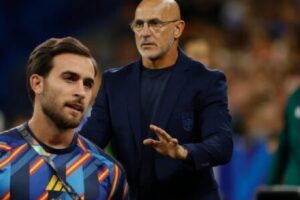
A recent incident during the defeat to Atlético Madrid has also drawn attention. Goalkeeper Antonín Kinský was substituted just 17 minutes into the match, and sources suggest that Tudor’s decision not to immediately offer public support to the player afterward was poorly received by several members of the squad.
Such moments can have an outsized impact during turbulent periods, particularly when a new manager is still attempting to establish authority and trust within the dressing room.
Leadership Changes and a New Era at Tottenham
The uncertainty surrounding Tudor comes against the backdrop of significant structural changes at Tottenham. The appointment of Venkatesham as chief executive in the summer of 2025 marked the beginning of a broader transformation in the club’s leadership.
Soon after, long-serving executive chairman Daniel Levy departed the club after 25 years, a move that signaled the end of one of the most influential administrative eras in Tottenham’s modern history. His exit was followed by a reshaping of the club’s executive framework.
Members of the Lewis family—principal owners of the club through Enic—have become more visible in the organization’s activities, although family patriarch Joe Lewis is believed to have taken a more peripheral role in recent months. Younger members of the family have reportedly assumed greater involvement in oversight and strategic discussions.
Focus on Stability During Uncertain Times
Club officials have emphasized that the recent changes in leadership are intended to establish long-term stability rather than provoke reactive decision-making. Non-executive chairman Peter Charrington has previously described the period as a “new era of leadership” for the club.
Charrington acknowledged that Tottenham has experienced significant transitions in recent months, both on and off the pitch. However, he stressed that the club’s primary focus is on empowering its executive leadership and creating a stable environment in which football operations can function effectively.
Whether that approach will remain unchanged if Tottenham’s results continue to decline remains an open question. For now, the club’s ownership appears committed to allowing its executives to determine the best course of action regarding Tudor’s future.