










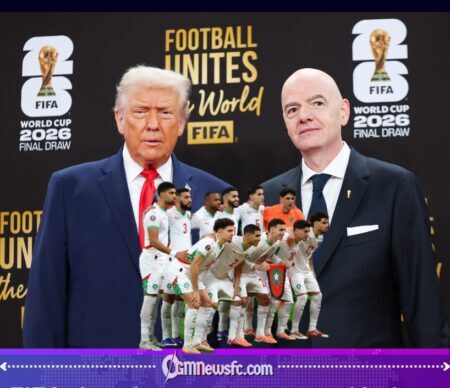
FIFA has dismissed a proposal from Mexico to host Iran’s World Cup fixtures, reaffirming that the Middle Eastern nation remains scheduled to compete in the United States despite rising geopolitical tensions and controversial remarks by former U.S. President Donald Trump. The decision comes as uncertainty grows over Iran’s participation following escalating conflict involving the United States, Israel, and Iran.
The global football governing body maintained that all qualified teams, including Iran, are expected to adhere to the official tournament schedule across host nations — the United States, Mexico, and Canada — even as political and security concerns intensify in the lead-up to the 2026 FIFA World Cup.
Rising Tensions Cast Shadow Over Tournament Preparations
The geopolitical climate surrounding the tournament has become increasingly strained following reports of an airstrike that killed Iran’s Supreme Leader, Ali Khamenei. The incident has heightened fears of instability, prompting speculation about Iran’s willingness to participate in matches hosted on U.S. soil.
Iran’s sports authorities have expressed concern over the safety of their players, suggesting that the national team’s involvement in the tournament could be reconsidered. While no official withdrawal has been confirmed, the situation remains fluid as diplomatic tensions continue to evolve.
FIFA, however, has sought to maintain a neutral stance, emphasizing its commitment to ensuring that football remains separate from political disputes. The organization continues to coordinate closely with all participating nations to ensure smooth tournament planning.
Mexico’s Proposal and FIFA’s Firm Rejection
In response to the growing uncertainty, Mexico reportedly promised toto host Iran’s matches as a precautionary measure. The proposal aimed to alleviate concerns about security and reduce potential diplomatic friction by relocating fixtures away from the United States.
Despite these intentions, FIFA declined the request, reiterating that the tournament schedule would remain unchanged. Iran is still expected to play two of its group-stage matches in Los Angeles and one in Seattle, as originally planned.
The decision underscores FIFA’s determination to preserve the integrity of the tournament structure, even amid external pressures. It also signals confidence in the host nations’ ability to provide adequate security for all participating teams.
Trump’s Comments Stir Debate Over Safety Concerns
The situation gained further complexity following comments made by Donald Trump, who questioned the appropriateness of Iran’s participation in the tournament. In a public statement, he suggested that the Iranian national team’s safety could not be guaranteed, though his remarks left room for interpretation.
Iranian Football Association president Mehdi Taj interpreted the comments as a warning, indicating that the team might refuse to travel to the United States under such conditions. He stated that discussions had been initiated with FIFA regarding the possibility of relocating matches to Mexico.
The ambiguity surrounding Trump’s statement has fueled debate, with observers questioning whether the concerns relate to security within the United States or broader geopolitical risks. Regardless, the remarks have added a new layer of uncertainty to an already complex situation.
FIFA Stands Firm on Tournament Schedule
In its official response, FIFA confirmed that it remains in regular contact with all participating member associations, including Iran, and expects all teams to compete as scheduled. The governing body reiterated its commitment to delivering a successful tournament across all host venues.
Iran’s current fixtures include matches against New Zealand and Belgium in Los Angeles, followed by a final group-stage game against Egypt in Seattle. Preparations for these matches are proceeding as planned, despite the surrounding controversy.
Meanwhile, officials from the Asian Football Confederation, including its senior leadership, have expressed confidence that Iran will ultimately participate. However, contingency plans remain in place should the situation change, with alternative teams such as Iraq and the United Arab Emirates potentially eligible to step in.
Uncertainty Persists as Tournament Nears
As the 2026 FIFA World Cup approaches, the intersection of sport and geopolitics continues to present challenges for organizers. While FIFA has taken a firm stance on maintaining the existing schedule, the evolving political landscape leaves open the possibility of last-minute changes.
The coming weeks are likely to prove निर्णсива as discussions between FIFA and Iranian authorities continue. For now, the global football community watches closely, hoping that the tournament can proceed without disruption while ensuring the safety and inclusion of all participants.