








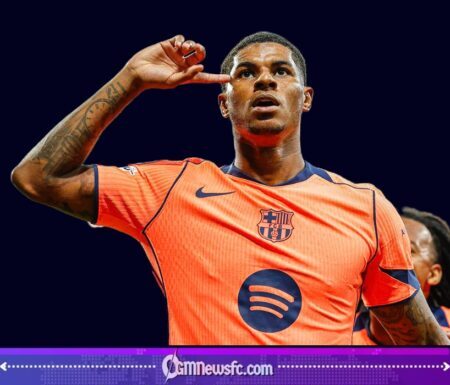
Barcelona are reportedly preparing for a decisive summer transfer window as they seek to retain Marcus Rashford on a permanent basis, while Manchester United remain firm in their stance that the forward will only leave on a full transfer. The Catalan club, encouraged by the player’s resurgence during his loan spell, are now exploring financial solutions—including player sales—to meet the valuation set by the Premier League side.
Rashford’s revival at FC Barcelona has not only reignited his club career but also restored his standing with Thomas Tuchel’s England setup. However, negotiations remain complex, with Barcelona’s financial limitations forcing them into strategic decision-making ahead of the summer window.
Barcelona’s Financial Strategy and Transfer Priorities
Barcelona’s interest in retaining Rashford comes amid ongoing financial constraints, compelling the club to consider offloading key assets. Among those reportedly under consideration is Ferran Torres, whose potential sale could generate the funds required to meet Manchester United’s £26 million valuation.
Torres, who joined Barcelona from Manchester City in 2022, remains under contract until 2027. However, club officials are wary of risking a depreciating asset if his future role becomes uncertain. Selling him this summer could provide both financial flexibility and squad clarity.
The Catalan side’s broader transfer approach reflects a balancing act between reinforcing the squad and maintaining financial sustainability. Rashford’s potential signing is seen as a strategic investment rather than a short-term solution.
Manchester United’s Firm Stance on Rashford
Despite Barcelona’s interest in extending Rashford’s stay through another loan, Manchester United have made their position clear: the player will only depart permanently. This firm stance underscores the club’s intent to resolve Rashford’s future decisively rather than prolong uncertainty.
United’s valuation of £26 million reflects both Rashford’s pedigree and his recent return to form. Having come through the club’s academy, his potential exit marks a significant moment for the institution, signalling a willingness to part ways with a long-serving player under the right conditions.
This position has placed Barcelona under pressure to act decisively. Without a willingness to meet United’s terms, the Spanish giants risk losing a player who has become increasingly integral to their attacking plans.
Rashford’s Resurgence and Role at Barcelona
Since arriving at Barcelona, Rashford has enjoyed a notable resurgence, contributing 10 goals and 13 assists in 39 appearances across all competitions. His performances have demonstrated renewed confidence and adaptability within the team’s attacking framework.
However, competition for places remains intense under manager Hansi Flick. Rashford continues to compete with high-performing wingers such as Raphinha and Lamine Yamal, both of whom have established themselves as key figures in the squad.
Despite this competition, Rashford’s versatility and work rate have made him a valuable asset. His ability to operate across the front line aligns with Barcelona’s tactical flexibility, increasing the club’s desire to retain him beyond his current deal.
Squad Evolution and Future Attacking Plans
Barcelona’s long-term planning extends beyond Rashford, with the club also considering the future of veteran striker Robert Lewandowski. With his contract nearing its end, discussions are ongoing regarding a potential extension.
At the same time, Barcelona are exploring options for a younger central striker, with Julián Álvarez reportedly emerging as a key target. Such a move would signal a gradual transition in the club’s attacking structure.
The combination of retaining Rashford, managing Lewandowski’s future, and potentially acquiring Álvarez highlights a comprehensive approach to squad evolution—balancing experience, youth, and tactical adaptability.
Leadership Backing and Rashford’s Personal Commitment
The recent re-election of Joan Laporta as Barcelona president has further strengthened the club’s strategic direction. Laporta is known to be a strong supporter of manager Hansi Flick, who in turn values Rashford’s contribution to the team.
Rashford himself has expressed a clear desire to remain at Barcelona, describing the club as his “happy place.” In interviews, he has emphasised his motivation to compete at the highest level and contribute to a winning culture.
His comments reflect a player who has rediscovered both form and purpose, aligning his personal ambitions with the club’s objectives. This mutual interest could prove decisive as negotiations progress.
Barcelona’s pursuit of Marcus Rashford represents a critical test of their financial ingenuity and strategic planning. With Manchester United holding firm on a permanent transfer, the Spanish club must act decisively—potentially through player sales—to secure the forward’s future.
As the summer window approaches, the outcome of these negotiations will not only shape Rashford’s career trajectory but also signal Barcelona’s broader ambitions in rebuilding a competitive and sustainable squad.