










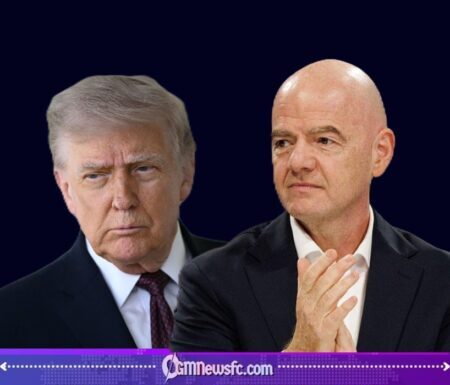
FIFA is considering a high-level diplomatic appeal to pause immigration enforcement operations during this summer’s World Cup, with plans emerging for its president, Gianni Infantino, to engage directly with U.S. President Donald Trump. The proposal, still under internal discussion, reflects growing concern among football’s governing body that ongoing enforcement actions by U.S. Immigration and Customs Enforcement (ICE) could overshadow the global spectacle of the tournament, which will be jointly hosted by United States, Canada and Mexico.
With the tournament set to be the largest in history, featuring 48 teams across multiple cities, FIFA officials are reportedly keen to ensure that the event remains focused on sport rather than controversy. The idea of requesting a temporary halt to ICE raids—potentially framed as a goodwill gesture—has gained traction among senior executives, though uncertainty remains over whether such a request would be accepted.
Growing Concerns Over Immigration Enforcement By FIFA
The debate within FIFA comes amid heightened tensions surrounding immigration enforcement in the United States. ICE operations have sparked protests in several areas, with critics arguing that the scale and manner of enforcement have led to unrest and, in some cases, tragic outcomes. These developments have raised concerns within FIFA about the potential reputational risks for the World Cup.
Officials fear that images of enforcement actions during the tournament could conflict with the inclusive and celebratory image FIFA seeks to project. The World Cup is widely regarded as a unifying global event, and any association with domestic political controversies could detract from its appeal to international audiences.
Beyond optics, there are also practical considerations. Teams, fans and officials will be travelling across multiple cities, and uncertainty surrounding enforcement activities could affect mobility, attendance and overall fan experience. These concerns have contributed to calls within FIFA for a coordinated approach to ensure a stable environment throughout the competition.
Proposal for a Temporary Moratorium
According to reports, FIFA executives have explored several options, ranging from limiting ICE presence around stadiums to advocating for a broader suspension of enforcement activities across host cities. The most ambitious proposal involves a nationwide pause on ICE raids for the duration of the tournament.
Infantino is said to be open to raising the issue directly with Trump, potentially framing the request as a “president-to-president” discussion. Such an approach would underscore the diplomatic nature of the appeal and highlight the global significance of the tournament.
One suggestion under consideration is a joint announcement between FIFA and the White House, presenting the pause as a positive and cooperative initiative. Proponents believe this could benefit both parties by aligning the administration with a globally celebrated event while ensuring a smoother tournament experience.
Political Sensitivities and Uncertain Response
Despite internal support within FIFA, the proposal faces significant political hurdles. Immigration enforcement has been a central pillar of Trump’s policy agenda, and ICE operations have been actively promoted by his administration as part of a broader commitment to border control.
Given this context, it remains unclear whether the White House would be receptive to suspending such activities, even temporarily. Any decision to pause enforcement could be interpreted domestically as a shift in policy, potentially drawing criticism from supporters of stricter immigration measures.
At the same time, the international nature of the World Cup adds a layer of diplomatic complexity. The tournament will attract millions of visitors and viewers worldwide, placing the host nations under intense global scrutiny. Balancing domestic priorities with international expectations will likely be a key challenge for policymakers.
A Tournament of Unprecedented Scale
This summer’s World Cup is set to break new ground, with 48 teams competing in 104 matches over 39 days. The expanded format marks a significant evolution of the tournament, reflecting FIFA’s ambition to broaden global participation and engagement.
Infantino has described the event as “the biggest show on Earth,” emphasising its ability to capture global attention. Matches will be held across 16 host cities in the United States, Canada and Mexico, making it one of the most geographically expansive tournaments in history.
Looking ahead, FIFA is also considering further expansion, including a potential 64-team format for the 2030 edition. Meanwhile, support from the CONMEBOL for Infantino’s continued leadership highlights ongoing discussions about the organisation’s future direction.
Balancing Sport, Politics and Global Image
The reported discussions underscore the delicate balance FIFA must maintain between sport and politics. While the organisation traditionally seeks to remain neutral, the scale and visibility of the World Cup often bring it into contact with broader societal issues.
A decision to formally request a pause in immigration enforcement would represent a notable intervention, reflecting the high stakes involved in hosting a successful tournament. It would also test FIFA’s ability to navigate complex political landscapes while safeguarding the integrity of its flagship event.
As preparations continue, the outcome of these discussions may shape not only the atmosphere of this year’s World Cup but also the evolving relationship between global sport and national policy