









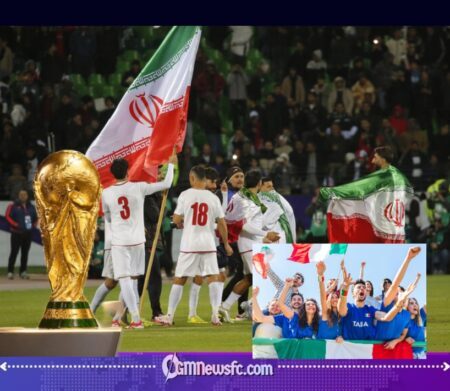
An envoy to current U.S. President Donald Trump has proposed that Iran be replaced by Italy at the upcoming FIFA World Cup finals, according to a report by the Financial Times. The suggestion, reportedly made by U.S. special envoy Paolo Zampolli, comes amid uncertainty surrounding Iran’s participation and reflects broader geopolitical tensions tied to the tournament.
The proposal is also seen as part of a wider diplomatic effort to mend relations between Trump and Italian Prime Minister Giorgia Meloni, following disagreements linked to the U.S. president’s criticism of Pope Leo XIV over the Iran conflict. While no official response has been issued by FIFA or national football bodies, the development has sparked debate across political and sporting circles.
Diplomatic Undercurrents Behind the Proposal
The suggestion to replace Iran with Italy is not purely a sporting matter but is intertwined with diplomatic considerations. According to sources cited in the Financial Times, the initiative is partly aimed at easing tensions between Washington and Rome, which have recently been strained over differing positions related to the Iran conflict.
President Trump’s remarks concerning Pope Leo XIV reportedly caused friction with Prime Minister Meloni, a key European ally. By advocating Italy’s inclusion in a U.S.-hosted tournament, Zampolli’s proposal is being interpreted as a symbolic gesture intended to reaffirm ties between the two nations.
While the White House has not publicly endorsed the idea, analysts suggest that even informal proposals of this nature can carry weight in international relations, particularly when tied to high-profile global events like the World Cup.
Italy’s Sporting Case and Recent Setbacks
Italy, one of football’s most decorated nations, has a strong historical claim with four FIFA World Cup titles. However, their recent failure to qualify—marked by a defeat to Bosnia and Herzegovina in a penalty shootout playoff—has left them absent from the tournament for the third consecutive time.
Zampolli highlighted Italy’s pedigree in his remarks, describing their inclusion as justified based on historical performance. For many fans, the absence of the “Azzurri” from a major tournament remains a significant disappointment, fueling support for unconventional routes back into the competition.
Despite this, FIFA’s qualification system is based on merit and established rules, making any post-qualification replacement highly unusual and likely controversial within the football community.
Iran’s Position and Participation Uncertainty
Iran has maintained that it is prepared to compete in the World Cup and has expressed its intention to participate. Reports indicate that Iranian officials are awaiting clarification from FIFA regarding the logistics of their matches, particularly a request to relocate fixtures from the United States to Mexico.
This request reflects broader geopolitical sensitivities, especially given the strained relations between Iran and the United States. Participation in a tournament hosted partly on U.S. soil presents logistical and diplomatic challenges that remain unresolved.
Although some reports suggest Iran reaffirmed its readiness to compete, independent verification of these claims remains limited, leaving room for continued speculation.
FIFA’s Silence and Governance Questions
FIFA has yet to issue an official response to the proposal, maintaining its typical stance of neutrality in politically sensitive matters. The organization is generally guided by strict regulations concerning qualification and participation, which do not easily allow for last-minute substitutions.
Any decision to replace a qualified team would likely require extraordinary circumstances and could set a precedent with far-reaching implications for international football governance.
Observers note that FIFA President Gianni Infantino faces a delicate balancing act between maintaining the integrity of the sport and navigating the political realities surrounding a globally watched event.
Reactions from Football and Political Circles
The proposal has elicited mixed reactions, with some viewing it as a pragmatic solution to a complex geopolitical issue, while others see it as an inappropriate politicization of sport. Critics argue that allowing political considerations to influence tournament participation undermines the principles of fair competition.
Supporters, however, point to the unique circumstances surrounding Iran’s participation and the potential benefits of including a globally recognized team like Italy, particularly for a tournament hosted in the United States.
As of now, neither the Italian Football Federation nor Iran’s football authorities have issued formal statements responding directly to the proposal, leaving the situation in a state of uncertainty.
Broader Implications for the FIFA World Cup
The controversy highlights the increasingly complex intersection of sports, politics, and diplomacy. Major international tournaments such as the FIFA World Cup often serve as platforms where geopolitical tensions play out, sometimes overshadowing the sporting spectacle.
If the proposal gains traction, it could open the door to further debates about how global events should handle political disputes, especially when they involve participating nations.
For now, the focus remains on FIFA’s forthcoming decisions and whether Iran’s participation will proceed as planned, or if alternative scenarios—however unlikely—begin to take shape.