

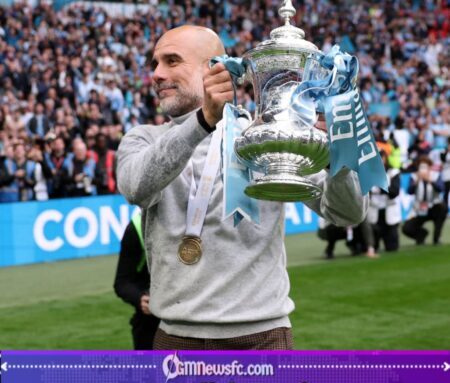
Pep Guardiola has now reached 41 major trophies as a professional coach, a number so ridiculous it almost feels personally disrespectful to the rest of football. The legendary manager continues to expand a collection that includes league titles in England, Spain, and Germany, alongside multiple Champions League triumphs and enough domestic cups to make entire trophy cabinets nervous about structural safety. The latest addition toPep Guardiola’s collection has once again sparked admiration, envy, tactical debates, and the annual tradition of rival supporters insisting that “anyone could do it with that squad” before immediately failing to explain why everyone else does not.
The scale of Pep Guardiola’s dominance has become one of the defining stories of modern football. Six Premier League titles, multiple Champions Leagues, Club World Cups, UEFA Super Cups, and domestic cup victories across Europe have elevated the Spanish coach into a category occupied by only a handful of managers in football history. Yet beyond the medals lies something even more influential: Guardiola has changed the tactical language of football itself.
Pep Guardiola Continues Dominance Across England, Spain and Germany
Pep Guardiola’s 41 titles represent more than simple longevity. They reflect a level of sustained excellence rarely seen in elite football, especially across multiple leagues and football cultures. From Barcelona’s possession-heavy revolution to Bayern Munich’s domestic control and Manchester City’s machine-like consistency, Guardiola has repeatedly transformed already-successful clubs into tactical superpowers. Many coaches inherit strong teams. Guardiola tends to inherit strong teams and somehow convince them to play football like they downloaded updates from the future.
His six Premier League titles remain particularly significant given the intensity and financial competitiveness of English football. Under Guardiola, Manchester City established periods of dominance built not only on investment but also on extraordinary tactical organization. The movement, pressing structures, positional rotations, and technical precision displayed by his sides have forced opponents into constant adaptation. Entire coaching staffs across Europe now spend weekends attempting to decode Guardiola’s ideas while defenders quietly reconsider their career choices after chasing inverted full-backs into midfield.
Critics continue to point toward the enormous resources available to Pep Guardiola throughout his managerial career. That debate remains valid in certain respects, especially considering the budgets involved at elite clubs. However, football history is filled with wealthy teams that failed spectacularly despite major spending. Guardiola’s greatest strength may not simply be assembling talent, but organizing elite players into systems capable of maintaining hunger, discipline, and tactical intelligence year after year.
Guardiola’s Coaching Legacy Grows With 41st Career Trophy
Pep Guardiola’s influence now stretches far beyond trophies alone. His ideas have fundamentally shaped how modern football is played, discussed, and analyzed. Concepts such as positional play, pressing triggers, ball progression structures, and inverted defenders have become mainstream partly because Guardiola’s teams executed them at devastatingly effective levels. Young coaches across Europe openly study his methods, although some imitations resemble experimental science projects that accidentally explode by halftime.
The Champions League victories also carry major weight in evaluating Guardiola’s career. While critics occasionally mocked him for tactical overthinking in knockout competitions, his European successes with different squads have strengthened his reputation as one of football’s most innovative minds. Winning league titles requires consistency. Winning Europe requires adaptability, emotional control, and occasionally surviving internet outrage every time a midfielder starts at left-back.
Beyond statistics, Guardiola’s greatest achievement may be sustaining motivation in environments where success quickly becomes expected rather than celebrated. Modern football consumes managers rapidly, especially at elite clubs where one poor month can trigger crisis headlines and dramatic television debates. Guardiola, however, continues evolving. Each season introduces tactical adjustments, positional experiments, and subtle innovations that keep his teams ahead of rivals attempting desperately to catch up before the next tactical trend arrives.
Pep Guardiola and his 41 titles have now become part of football’s larger historical conversation rather than merely contemporary success stories. Whether admired or criticized, his impact on the modern game is undeniable. Rival fans may complain about spending, dominance, or tactical obsession, but football history rarely remembers excuses as clearly as it remembers trophies. And at this rate, Guardiola may soon require an entirely separate building just to store the evidence.