









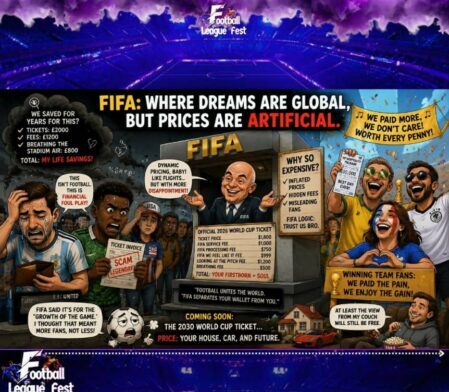
FIFA has found itself facing uncomfortable scrutiny after allegations emerged accusing the organisation of artificially inflating ticket prices and misleading supporters during sales for the 2026 World Cup, a situation that has transformed football excitement into what many fans now describe as an unexpected economic survival exercise. While anticipation for the tournament remains enormous, frustration surrounding ticket accessibility is rapidly growing, with critics questioning whether football’s biggest celebration is quietly becoming football’s most expensive spectator sport.
FIFA Ticket Prices Leave Supporters Feeling Like Financial Fair Play Victims
FIFA’s ticket controversy intensified after supporters reported dramatic increases between advertised prices and final checkout costs during the purchasing process. Complaints surrounding hidden charges, premium hospitality bundles, and fluctuating pricing structures quickly spread across social media, where fans responded with equal parts outrage and comedy. Some supporters joked that securing a World Cup seat now requires the financial planning of a home mortgage application rather than a simple football purchase.
The allegations arrive at a sensitive moment for FIFA, particularly as the 2026 World Cup is already expected to become the largest and most commercially ambitious tournament in football history. Hosted jointly by the United States, Canada, and Mexico, the competition will feature an expanded format with 48 national teams, increasing both global demand and commercial opportunities. Critics, however, argue that expanding football’s reach means little if ordinary supporters increasingly struggle to afford attendance inside the stadiums themselves.
Fans Accuse FIFA of Turning World Cup Dreams Into Luxury Packages
The FIFA debate also reflects wider concerns surrounding modern football’s growing dependence on premium experiences, corporate partnerships, and dynamic pricing systems. Over recent years, supporters across domestic leagues and international competitions have repeatedly voiced frustration over rising costs attached to tickets, travel, accommodation, and merchandise. Many fan groups believe the culture and atmosphere traditionally created by working-class supporters risk being replaced by highly commercialised entertainment models focused primarily on revenue growth.
Additional criticism has emerged regarding transparency during online sales procedures, particularly around how prices are displayed before final payment stages. Consumer advocates and football supporters alike have called for clearer communication regarding fees and ticket categories, especially as global inflation continues affecting fans financially worldwide. Ironically, football supporters have spent years debating Financial Fair Play rules for clubs, only to discover their own wallets now appear to be under stricter regulation than some transfer budgets.
For FIFA, the challenge now extends beyond public relations. The organisation must convince supporters that accessibility remains central to the spirit of the World Cup rather than allowing perceptions of exclusivity and aggressive pricing to dominate the narrative. The 2026 tournament still promises unforgettable moments, historic crowds, and global celebration, but many fans are increasingly wondering whether the hardest qualification process belongs not to national teams — but to the supporters attempting to buy Tickets without selling half their possessions first. OGM News FC will continue monitoring developments surrounding FIFA and the growing backlash over ticket pricing concerns.