










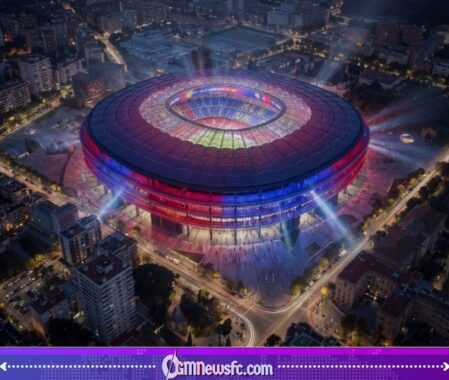
Camp Nou is once again at the center of European football conversation after Barcelona officially confirmed that it has submitted a bid to host the Champions League Final in 2029. The announcement may sound straightforward, but behind it lies a much larger story involving prestige, stadium transformation, financial ambition, and a club eager to showcase its future to the world. If successful, the final could become the ultimate unveiling ceremony for one of football’s most famous arenas.
Barcelona Chase Champions League Final While Rivals Question the Timing
Barcelona’s decision to pursue the Champions League Final is closely tied to the ongoing redevelopment of Camp Nou, a project designed to modernize the stadium while preserving its historic identity. Club officials believe the renovated venue will provide UEFA with an ideal location for European football’s biggest club match. The bid reflects confidence that construction targets will be achieved and that the stadium will be fully capable of handling the demands of an event watched by hundreds of millions worldwide.
The move also carries significant symbolic value. Barcelona have spent recent years balancing sporting ambitions with financial restructuring and major infrastructure investment. Securing hosting rights for the Champions League Final would allow Camp Nou to reintroduce itself to the football world on the grandest possible stage. Some observers may joke that the club has already sent out invitations before arranging every seat, but the application demonstrates genuine belief in the project’s progress and long-term importance.
Barcelona Aim for Football’s Biggest Night Despite Ongoing Scrutiny
The bid arrives against the backdrop of UEFA’s continued preference for modern, high-capacity venues capable of delivering major international events. Recent Champions League finals have been staged in some of Europe’s most advanced stadiums, making infrastructure, transportation, hospitality, and security key factors in the selection process. Barcelona’s redevelopment plans have been designed with many of those requirements in mind, strengthening the case for Camp Nou as a future host venue.
Beyond football itself, hosting the Champions League Final would generate substantial economic and tourism benefits for Barcelona and the surrounding region. Major finals attract supporters, sponsors, media organizations, and international visitors from across the globe. The event would not only showcase Camp Nou but also highlight the city’s status as one of Europe’s premier sporting destinations. Industry analysts frequently note that such events can leave lasting commercial and reputational benefits long after the final whistle has blown.
The race to host the 2029 final is far from over, and UEFA’s evaluation process will ultimately determine whether Barcelona’s vision becomes reality. For now, Camp Nou has officially entered the contest, turning a construction project into a statement of ambition. If the bid succeeds, the Champions League Final could serve as both a football spectacle and a symbolic celebration of Barcelona’s next chapter—a chapter the club clearly hopes the entire football world will be watching.