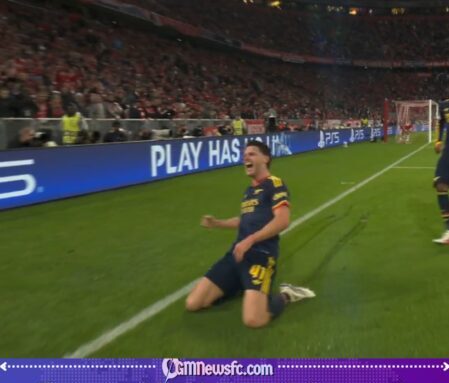











Hincapié became one of the tournament’s most talked-about names after receiving a remarkable Red Card during Ecuador’s World Cup defeat to Mexico. The defender was dismissed not for a reckless tackle or violent conduct, but for covering his mouth while confronting an opponent—an action FIFA has increasingly targeted in an effort to improve transparency and discourage abusive or concealed communication. In a World Cup already packed with surprises, even keeping a conversation private has apparently become a risky tactical decision.
The World’s Most Expensive Whisper Ended With a Red Card
The incident unfolded during Ecuador’s knockout defeat when Hincapié approached an opponent while shielding his mouth with his hand. Match officials deemed the action worthy of a straight dismissal under FIFA’s recently enforced competition guidelines. It marked the second occasion during the 2026 FIFA World Cup that a player had been sent off for the same offence, confirming that officials are applying the directive consistently rather than selectively.
The decision immediately divided football supporters. Some argued that football has long been filled with heated exchanges that never required such punishment. Others welcomed the tougher stance, believing hidden conversations make it difficult to detect insults, discriminatory remarks or unsporting behaviour. Either way, the old advice to “watch what you say” may now need an update: “watch where you put your hand.”
Ecuador Lost More Than the Match—They Lost Their Privacy Settings
FIFA’s stricter enforcement forms part of broader efforts to promote respect, accountability and fair play during international competitions. Tournament officials have increasingly encouraged open communication between players and referees while discouraging gestures that prevent cameras or match officials from observing interactions. The policy follows wider discussions within football about improving behaviour on the pitch and reducing incidents that cannot easily be reviewed after matches.
For Ecuador, however, the debate offered little consolation. The dismissal complicated an already difficult evening against Mexico and effectively ended hopes of mounting a comeback. While tactical decisions and individual performances will dominate football analysis, Hincapié’s red card may become one of the tournament’s most memorable talking points—not because of a dangerous challenge, but because of a gesture that many players have considered routine for years.
As the World Cup progresses, players, coaches and officials will continue adapting to football’s evolving disciplinary landscape. Hincapié and his Red Card have become a timely reminder that modern football is policing not only tackles and fouls, but also the smallest details of player conduct. OGM News FC will continue monitoring how this rule shapes future matches—and whether football’s quietest conversations continue producing the loudest headlines.