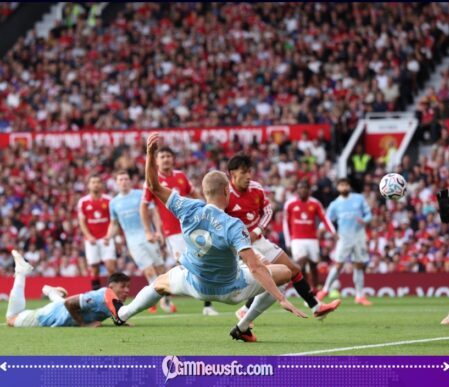











Enzo Maresca has produced a hilarious twist on one of the most recognizable sayings in modern culture while discussing Erling Haaland. The manager declared that the most important thing is for Haaland to be happy before borrowing the familiar phrase “Happy wife, happy life” and giving it a football makeover: “Happy Erling, happy life!”
Maresca’s joke became even better when he admitted that his wife would probably be upset with him for changing the phrase. It was a light-hearted comment, but underneath the humor was a simple football truth: when a team’s elite goalscorer is confident, settled and performing at his best, everybody around him tends to benefit.
Enzo Maresca Wants Erling Haaland Happy and Firing
Enzo Maresca’s comments underline just how important Erling Haaland is to the attacking equation. The Norwegian forward has established himself as one of the most prolific goalscorers in world football, meaning his confidence and rhythm can have an enormous effect on the team’s ability to turn attacking opportunities into goals.
For a manager, keeping such a player comfortable is not necessarily about simply making him happy for the sake of happiness. It is also about creating the conditions in which a striker can perform. Haaland’s physical presence, movement, finishing and penalty-box instincts make him a unique attacking weapon, and managers naturally want that weapon operating at full capacity.
That makes Maresca’s joke surprisingly logical beneath the comedy. A happy Haaland can mean a confident Haaland, and a confident Haaland can mean defenders having a very long afternoon.
The amusing part is that Maresca has effectively turned player management into relationship advice. Instead of “Happy wife, happy life,” the football version has become “Happy Erling, happy life.” Somewhere, a dressing-room whiteboard is probably being prepared for the next team meeting.
Maresca’s Haaland Joke Comes With a Domestic Warning
Maresca’s admission that his wife would be upset adds another layer to the story. The manager clearly knew he was playing with the original phrase, but his willingness to joke about it showed the relaxed side of a conversation that could otherwise have been entirely football-focused.
For Erling Haaland, however, the message is undoubtedly flattering. Having a manager publicly emphasize the importance of his happiness suggests that the relationship between player and coach matters. Elite footballers are expected to deal with enormous pressure, and managers increasingly understand that confidence and environment can influence performance.
Of course, no manager can guarantee that keeping one player happy will automatically produce victories. Football remains a team sport, and success depends on tactics, defending, midfield control, squad depth and consistency across an entire campaign.
But when the player in question is Erling Haaland, there is little argument that keeping him confident is a worthwhile objective. His goals can transform matches, and his presence alone can alter how opponents defend.
So Enzo Maresca may have joked his way into a new football philosophy, but the principle is clear: happy Erling, happy life. The only unresolved issue is whether Maresca’s wife has accepted the tactical amendment.