





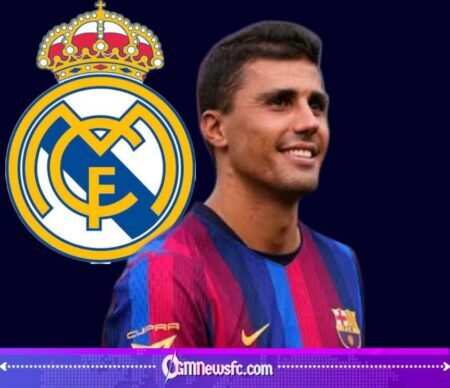
Rodri has revealed that turning down Real Madrid was not an easy decision, particularly because of the positive way he says the Spanish giants treated him. The midfielder acknowledged the significance of the opportunity but explained that his eventual decision was based primarily on sporting considerations. For a player at the highest level, even the glamour of Real Madrid was not enough to override what he believed was the right footballing path.
Rodri said he chose according to what excited him most and where he felt he could win and develop the most as a player. His explanation presents the decision as a calculated sporting choice rather than a rejection of Real Madrid itself.
Rodri Chose Sporting Ambition Over Real Madrid Prestige
Rodri’s decision is particularly notable because Real Madrid represents one of the most prestigious destinations in world football. For many players, an approach from the club can be difficult to refuse. Yet Rodri explained that the quality of the sporting project mattered more to him than the size of the badge.
His comments suggest that the midfielder was thinking beyond the immediate attraction of a transfer. He wanted to understand where his football could develop, what project could provide the greatest competitive opportunities and which environment genuinely excited him.
That is a significant distinction. A player can respect a club, appreciate how it has handled negotiations and still conclude that another destination offers a better sporting fit. Rodri’s explanation indicates that this was precisely how he viewed the situation.
The decision also reflects the changing expectations of elite players. Winning remains central, but players increasingly consider tactical roles, development, playing style, squad structure and their long-term position within a project before making major career choices.
Real Madrid Could Not Make the Sporting Argument Strong Enough
For Rodri, the key question appears to have been where he could continue growing while competing for major honours. His answer ultimately did not lead him to Real Madrid, despite his acknowledgment that the club treated him well.
Rodri’s emphasis on excitement is also revealing. At the highest level, motivation can be as important as money or reputation. A player who believes strongly in a sporting project may prefer that environment even when a more glamorous alternative is available.
There is also an element of risk in such a decision. Real Madrid carries an extraordinary history of success, meaning rejecting the club inevitably creates a “what if?” question. Had Rodri chosen differently, his career path could have taken an entirely different direction.
Instead, he chose to prioritize his own assessment of where he could win and develop most effectively. That does not diminish Real Madrid’s appeal; if anything, Rodri’s comments underline how difficult the decision was precisely because the offer was so attractive.
Rodri’s explanation ultimately provides a simple answer to a complicated transfer decision: Real Madrid was tempting, the treatment was good, but the sporting project he believed in mattered more. Sometimes even the biggest club in the room has to accept that the best decision for a player may be somewhere else.