








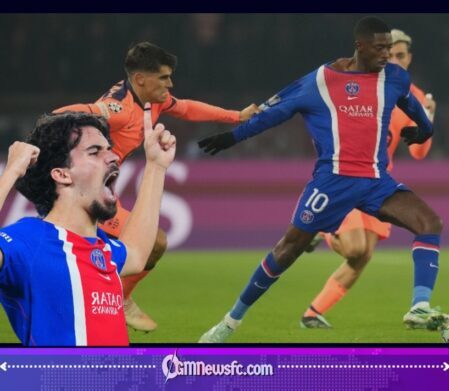
Paris Saint-Germain (PSG) and Barcelona have delivered a Champions League spectacle packed with goals, drama and enough goalkeeping action to make the defenders question their career choices. According to the supplied live match report, PSG lead Barcelona 3–2 at the Parc des Princes after 85 minutes, with Désiré Doué, Lucas Hernández and Vitinha scoring for the French side, while Xavi Espart and Lamine Yamal found the net for Barcelona. The match has become a battle between PSG’s ruthless finishing and Barcelona’s determination to stay alive, with the final whistle still pending in the supplied update.
The most striking detail is not simply the scoreline. Barcelona have enjoyed more possession and completed more passes, yet PSG have created greater danger in front of goal. In a contest where controlling the ball does not necessarily mean controlling the match, the scoreboard is delivering a lesson that even the most ambitious football project cannot ignore: possession earns applause, but goals earn results.
PSG’s Shot Count Tells a Story Barcelona’s Possession Cannot Hide
The supplied statistics show PSG with 21 shots and 14 on target, compared with Barcelona’s 14 attempts and only five on target. The French side also recorded an expected-goals figure of approximately 2.97, against Barcelona’s 1.79. Those numbers suggest that PSG were more effective at turning attacking opportunities into genuine threats, even though Barcelona held 54.2 per cent of possession and completed 497 passes to PSG’s 423. In football terms, Barcelona had more of the conversation, but PSG delivered more of the punchlines.
The goalkeeping figures make the contrast even sharper: Barcelona’s goalkeeper reportedly made 10 saves, while PSG’s goalkeeper made three. That difference points to sustained pressure on Barcelona’s defence and explains why their greater share of the ball did not translate into a comfortable evening. If the supplied numbers hold up in the final match record, Hansi Flick will have plenty to examine beyond the two goals his side scored. A team cannot expect its goalkeeper to become a full-time emergency service every time its defensive structure breaks down.
Doué, Hernández and Vitinha Lead PSG’s Attacking Response
According to the supplied match feed, Désiré Doué opened the scoring in the 38th minute, with João Neves providing the assist. Lucas Hernández then reportedly restored PSG’s advantage in the 72nd minute before Vitinha struck in the 81st. The sequence illustrates PSG’s ability to respond to pressure and punish defensive lapses, although the precise scoring timeline should be checked against the final official match record before publication.
Barcelona, meanwhile, refused to disappear from the contest. Xavi Espart reportedly scored in the 55th minute, assisted by Fermín López, before Lamine Yamal added another in the 79th. Yamal’s contribution again underlines why Barcelona’s young attacking talent remains central to their ambitions. But there is an uncomfortable question for the Catalan side: how many goals must their forwards score before the defence stops making their job unnecessarily difficult? Even the most gifted attackers cannot be expected to rescue every match.
Barcelona’s Tactical Gamble Raises Questions for Flick
PSG’s reported 4–3–3 setup, under Luis Enrique, offered a direct attacking threat through Doué, Ousmane Dembélé and Khvicha Kvaratskhelia. Barcelona’s listed formation also relied on attacking width and creative players, including Dani Olmo and Yamal. The difference, according to the supplied statistics, was PSG’s ability to turn possession changes into dangerous attempts. Barcelona’s eight tackles, compared with PSG’s 16, also suggest that the French side were more active in disrupting their opponents’ play.
For Flick, the bigger challenge is finding the right balance between attacking ambition and defensive security. Barcelona’s willingness to push forward can make them dangerous, but it can also leave space for opponents who are quick enough to exploit mistakes. PSG demonstrated the danger of that approach in this encounter. The lesson is not that Barcelona should abandon their footballing identity, but that an attacking philosophy must be supported by defensive organisation if the club wants to compete consistently at the highest European level.
Editorial verification note: The match itself is confirmed on the UEFA Champions League schedule, and live coverage independently corroborates the supplied scoring sequence through Vitinha’s 81st-minute goal. However, the live coverage available during this check had already moved beyond the supplied 85-minute snapshot, so the score should be refreshed before publication.
PSG’s clash with Barcelona has provided another reminder that elite European football rewards efficiency as much as flair. While Barcelona’s possession and attacking talent kept them in the contest, Paris Saint-Germain’s ability to find the net at crucial moments placed the French side in control of the supplied match narrative. The final result and verified statistics will determine the full significance of the encounter, but the defensive questions facing Barcelona are already clear. Watch out for future updates on this developing Champions League story from OGM News FC

One thought on “PSG Turn Paris Into a Nightmare for Barcelona as Five-Goal Thriller Exposes Defensive Weaknesses”