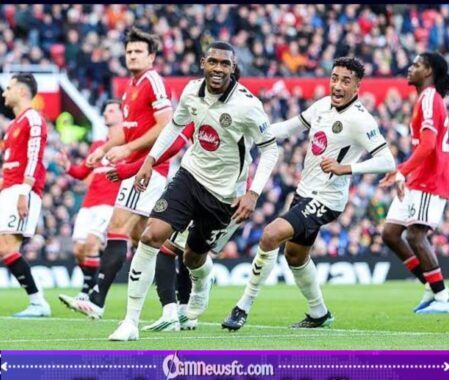











José Mourinho has revealed the tactical thinking behind Real Madrid’s 2–1 victory over Barcelona in Sunday’s El Clásico, explaining how Eduardo Camavinga and Jude Bellingham helped his team exploit spaces that Barcelona’s defensive system is designed to protect. Rather than relying exclusively on forwards to run behind the defence, Mourinho instructed his midfielders to make decisive attacking movements, turning Barcelona’s defensive organisation into a problem of its own. The Portuguese coach’s message was simple: when the usual attacking routes are heavily guarded, sometimes the best solution is to send the danger from somewhere the opposition least expects it.
Mourinho’s Tactical Masterstroke: Why Barcelona’s Defensive Trap Needed a Different Solution
Mourinho explained that Barcelona’s defensive organisation makes it difficult for conventional attackers to exploit spaces behind the defensive line. Their defenders are coached to recognise forward runs and catch opponents offside, while goalkeeper Joan García can intervene when passes successfully bypass the defensive line. In other words, Barcelona’s defensive plan is designed to turn ambitious forward runs into frustrating episodes of raised flags and intercepted passes. For opposing attackers, it can feel like trying to enter a building where the security team already knows everyone’s name.
According to Mourinho, the answer was to use midfielders such as Camavinga and Bellingham to attack those spaces from deeper positions. Their late runs made it harder for Barcelona to anticipate the danger because the threat did not originate exclusively from the forwards. Mourinho explained that he instructed Camavinga to attack space while Aurélien Tchouaméni remained deeper to protect the defence. The arrangement offered Madrid a balance between defensive security and attacking movement, demonstrating that a midfield player can become an unexpected weapon when the timing and positioning are right.
Camavinga and Bellingham Turn the Space Behind Barcelona’s Defence Into a Winning Opportunity
The plan produced a decisive moment in the match. Real Madrid defeated Barcelona 2–1 at Camp Nou on October 25, 2026, with Kylian Mbappé scoring twice. His second goal arrived in the closing stages after Bellingham helped initiate the attacking move and Camavinga advanced into a dangerous position before delivering the decisive assist. The goal illustrated Mourinho’s point: midfielders can create opportunities that conventional forward movements might struggle to produce against a well-organised defensive line.
Barcelona, meanwhile, discovered that defensive preparation does not automatically guarantee defensive success. A team can study attacking patterns, organise its back line and prepare its goalkeeper for through balls, yet still struggle when the opposition changes the source and timing of its runs. Mourinho’s tactical adjustment exploited that uncertainty. While Barcelona sought to protect the spaces behind its defence, Madrid found a way to attack them through its midfield. It was a reminder that football is not merely about having talented players; it is also about making those players arrive in the right place at the right moment.
For Mourinho, the victory was another opportunity to demonstrate the value of tactical flexibility, while Camavinga and Bellingham provided the movement needed to make his plan work. Barcelona’s defeat will invite further questions about its defensive coordination, particularly when opponents attack from unexpected positions. Real Madrid, however, will take confidence from a Clásico victory built on intelligent movement and decisive finishing. Stay with OGM News FC for further updates, analysis and the next chapter in this developing football rivalry.