








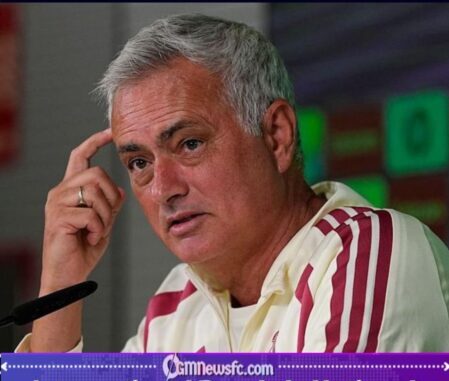
José Mourinho has once again brought attention to one of football’s most uncomfortable scheduling problems, suggesting that returning from an international break is rarely straightforward for Europe’s biggest clubs. The Portuguese manager’s observation that Arsenal, Manchester City, Chelsea and Bayern Munich all failed to win after the latest international interruption has reignited the debate about whether international football is increasingly becoming an unwanted obstacle to domestic and European club campaigns.
Mourinho’s argument carries considerable weight, particularly as clubs invest enormous amounts of money in assembling competitive squads, only to release their most important players for international assignments and hope they return without injuries, fatigue or a sudden loss of rhythm. Unfortunately, football does not always respect the financial investments of club owners, and the international calendar appears to have its own ideas about when players should be available.
The bigger concern, however, goes beyond dropped points. With reports of injuries involving Chelsea’s Moisés Caicedo and Bayern Munich’s Harry Kane and Michael Olise, questions are once again being raised about player welfare, workload management and whether national teams are doing enough to protect footballers who already have demanding club schedules.
THE INTERNATIONAL BREAK: A WELCOME HOLIDAY FOR SOME, A HEADACHE FOR CLUB MANAGERS
Mourinho’s comments came after Real Madrid’s 2-1 victory over Celta Vigo, where he pointed to the difficulties experienced by other leading European clubs. His observation was particularly interesting because the international break had interrupted the normal rhythm of club football, forcing managers to prepare for competitive fixtures without having their entire squads available for regular training and tactical preparation. Arsenal, Manchester City, Chelsea and Bayern Munich all experienced disappointing results, giving Mourinho another opportunity to remind everyone that winning immediately after international football is not always guaranteed.
There is a legitimate footballing argument behind his observation. Players return from different countries, having followed different training programmes, played varying amounts of football and travelled different distances. Some return physically exhausted, others arrive with minor injuries, while a few might have barely played but still require time to readjust to their club’s tactical demands. Managers are consequently expected to restore collective understanding almost overnight. Apparently, the football calendar believes tactical chemistry can be downloaded before the next weekend’s fixture.
INJURIES ARE MAKING THE INTERNATIONAL BREAK EVEN MORE EXPENSIVE
The situation becomes more concerning when injuries enter the discussion. Chelsea’s Moisés Caicedo reportedly experienced discomfort after representing Ecuador during the international period, making his availability a concern for Xabi Alonso. Chelsea’s official update on November 6 confirmed that the midfielder had been experiencing physical problems and that his fitness would be assessed before the Sunderland fixture. This is precisely the sort of situation that frustrates club managers: an important player leaves for international duty and returns with questions surrounding his physical condition.
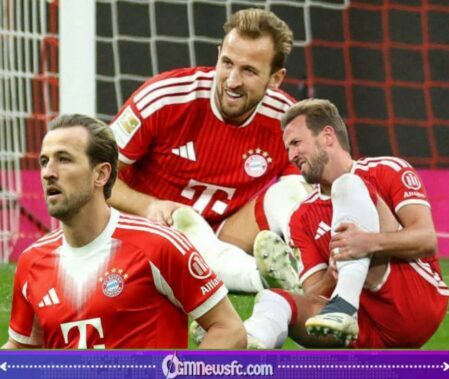
Bayern Munich’s situation has also attracted attention, although an important distinction must be made. Harry Kane and Michael Olise were both substituted with injuries during Bayern’s Bundesliga encounter against Cologne on November 20, rather than during international duty itself. Kane subsequently underwent surgery for an ankle ligament injury, while Olise was reported to have suffered a bruised foot. Kane’s absence could be particularly damaging, considering his importance to Bayern’s attacking system. The international break may have restarted the wider discussion about player workload, but it would be inaccurate to automatically attribute these particular Bayern injuries to national-team appearances.
NATIONAL TEAM COACHES MUST STOP TREATING EVERY PLAYER LIKE AN INDESTRUCTIBLE MACHINE
This is where the discussion should become more serious. National teams have legitimate competitive responsibilities, and representing one’s country remains one of football’s greatest honours. However, those responsibilities should not eliminate the need for sensible player management. Coaches must pay closer attention to players carrying existing injuries, those experiencing fatigue and individuals who have accumulated excessive minutes before arriving at international camps. Playing an already struggling footballer for unnecessary minutes simply because an important fixture is approaching could create bigger problems for everyone involved.
Research into professional football’s congested international calendar has repeatedly raised concerns about recovery, fatigue, travel and injury risks. A 2025 expert position statement highlighted the need for better safeguards, including adequate recovery periods and workload management. It also reported that around 35 per cent of surveyed players indicated that they had sustained an injury due to match congestion. The message is straightforward: footballers are athletes, not machines designed to operate continuously without maintenance.
Mourinho’s observation has reopened an important conversation about the relationship between international football and club football. While the international break cannot be blamed for every disappointing result or subsequent injury, its impact on preparation, player availability, fatigue and recovery deserves serious attention. National team coaches, club managers and football administrators must find a better balance before the beautiful game turns its most valuable players into permanent occupants of the treatment room. The question is no longer simply whether international breaks disrupt club performances, but whether football’s governing authorities are doing enough to prevent the disruption from becoming a regular feature of the season. Watch this space for more developments on OGM News FC.