









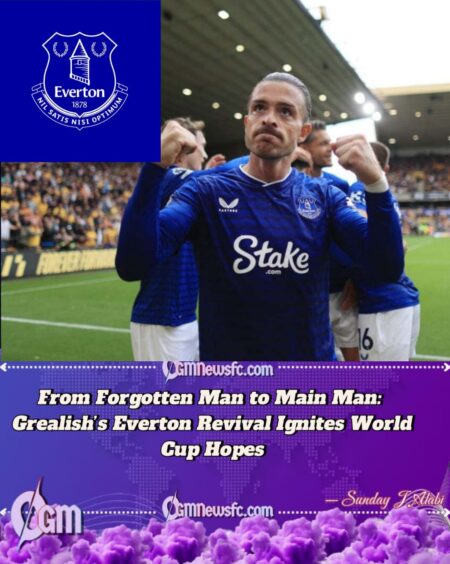
Jack Grealish’s emotional celebration at Molineux told the story of a player reborn. After inspiring Everton to a thrilling 3-2 victory over Wolverhampton Wanderers, the 29-year-old midfielder vaulted the advertising hoarding to embrace the travelling fans like a conquering hero. The scenes were reminiscent of a rock star greeting adoring crowds, with supporters desperately stretching to touch the man who had just delivered another match-winning performance.
This was Grealish’s triumphant return to the West Midlands, the region where he first made his name at Aston Villa. His display against Wolves was nothing short of sensational – two more assists, 60 touches, 35 passes at 91.4% accuracy, and seven free-kicks won for his team. Only a fine save from Jose Sa denied him a goal to cap off a perfect afternoon.
The contrast with his recent Manchester City experience could not have been starker. These were the moments Grealish had almost forgotten existed during those long spells warming the Etihad bench. Now, wearing Everton blue, he was once again the focal point, the difference-maker, the player fans paid to watch.
Moyes’ Masterstroke: ‘Better Than I Thought’
David Moyes has never been one for hyperbole, but even the experienced Scottish manager couldn’t hide his admiration for Grealish’s immediate impact. “He is even better than I thought,” Moyes declared after watching his new signing orchestrate another victory. The praise from a manager known for his measured assessments carries significant weight.
Moyes identified exactly what Grealish needed to rediscover his best form: “He probably needs a bit of love and attention. He needs the games as well.” This psychological insight has proven crucial to Grealish’s revival. At City, the player had become just another squad option; at Everton, he’s the main attraction, the creative heartbeat around which the team’s attacking play revolves.
The Everton boss was quick to deflect personal credit for the transformation, insisting: “It’s nothing to do with me, let me tell you – it’s all to do with Jack and his own mentality to be better.” However, Moyes’ tactical setup and man-management have clearly provided the perfect environment for Grealish to flourish. The manager’s demand for “elite players” to match the club’s “elite new stadium” has been spectacularly fulfilled.
Statistical Renaissance: Numbers Tell the Story
The stark contrast between Grealish’s Manchester City struggles and his Everton renaissance is best illustrated through cold, hard statistics. In his previous two Premier League campaigns at City, hampered by limited playing time and tactical restrictions, Grealish managed just two assists in total. Three games into the new season at Everton, he has already doubled that tally with four assists.
His productivity has been remarkable since joining the Toffees on a season-long loan. Grealish became the first Everton player to register two or more assists in consecutive Premier League appearances, following up his double against Brighton with another stellar showing at Wolves. His four assists in 2025-26 already represent the second-highest total for any Everton player since the start of last season, despite playing over 1,000 minutes fewer than leading creator Dwight McNeil.
The eye test confirms what the numbers suggest. Grealish’s involvement in Iliman Ndiaye’s crucial goal that put Everton 2-1 ahead at Wolves demonstrated his ability to influence play beyond direct statistical contributions. His movement, vision, and technical ability have elevated the entire team’s attacking threat, providing the creative spark that had been missing from Everton’s play.
The Maverick Factor: What Grealish Brings to Everton
Former Liverpool defender Stephen Warnock perfectly encapsulated Grealish’s unique value: “We often talk about not having mavericks in the team. Jack Grealish is a maverick, but he can play in a system and he can work hard for the team.” This balance between individual brilliance and collective responsibility has been the key to his Everton success.
The transformation extends beyond pure technique to attitude and application. Warnock noted how “the home fans last week at the new stadium were on their feet because he was battling for everything – he’s got that side in him as well.” This work ethic, combined with his natural flair, has endeared him to the Goodison faithful who appreciate players willing to fight for the shirt.
BBC Match of the Day pundit Danny Murphy praised the broader impact: “The forward line was creative and brave. Not just Jack, and the Everton fans must be loving it.” Grealish’s presence has lifted those around him, creating a more adventurous and entertaining brand of football that has reinvigorated both players and supporters. His ability to win free-kicks, draw fouls, and create space for teammates adds multiple dimensions to Everton’s attack.
World Cup Dreams: Can Grealish Force His Way Back?
Perhaps the most intriguing subplot of Grealish’s revival concerns his international future. With 39 caps and four goals for England, he remains a proven performer at the highest level, yet Thomas Tuchel’s recent squad selections suggest he faces an uphill battle to make the World Cup squad. The German coach’s explanation was diplomatic but telling: “Big players and big personalities, always in the mix. I know both are desperate but in this camp we decided for… Rashy [Marcus Rashford] and Ebs [Eberechi Eze]. The competition is up.”
Grealish’s last meaningful England involvement came under interim boss Lee Carsley, when he scored in a 2-0 win over the Republic of Ireland in Dublin. Since then, just two appearances for the Three Lions tell their own story. His absence from squads for World Cup qualifiers against Andorra (ironically at his former club Aston Villa) and Serbia represents a significant blow to his international ambitions.
However, with the World Cup still nine months away and Grealish’s club form reaching new heights, the door may not be completely closed. His current trajectory at Everton – where he’s playing regularly, creating chances, and rediscovering the form that made him England’s most expensive player – provides the platform for an international comeback. If he maintains this level of performance throughout the season, Tuchel may find it impossible to ignore a player who brings a unique skill set to the England setup. The next few months could determine whether Grealish’s remarkable revival extends from Merseyside to the world stage.