







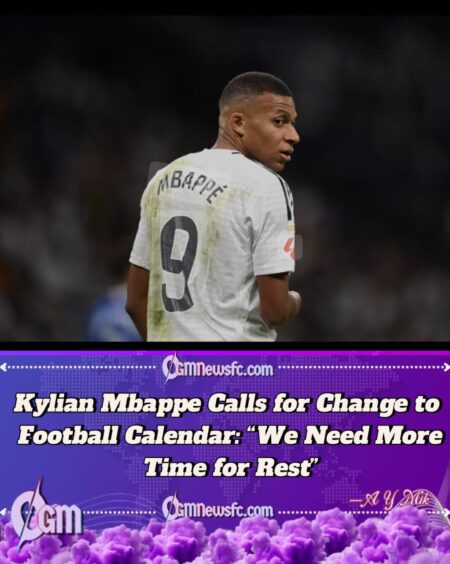
Real Madrid forward Kylian Mbappe has reignited the debate over football’s punishing schedule, openly criticizing the sport’s governing bodies for failing to prioritize player welfare. The French captain warned that the current football calendar is “unsustainable,” adding his influential voice to a chorus of stars and managers calling for change.
The 25-year-old striker admitted that his perspective on the issue had “evolved” after suffering a bout of gastroenteritis during last season’s Club World Cup. For Kylian Mbappe, the experience highlighted the risks of pushing players to their physical limits. He now insists that football must find a way to protect its biggest assets—the players—by reducing the number of games and increasing recovery time.
With the Champions League expanding and FIFA introducing a bigger Club World Cup, fixture congestion has reached unprecedented levels. Mbappe’s comments underscore the growing concern that the pursuit of more competitions and revenue is compromising performance, entertainment, and health.
Health Scare Shifts Kylian Mbappe’s Outlook
In reflecting on his illness,Kylian Mbappe acknowledged how a personal health setback changed his view on workload and recovery. He revealed that before the incident, he might have accepted the demands as “part of the job.” However, the hospitalization forced him to reconsider what it means to sustain top performance over an exhausting campaign.
“I don’t know if we’re ready to play a 60-game season. I’ve never seen a player perform at the highest level across 60 matches,” Mbappe explained. “Last season I had gastroenteritis. That kind of virus made me think differently. We need more time for rest, for vacations.”
This revelation is significant, given that Mbappe has built a reputation as one of the most durable and explosive forwards in world football. For a player at his peak to admit fatigue suggests the calendar has already pushed even elite athletes to their limit.
The Problem With a 60-Game Season
Kylian Mbappe’s warning shines a spotlight on a wider structural problem in football. Between domestic leagues, cups, continental competitions, and international fixtures, many top players are required to play between 55 and 65 matches per season. For those advancing deep into tournaments, the calendar barely allows a few weeks’ rest before the next campaign begins.
The French superstar dismissed the argument that high wages justify extreme demands. “The answer is always that we’re making a lot of money, so we must play,” he said. “But the reality is different. Fatigue, injuries, and performance levels all suffer when there is no recovery time.”
The relentless schedule not only risks shortening careers but also threatens to diminish the quality of football. Fans may enjoy more matches, but as Mbappe noted, the result is often lower-intensity games, less excitement, and players struggling to deliver their best.
Pressure on FIFA, UEFA, and Clubs
Kylian Mbappe’s comments will increase pressure on FIFA and UEFA, the governing bodies responsible for international scheduling. Both organizations have faced criticism for expanding tournaments despite players and coaches consistently warning of burnout.
UEFA’s revised Champions League format, which introduces a league-style phase with more matches, is already controversial. FIFA’s push for an expanded Club World Cup has only intensified concerns. Critics argue that rather than reducing strain, governing bodies are adding more fixtures for commercial gain.
Players’ unions, such as FIFPro, have long called for a restructured calendar. With stars like Mbappe now speaking publicly, the movement for reform gains credibility. Governing bodies may soon find it impossible to ignore the demands of those at the heart of the sport.
France Relying on Their Captain Amid Debate
Despite his concerns about the congested schedule, Mbappe remains focused on leading France in their World Cup qualifying campaign. Les Bleus face Ukraine on Friday and then meet Iceland on Tuesday, September 9th. Both games are crucial as France look to secure their spot in the 2026 World Cup.
For manager Didier Deschamps, Mbappe’s leadership on and off the pitch is invaluable. His willingness to raise difficult issues reflects his growing maturity as captain. The fact that he continues to deliver at the highest level despite these pressures only amplifies his message about the toll the calendar takes.
Fans will be eager to see how Mbappe performs in these qualifiers, but his remarks serve as a reminder that even the brightest stars need adequate rest to shine consistently.
The Debate Over Football’s Future Intensifies
The discussion over the Kylian Mbappe football calendar comments is part of a larger conversation about the direction of modern football. Should the game prioritize revenue and global expansion, or should it safeguard player health and long-term performance?
Kylian Mbappe’s stance makes it clear where he stands: without reform, the sport risks damaging both players and the spectacle itself. “Everyone must find a solution,” he stressed. “In the end, everyone will win. There will be higher-level matches. We love football and we love our jobs.”
As more top professionals echo his concerns, the pressure on decision-makers is only set to grow. The coming years could define how football balances its commercial ambitions with the fundamental need to protect the players who make the sport what it is.