









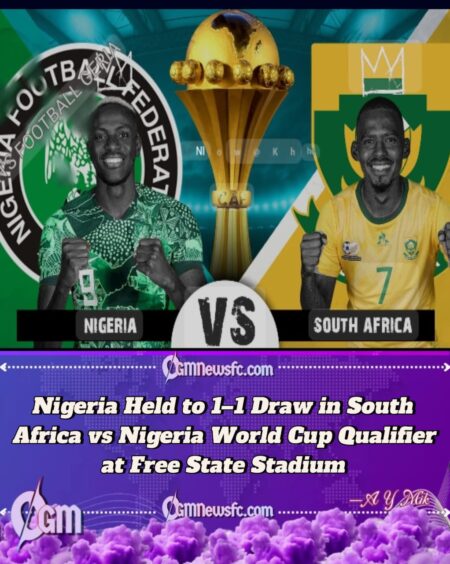
The highly anticipated South Africa vs Nigeria World Cup qualifier at the Free State Stadium in Bloemfontein began with both sides battling for early dominance. The energy inside the stadium was electric, as Bafana Bafana looked to capitalize on their home advantage against a struggling Super Eagles side desperate for points.
South Africa settled into the game quicker, moving the ball with purpose and forcing Nigeria to defend deep in their half. Their persistence was rewarded in the 25th minute when William Troost-Ekong, Nigeria’s captain, mistakenly diverted a dangerous cross into his own net. The own goal stunned the Super Eagles and gave the home fans a moment to celebrate.
For Nigeria, the early setback was a painful reminder of their shaky start in the World Cup qualification campaign. Troost-Ekong, normally a pillar of defensive stability, was left frustrated, while the rest of the team faced the task of regrouping quickly.
Bassey’s Equaliser Restores Hope for the Super Eagles
Despite conceding first, Nigeria refused to fold. Finidi George’s men pushed forward with urgency, seeking a response before halftime. The Super Eagles attacked through the wings, with Ademola Lookman proving particularly lively on the left flank.
In the 44th minute, Nigeria finally found their breakthrough.
Lookman whipped in a teasing cross that caused chaos in the South African defense. Defender Calvin Bassey reacted quickly and bundled the ball over the line, beating the Bafana Bafana goalkeeper to level the score.
The equaliser was a huge morale boost for Nigeria, shifting momentum at a crucial stage of the game. The Super Eagles went into the halftime break relieved, knowing they had avoided going into the dressing room with a deficit. For South Africa, it was a frustrating blow after controlling much of the first half.
Tactical Changes Shape a Fierce Second Half
When play resumed, both teams intensified their search for a winner. Nigeria’s coach Finidi George introduced fresh legs, bringing on Tolu Arokodare for Cyriel Dessers to add more physical presence in attack. He was also forced to replace the injured Troost-Ekong with Bruno Onyemaechi, reshuffling the backline.
South Africa, meanwhile, kept pushing forward in numbers, sensing that a second goal could break Nigeria’s resolve. Their forwards tested Stanley Nwabali on several occasions, but the Nigerian goalkeeper was equal to the task, making key saves to keep the scoreline intact.
The match turned into a tactical chess game, with both sides trying to exploit spaces without leaving themselves exposed at the back. Each substitution added new dynamics, but neither team could find the decisive breakthrough.
Missed Chances and Defensive Resilience
As the clock ticked down, both South Africa and Nigeria had opportunities to clinch victory. Bafana Bafana launched wave after wave of attack, roared on by their fans. Yet, their finishing lacked precision, with shots flying over the bar or being comfortably dealt with by Nwabali.
Nigeria, on the other hand, tried to rely on counterattacks. With pace from Lookman and strength from Arokodare, they attempted to stretch South Africa’s defense. However, the final ball often let them down, and chances fizzled out before they could seriously trouble the opposition goalkeeper.
The defensive resilience of both sides became the defining theme of the final minutes. While South Africa pressed harder, Nigeria’s backline stood firm, determined not to concede a late goal that could have all but ended their qualification hopes.
Final Whistle Confirms 1–1 Draw in Bloemfontein
When the referee blew the final whistle, the scoreboard read South Africa 1–1 Nigeria, a result that reflected the balance of the contest. Troost-Ekong’s unfortunate own goal and Bassey’s equaliser ensured the spoils were shared in Bloemfontein.
For South Africa, the draw keeps them at the top of Group C, maintaining their strong position in the race for the 2026 FIFA World Cup. The home fans were satisfied with their team’s effort, even though they missed the chance to open an even bigger gap at the summit.
For Nigeria, however, the draw leaves them under pressure. The Super Eagles remain six points behind South Africa, meaning their qualification hopes are hanging by a thread. With limited games left to play, every fixture will now feel like a final for Finidi George’s men.
What the Result Means for Nigeria’s World Cup Qualification
The implications of the South Africa vs Nigeria World Cup qualifier go far beyond the single point earned. Nigeria’s inability to secure a victory means they now face an uphill task in Group C. The gap to South Africa is significant, and other group rivals are also vying for qualification.
Coach Finidi George has been under growing scrutiny, with fans demanding more clinical finishing and sharper tactics. The draw shows the team’s resilience but also highlights weaknesses in converting chances and maintaining composure under pressure.
For the Super Eagles, the road to the 2026 World Cup is far from over, but it has become narrower. They will need to win their remaining fixtures and hope results elsewhere swing in their favor. The resilience shown in Bloemfontein offers a glimmer of hope, but without victories, the dream of another World Cup appearance could slip away.