










The Emirates Stadium had barely finished its pre-match crescendo when Erling Haaland reminded everyone why he’s considered football’s most lethal weapon. Nine minutes was all it took for the Norwegian goal machine to silence 60,000 Arsenal faithful with a clinical finish that bore all the hallmarks of Manchester City’s ruthless efficiency. The goal came via a textbook counter-attack, orchestrated by Tijjani Reijnders whose assist was as precise as a Swiss watchmaker’s craft.
What made the strike particularly galling for Arsenal supporters was its sheer inevitability. Haaland, who seems to score goals with the same casual ease that most people make toast, exploited a momentary lapse in Arsenal’s defensive concentration. The goal highlighted City’s ability to punish opponents even when they’re not dominating proceedings – a quality that has made them the benchmark for Premier League excellence under Pep Guardiola.
The early setback threatened to derail Arsenal’s carefully laid plans, but rather than crumbling under pressure, Mikel Arteta’s side showed the kind of resilience that suggests they’ve learned from previous encounters with their title rivals. While City celebrated, Arsenal began plotting their response with the patience of a chess grandmaster.
Arsenal’s Possession Paradise Falls Short
If football matches were decided by possession statistics and pass completion rates, Arsenal would have won this encounter by a country mile. The Gunners dominated the ball for large periods, playing with the kind of intricate passing patterns that would make Barcelona’s tiki-taka pioneers weep with joy. Their 67.2% possession figure told the story of a team that had clearly done their homework on how to frustrate Guardiola’s usually ball-hungry City side.
However, as any seasoned football observer will tell you, possession without penetration is like owning a Ferrari but never taking it out of first gear. Arsenal’s midfield maestros orchestrated wave after wave of attacks, probing City’s defensive structure with the persistence of a woodpecker attacking an oak tree. Yet for all their huffing and puffing, they struggled to create clear-cut chances that would genuinely trouble City’s goalkeeper.
The frustration was palpable among the Emirates faithful, who watched their team play some genuinely delightful football without the end product to match. It was a classic case of style over substance, beautiful to watch but ultimately futile without goals to show for their efforts. The half-time whistle brought a collective sigh from the stands – appreciation for the performance mixed with exasperation at the scoreline.
Guardiola’s Tactical Masterclass Meets Its Match
In a development that would have shocked anyone who suggested it before kickoff, Pep Guardiola’s Manchester City recorded their lowest ever possession figure under the Spanish tactician’s reign – a mere 32.8%. This statistic alone tells the story of a manager who abandoned his usual possession-obsessed philosophy in favor of pragmatic efficiency. It was vintage Guardiola adaptation, proving that even the most dogmatic coaches can evolve when circumstances demand it.
City’s approach was reminiscent of a heavyweight boxer who decides to fight on the counter-attack rather than bullying their opponent into submission. They sat deeper than usual, allowed Arsenal to have the ball in non-threatening areas, and struck with lethal precision when opportunities presented themselves. It was a tactical gamble that almost paid off completely, showcasing Guardiola’s tactical flexibility when facing opponents he respects.
The sight of Manchester City defending with ten men behind the ball would have been unthinkable just a few seasons ago, but it demonstrated their manager’s willingness to sacrifice aesthetic beauty for practical results. This wasn’t the free-flowing City that usually suffocates opponents with endless possession – this was a streetwise, results-oriented outfit that knew exactly when to pick their moments.
Martinelli’s Moment of Magic Saves the Day
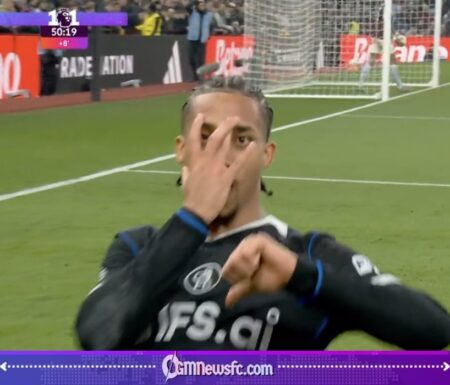
Just when it seemed Arsenal were destined for another painful lesson in the art of not taking chances, Gabriel Martinelli produced a moment of pure footballing poetry that will be replayed until the end of time. The Brazilian’s 93rd-minute equalizer wasn’t just a goal – it was a masterpiece of timing, technique, and audacity that transformed despair into delirium in the space of a few seconds.
The goal came from seemingly nothing, as Eberechi Eze threaded a pass through City’s defense that would have made Xavi himself nod in approval. Martinelli’s response was instinctive and brilliant, racing through on goal before producing a delicate chip over the goalkeeper that combined ice-cool composure with Brazilian flair. It was the kind of finish that separates good players from great ones – a moment where technique, vision, and nerve converge to create something unforgettable.
What made Martinelli’s intervention even more special was the context. Having been relegated to the bench for much of the match, the Brazilian came on as a substitute with the weight of expectation on his shoulders. Rather than wilting under pressure, he embraced the moment with the confidence of a player who has always believed in his ability to influence big games. His celebration – a mixture of relief, joy, and vindication – perfectly captured what this goal meant to both player and club.
Title Race Implications and Looking Ahead
This draw leaves Arsenal in second place, maintaining a three-point cushion over Manchester City while trailing leaders Liverpool by five points. While neither side will be entirely satisfied with sharing the spoils, the result probably suits Arsenal better than their visitors. For a team that has often struggled in big matches against their title rivals, earning a point against City through sheer determination and late heroics suggests a growing maturity in their approach to these crucial encounters.
Mikel Arteta’s achievement in remaining unbeaten against Guardiola for five consecutive league matches cannot be understated. The Spanish manager has established himself as the only coach to consistently frustrate his former mentor in domestic competition, suggesting Arsenal have finally cracked the code of how to compete with City’s machine-like efficiency. This psychological breakthrough could prove invaluable as the season progresses.
For Manchester City, the result represents a missed opportunity to close the gap on Liverpool while potentially denting Arsenal’s confidence. However, Guardiola’s tactical adaptability and his team’s ability to grind out results even when not at their fluent best demonstrates why they remain dangerous title contenders. The fact that they nearly secured all three points while playing their most un-City-like football under Guardiola shows their evolution as a more versatile, pragmatic outfit. As both teams lick their wounds and prepare for their next challenges, this draw feels like the kind of result that could define the broader narrative of what promises to be a fascinating title race.