










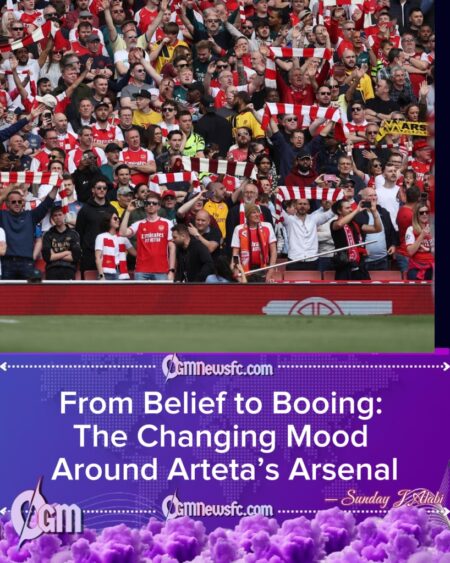
Arsenal’s rise back to the summit of English football has been shaped not only by tactics, transfers and performances, but by the evolving relationship between the team and its supporters at the Emirates Stadium. Under Mikel Arteta, the club rebuilt its identity during a period marked by empty stands, before rediscovering a powerful bond with fans when football returned to normal. However, as expectations have risen alongside results, that connection has come under strain, culminating in moments of frustration and boos at full time despite Arsenal’s strong league position.
The history of the Emirates era, defined by near-misses and rebuilding cycles, has created an atmosphere where progress is no longer enough. For a side now leading the Premier League, emotional investment has shifted from hope to demand, leaving Arsenal navigating the delicate balance between ambition and enjoyment.
From Reconnection to Collective Momentum
Arteta’s early reign coincided with the Covid-19 pandemic, a period when matches were played behind closed doors and the emotional link between players and supporters was largely absent. It was not until the 2021–22 season, when fans returned permanently to stadiums, that Arsenal felt whole again. The renewed presence in the stands brought a surge of energy that visibly lifted performances on the pitch.
That season produced defining moments that underlined the power of unity. Against Wolves, an early error from Gabriel gifted the visitors a goal, but relentless backing from the crowd helped push Arsenal to a late comeback victory. Similarly, when William Saliba scored an own goal against Leicester City in just his second appearance, the Emirates responded with encouragement rather than criticism. The ovation steadied the young defender, and Arsenal went on to secure a 4–2 win, a night Arteta described as unlike anything he had previously witnessed in football.
Those instances reflected a club rediscovering belief together. Supporters, players and staff fed off one another, creating momentum that laid the foundations for Arsenal’s transformation into genuine title contenders.
Expectation, Tension and the Changing Atmosphere
As Arsenal’s performances improved, so too did expectations. Three consecutive second-place finishes have sharpened emotions, replacing excitement with a sense of urgency and impatience. The atmosphere that once felt uplifting has increasingly been shaped by tension, particularly in moments of uncertainty.
This season has offered several examples of that shift. During the recent defeat to Manchester United, hesitation on the ball was met with audible groans from the stands, highlighting a disconnect between what supporters want to see and what players feel able to do under pressure. Similar misalignments have occurred at other points in the campaign, including matches Arsenal ultimately won, but only narrowly.
Arteta has acknowledged the boos as part of modern football’s demands, stressing that the team must continue to give its best regardless of reactions. Yet the underlying issue remains a shared one. The energy transmitted from the pitch influences the crowd, just as the mood in the stands shapes decision-making and confidence on the field. When frustration replaces encouragement, that cycle can become difficult to break.
Risk, Reality and the Road Ahead of Arsenal
Former Arsenal captain Patrick Vieira has pointed to a perceived lack of risk-taking as a source of supporter frustration, noting that boldness was a defining feature of Arteta’s earlier teams. However, the manager argues that Premier League football has evolved, with opponents now better prepared and more cautious, often closing space from the opening minute and forcing matches into predictable patterns.
Despite these challenges, Arsenal remain in a strong position. They are four points clear at the top of the table, boast an excellent home record, and have lost at the Emirates for the first time this season only recently. Tension, even in victory, reflects how far expectations have climbed rather than a collapse in standards.
The real challenge may not be managing expectations, but redefining them. Beyond the pursuit of three points, there is a need for clarity about how success should feel along the way. If players and supporters can reconnect around shared purpose rather than shared anxiety, the remainder of the season could become a platform for progress rather than pressure.