






Arsenal left it late to secure a dramatic 2–1 victory over Wolves at the Emirates Stadium, but the manner of the win raised fresh questions about their attacking cohesion. All three goals arrived in the final 20 minutes, with the decisive moment coming deep into stoppage time, underlining just how narrow the margins were against a side rooted to the bottom of the Premier League table.
A fortuitous own goal by Wolves goalkeeper Sam Johnstone, deflected in from a Bukayo Saka corner, handed Arsenal the lead. That advantage was wiped out late on when Tolu Arokodare struck to level the contest in the dying moments of normal time. Just when the match appeared to be slipping away, Yerson Mosquera inadvertently nodded the ball into his own net in the fourth minute of injury time, rescuing all three points for the hosts.
Despite the dramatic ending, Arsenal were far from convincing. The Gunners dominated possession but lacked fluency and precision in key areas, forcing manager Mikel Arteta to acknowledge that the performance fell short of the standards expected of a title-chasing side.
Arteta’s Honest Assessment of a Below-Par Display
Arteta did not shy away from criticising his team’s overall showing, admitting Arsenal made life unnecessarily difficult for themselves. He highlighted missed opportunities in the first half, including a glaring chance for Gabriel Martinelli from close range, as evidence that the match could have been put to bed much earlier.
The Arsenal manager pointed to poor decision-making in attacking areas, noting that while his side frequently entered dangerous positions, they failed to translate those moments into clear-cut chances. According to Arteta, the lack of composure and precision in the final third prevented Arsenal from asserting control over the game.
Defensively, Arteta was equally frank. He described a brief but costly lapse in concentration during the second half as “not acceptable,” stressing that Wolves scored with their first meaningful attempt after Arsenal had previously kept them at bay. For Arteta, the fact that the win ultimately relied on a chaotic individual moment rather than sustained dominance was a clear warning sign.
Gyokeres Isolated by Wolves’ Low Block
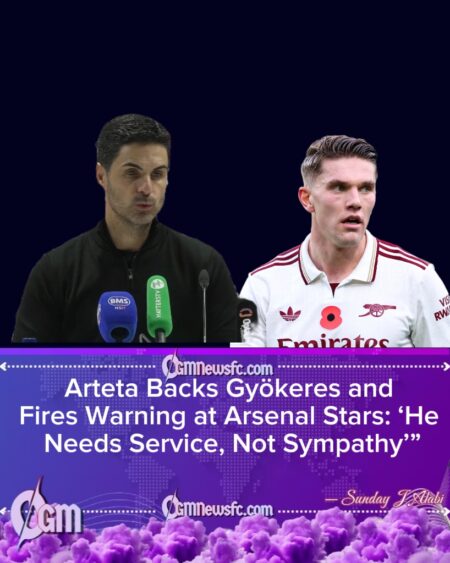
Much of the post-match focus centred on Viktor Gyokeres, who endured a frustrating evening leading the line. Wolves adopted a deep defensive low block, compressing space in and around the penalty area and limiting the striker’s involvement. Gyokeres managed just 15 touches during his 81 minutes on the pitch, reflecting how little service reached him.
From the stands, Gyokeres’ quiet performance invited scrutiny, particularly given Arsenal’s struggles to create from open play. However, Arteta was quick to contextualise the striker’s display, pointing to the tactical setup of the opposition and the team’s overall lack of sharpness.
Rather than singling out Gyokeres, Arteta suggested that Arsenal’s build-up play and delivery into the box were the real issues. Against a compact defence, timing, speed and accuracy become critical — qualities Arsenal did not consistently show on the night.
Arteta Sends a Clear Message to His Attackers
In a pointed defence of his striker, Arteta effectively shifted part of the responsibility onto Gyokeres’ teammates. He stressed that the role of a No.9 is a collaborative one, dependent on the quality and speed of service provided by those around him.
Arteta explained that Gyokeres found himself in promising positions on multiple occasions, but the ball failed to arrive quickly or precisely enough to capitalise. For a striker operating in tight spaces, those marginal delays can be the difference between scoring and being rendered anonymous.
While acknowledging that Gyokeres must continue to demand the ball and impose himself, Arteta praised his work rate and intent. The message was clear: Arsenal must improve their collective attacking execution if they want their striker to thrive, rather than expecting him to produce goals in isolation.
Injury Concerns Cloud Late Drama
The only significant downside to the victory was an injury to Ben White, who was forced off with what appeared to be a hamstring problem. Arteta confirmed after the match that the issue would be assessed further in the coming days.
While the extent of the injury remains unclear, any absence for White would be a concern given Arsenal’s demanding fixture schedule and his importance to their defensive structure. Arteta indicated that clarity would come following further medical checks, likely within 48 hours.
As Arsenal celebrated a dramatic win, the performance itself served as a reminder of the fine margins in the Premier League. Arteta’s post-match comments reflected both relief at the result and a clear demand for improvement — particularly in how his side supports and supplies their central striker.