










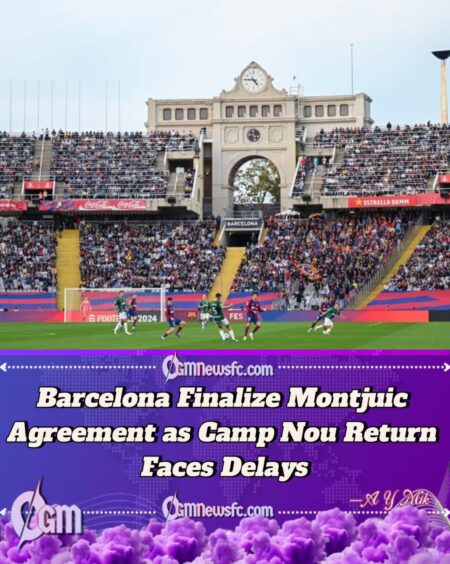
Barcelona’s ongoing Camp Nou uncertainty has forced the club to activate a backup plan to avoid being left without a stadium during a crucial part of the season. While renovation works at the Spotify Camp Nou remain in progress, the Catalan giants have reached an agreement with Barcelona de Serveis Municipals (BSM) to continue using the Estadi Olímpic Lluís Companys, popularly known as Montjuic, until February 2025.
The deal ensures that the Blaugrana will not be left scrambling for alternatives should the anticipated September return to Camp Nou face delays. This decision reflects Barcelona’s proactive approach to securing stability during a turbulent transition period, especially as the club prepares for both La Liga and the revamped UEFA Champions League format.
Why the Agreement with Montjuic Matters
The Montjuic extension is not just a temporary measure—it is a vital safety net for Barcelona during the Camp Nou uncertainty. With UEFA requiring clubs to play all group-stage matches at the same stadium, the deal guarantees that Barcelona will host all four of their Champions League home games at Montjuic if needed. It also covers a possible playoff round, depending on the club’s group stage performance.
This arrangement provides peace of mind for the coaching staff, players, and supporters alike. Suppliers and service providers have also been instructed to remain on standby, ensuring Montjuic can be activated at short notice. The agreement signals that Barcelona are determined to remain competitive in Europe while navigating logistical challenges at home.
Camp Nou Licence Issues and City Council Obstacles
Barcelona’s hopes of returning to Camp Nou in August suffered a blow when the City Council denied the Licence of First Occupancy in late July. This decision prevented the Joan Gamper Trophy, scheduled for August 10, from being played at the iconic stadium. The setback highlighted the complexity of the renovation process and deepened concerns over the timeline of Camp Nou’s reopening.
President Joan Laporta has consistently maintained that returning to Camp Nou is the club’s number one priority. However, the refusal by the City Council left the club with no choice but to establish a “Plan B.” The Montjuic extension now provides a safety cushion, but it also raises questions about whether Barcelona can truly stick to their September target for reopening Camp Nou.
The September Valencia Clash: A Logistical Puzzle
One of the most pressing issues in Barcelona’s calendar is their scheduled La Liga home match against Valencia on September 13 or 14. Ideally, this fixture would be hosted at Camp Nou, but with the stadium’s clearance still pending, the situation remains unresolved. Montjuic is not an option either, as a Post Malone concert scheduled for September 12 will leave the pitch in poor condition.
If Camp Nou is unavailable, Barcelona face two alternatives: playing the match behind closed doors at Camp Nou without full approval, or moving the game to another La Liga-approved venue.
Girona’s Estadi Montilivi has been cited as a feasible option, but officials stress that no arrangements have been made. Interestingly, Espanyol’s Cornella-El Prat has not been considered at all, underlining the rivalry-driven politics of Catalan football.
UEFA’s Firm Stance on Champions League Scheduling
Barcelona’s uncertainty extends into the European stage as well. The club requested UEFA to schedule their first Champions League group match away from home between September 16–18, hoping to buy extra time before hosting their first European night at Camp Nou or Montjuic. However, UEFA rejected the proposal, insisting that fixture scheduling must follow the draw.
This means Barcelona’s Champions League fate—and whether their first game will be at Montjuic or Camp Nou—will be determined when the draw takes place on August 28 in Monaco. The official fixture calendar will be confirmed on August 30, leaving very little room for Barcelona to maneuver. The rejection underscores UEFA’s strict competition regulations, leaving the Catalan club at the mercy of the draw.
What the Montjuic Extension Means for Barcelona Fans
For supporters, the extension of Montjuic during the Camp Nou uncertainty is a bittersweet development. On one hand, it guarantees continuity and ensures fans will have a venue to support their team in the Champions League group stage. On the other, it prolongs the wait to return to the historic Camp Nou, a venue that embodies the soul of FC Barcelona.
The arrangement also highlights the financial and logistical challenges the club faces in balancing renovation work with competitive obligations. Joan Laporta’s administration must now carefully manage fan expectations, player performance, and operational costs until Camp Nou is fully ready. In the meantime, Montjuic remains the club’s trusted backup, ensuring Barcelona are never left without a stage to perform.