








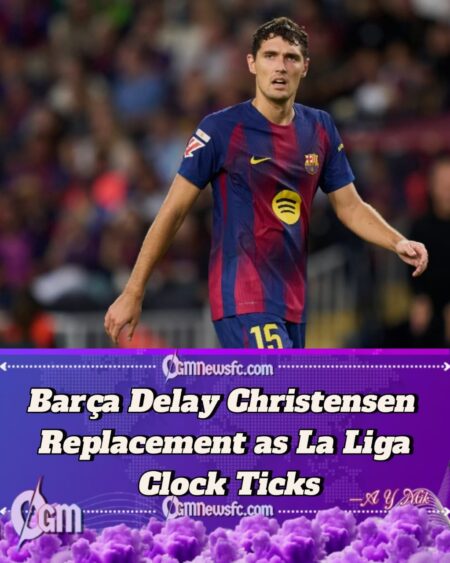
Bad luck has struck Andreas Christensen once again, and this time it has arrived with surgical precision. The Danish defender suffered a partial tear of the anterior cruciate ligament (ACL) in his left knee during a training session in December, an injury expected to keep him out for around four months. For Barcelona, already juggling fitness concerns, it was a familiar but unwelcome headline.
Christensen’s absence is not just a medical issue; it is a structural one. Since arriving at Camp Nou, the defender has delivered calm performances when fit, but injuries have increasingly disrupted his rhythm. This latest setback only deepens concerns over his availability during the business end of the season.
While the player begins a careful rehabilitation process, Barcelona’s sporting department has been forced into yet another January balancing act—one involving regulations, finances, and timing.
La Liga Rules Offer a Lifeline — On Paper
Under La Liga’s long-term injury regulations, clubs are permitted to sign and register a replacement if a player is ruled out for four months or more. The rule allows the affected club to use up to 80% of the injured player’s salary space to register a replacement for the remainder of the season.
In theory, this provision hands Barcelona a clear solution. In practice, it opens a familiar can of worms. Salary caps, registration limits, and financial fair-play concerns mean that using the rule is not as straightforward as signing a name and printing a shirt.
Barcelona must first submit a detailed medical report to La Liga for approval. Only then can the club officially activate the replacement mechanism—something Barça are notably delaying.
Why Barcelona Are Hesitating
Despite being eligible to move quickly, Barcelona have chosen caution. Reports indicate the club has delayed sending Christensen’s medical documentation to La Liga while they evaluate potential defensive options and financial consequences.
The hesitation is strategic. Once the medical report is approved, the clock starts ticking, and the club must act decisively. Barcelona want clarity on who they would sign before committing to the process, rather than triggering the rule and scrambling under pressure.
In short, the club is trying to avoid repeating past January mistakes—when urgency led to signings that solved one problem while creating three others.
Defensive Depth Under the Microscope
Christensen’s injury has exposed Barcelona’s defensive depth at a delicate moment. With Ronald Araújo also dealing with fitness issues and a demanding fixture list ahead, the burden has fallen on younger and versatile options.
Teenage centre-back Pau Cubarsí has impressed with maturity beyond his years, while Jules Koundé and Eric García have provided cover across the back line. However, relying heavily on youth and positional flexibility is a risky long-term strategy, especially in La Liga’s title race and European competition.
The question facing Barcelona is not whether they can survive without Christensen—but whether they should take that gamble.
Flick, Deco, and the Waiting Game
Head coach Hansi Flick has struck a supportive tone publicly, emphasizing Christensen’s recovery over transfer panic. Behind the scenes, discussions with sporting director Deco continue as the club assesses January options.
There is also an added layer of uncertainty regarding Christensen’s future. Despite his injury record, reports suggest the club’s hierarchy remains open to renewing his contract, believing his quality justifies patience.
For now, Barcelona are playing the waiting game—hoping internal solutions hold while weighing whether external reinforcements are worth the financial stretch.
A Decision That Could Shape the Season
Barcelona’s delay is not indecision; it is calculation. Trigger the La Liga rule too early, and the club risks a misfit signing. Wait too long, and injuries could expose a thin squad at the worst possible moment.
With deadlines approaching, the coming weeks will determine whether Barcelona trust their existing depth or dip cautiously into the market. Either way, Christensen’s injury has once again reminded the club that in modern football, planning is only effective until the next training session.