






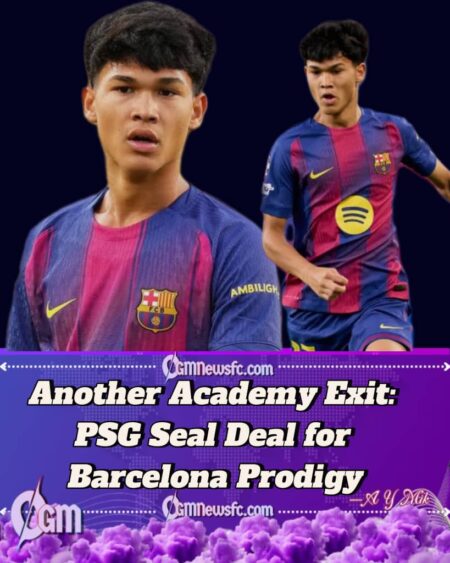
Barcelona’s academy has long been football’s most reliable talent factory, but even the finest production lines occasionally lose a prized piece. Pedro Fernández, better known as ‘Dro’, one of La Masia’s most talked-about midfield prospects in recent years, is set to join Paris Saint-Germain after the French champions activated his €6 million release clause.
The move, first confirmed by transfer insider Florian Plettenberg, is now regarded as a done deal, with full agreement reached between PSG and the player. For Barcelona, it is another reminder that in modern football, potential alone is no longer enough to keep young stars patient.
Deal Done: PSG Move Fast and Decisive
Once PSG decided to act, events moved quickly. The Ligue 1 champions triggered Dro’s €6 million release clause directly, leaving Barcelona with no room to negotiate or delay proceedings. In today’s transfer market, release clauses are the ultimate checkmate—and PSG played it without hesitation.
Personal terms were swiftly agreed, and the midfielder is expected to sign a long-term contract at the Parc des Princes, reportedly stretching into the end of the decade. From Paris’ perspective, the fee represents a low-risk, high-upside investment in elite technical talent.
For Dro, the clarity of the offer mattered. PSG presented a concrete plan, not just promises, and that decisiveness proved crucial in sealing the move.
Pedro Fernández: Why Dro Decided to Leave Barcelona
Despite being highly rated internally, Pedro Fernández struggled to secure consistent first-team opportunities at Barcelona. Competition in midfield was fierce, and while coaches praised his intelligence and technical quality, his appearances were limited and often fleeting.
Behind the scenes, discussions about contract renewal and development pathways dragged on. While Barcelona insisted his chance would come, Dro and his representatives felt the window for growth was narrowing rather than opening.
In the end, the release clause provided a clean exit. Rather than wait for opportunity, Dro chose to chase it—an increasingly common choice among Europe’s brightest teenagers.
Luis Enrique’s Familiar Voice
One of the most influential figures in the transfer was Luis Enrique. The PSG manager, with deep roots at Barcelona, knows La Masia’s philosophy intimately and understands the pressures facing young talents trying to break through.
Reports suggest Luis Enrique personally outlined how Dro would fit into PSG’s long-term midfield plans, framing the move as a developmental step rather than a leap into the unknown. That reassurance, delivered by a coach who speaks the same footballing language, carried weight.
When familiarity meets opportunity, decisions become easier—and Paris suddenly felt like less of a gamble.
Barcelona’s Reaction: Frustration and Reflection
At Camp Nou, the reaction has been restrained but telling. Officials are understood to be unhappy about losing a player of Dro’s profile for such a modest fee, particularly one developed entirely within the club’s academy.
The departure has reignited debate around youth integration at Barcelona. La Masia continues to produce elite talent, but competition, financial pressures, and short-term demands often limit opportunities for sustained growth at senior level.
For fans, it is another uncomfortable reminder: producing world-class prospects is one thing; convincing them to stay is another.
Who Is ‘Pedro Fernández’ and What PSG Are Getting
Dro is a technically refined midfielder, comfortable operating between the lines and under pressure. Coaches praise his vision, composure, and ability to control tempo—qualities that fit naturally into possession-based systems.
Though still raw, his football intelligence has drawn comparisons to past La Masia graduates known more for elegance than explosiveness. PSG see him as a long-term project rather than an instant starter, a player who can develop away from constant spotlight pressure.
In Ligue 1, with time and trust, Dro will have the space to grow—and perhaps remind Barcelona what they let slip.
What This Transfer Says About Modern Football
Beyond the individual move, Dro’s transfer highlights a broader trend. Young players are increasingly unwilling to wait indefinitely, even at clubs with historic reputations for youth development.
For PSG, this signing signals a shift toward strategic youth recruitment alongside marquee names. For Barcelona, it serves as a warning that tradition alone no longer guarantees loyalty.
As Pedro Fernández prepares for life in Paris, his story becomes part of a wider narrative—one where opportunity often outweighs sentiment.