









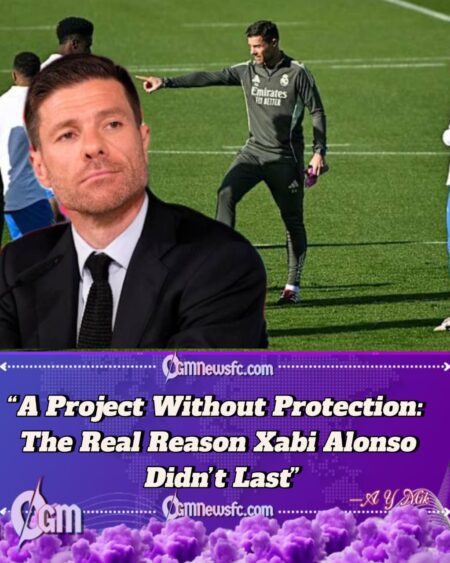
Real Madrid do not lack ambition, trophies, or money. What they sometimes lack—history suggests—is patience. That familiar flaw returned to the spotlight with the abrupt end of Xabi Alonso’s short-lived reign, a project that insiders insist did not fail on the pitch as much as it failed in the boardroom.
While official statements described the split as “mutual,” few across Europe are buying that version wholesale. As more details surface, one theme keeps repeating itself like a bad chant from the away end: Alonso never got the one signing he asked for, a missing €60 million piece that slowly collapsed the entire structure of his plan.
A Golden Return That Carried Heavy Expectations
Xabi Alonso’s appointment was never meant to be ordinary. This was not just another coach stepping into the Bernabéu dugout; this was a former midfield general returning home, fresh from tactical triumphs elsewhere and widely regarded as one of Europe’s sharpest young managers.
From day one, Alonso spoke the language Madrid loves—control, dominance, intelligence on the ball. His vision was clear: a modern, press-resistant side built around midfield authority rather than chaos and individual heroics. For a club transitioning from the Modrić-Kroos era, the timing seemed perfect.
But while the symbolism was immaculate, the reality was less cooperative. Behind the ceremonial smiles and polite press conferences, Alonso was already pushing for a squad adjustment that never came.
The €60m Mistake That Refused to Be Signed
According to multiple reports across Spain and Europe, Alonso’s most consistent request was one elite midfield controller—a player comfortable dictating tempo, absorbing pressure, and knitting phases together. In short, the kind of footballer Real Madrid once produced effortlessly.
Instead, the club spent heavily elsewhere, committing close to €60 million on profiles that did not address the central problem. The result was a midfield full of energy, talent, and promise—but short on orchestration. Madrid could run, but they could not always think.
As matches piled up, this absence became painfully obvious. When games demanded calm, Madrid found chaos. When control was required, they chased shadows. The €60m mistake was not just financial—it was structural.
When Tactics Meet the Dressing Room Reality
Alonso’s football ideas were sophisticated, but sophistication at Real Madrid often comes with resistance. Several reports pointed to unease among senior players, some unconvinced by positional demands and tactical discipline that required sacrifice over freedom.
Training sessions reportedly became intense classrooms. Not everyone wanted to take notes. In a squad filled with stars accustomed to improvisation, Alonso’s insistence on structure sometimes felt like homework after trophies.
This friction did not explode publicly, but it simmered quietly. Body language during substitutions, visible frustration on the bench, and subtle post-match comments all hinted at a squad not fully sold on the project—even if they respected the man leading it.
Results That Were Good—But Not Real Madrid Good
On paper, Alonso’s numbers were respectable. Wins arrived regularly, defeats were not catastrophic, and Madrid remained competitive across competitions. In most clubs, this would buy time.
But Real Madrid do not operate on “most clubs” logic. Heavy losses in marquee fixtures—particularly against elite rivals—carried disproportionate weight. Performances that looked promising one week unraveled the next, largely due to the same midfield imbalance.
For a club built on control, surrendering it repeatedly became intolerable. In Madrid, progress is not enough; dominance is the minimum requirement.
Institutional Silence and the Warning Signs Ignored
Perhaps the clearest sign of Alonso’s fading support came not in a press conference, but in silence. Club insiders noted moments where the coach appeared increasingly isolated, absent from symbolic gestures that often signal long-term backing.
When influential voices suggested Alonso never truly had institutional protection, the narrative shifted. This was no sudden collapse—it was a slow withdrawal of faith. The project was allowed to continue, but not protected when turbulence arrived.
By the time the final defeat sealed his fate, the decision felt less like a reaction and more like a conclusion already reached.
The End of a Project That Never Fully Began
The official announcement framed the split as amicable. Football history suggests otherwise. Alonso leaves having planted ideas that never fully bloomed, undone less by incompetence than by misalignment.
His departure raises familiar questions about Real Madrid’s long-term planning: Can even the brightest tactical minds succeed without structural backing? And how many projects must end early before patience becomes policy?
For now, the €60m mistake remains—a transfer that never arrived, but whose absence was felt every weekend.