








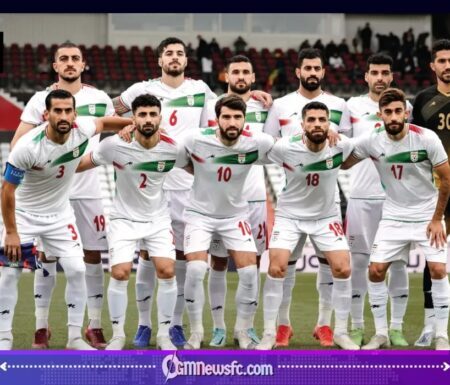
Iran’s football federation has confirmed it is in active discussions with FIFA over a possible relocation of its 2026 World Cup fixtures from the United States to Mexico, citing concerns over player safety. The development follows rising geopolitical tensions after recent joint airstrikes by the United States and Israel on Iranian territory, which have cast uncertainty over Iran’s participation in the tournament.
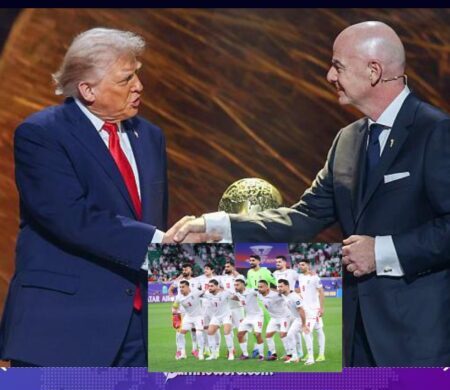
The situation intensified after U.S. President Donald Trump publicly suggested that Iran should not play its matches in the United States “for their own life and safety.” With Iran scheduled to play all three of its group-stage matches on U.S. soil, the remarks have added urgency to ongoing negotiations and raised broader questions about security, logistics, and the integrity of the tournament.
Growing Security Concerns Surround Iran’s Participation
Iran’s football authorities have expressed deep concern over the safety of their players and officials should they travel to the United States. Mehdi Taj, president of the national football federation, stated that the team would not travel if adequate security assurances could not be guaranteed. His remarks were shared via official diplomatic channels, underscoring the seriousness of the situation.
The concerns stem from escalating hostilities between Iran and the United States, particularly following coordinated airstrikes involving Israel. These developments have heightened fears of potential risks to Iranian nationals abroad, especially in a high-profile global event such as the World Cup.
While Iran has not formally withdrawn from the tournament, officials have indicated that participation under current conditions remains uncertain. The possibility of relocation is therefore being explored as a compromise that would allow the team to compete without exposing players to perceived threats.
Proposed Shift to Mexico and Logistical Implications
Iran has proposed relocating its matches to Mexico, one of the co-hosts of the 2026 tournament, which also includes the United States and Canada. Such a move would represent a significant logistical adjustment, requiring coordination across multiple organizing committees, venues, and security frameworks.
The matches in question are currently scheduled to take place in Los Angeles and Seattle, both major U.S. cities with established hosting infrastructure. A relocation would necessitate changes to travel arrangements, ticketing, broadcasting schedules, and fan engagement strategies.
Despite the complexity, precedent exists for such adjustments in international sports. Organizers have previously relocated fixtures due to political tensions or security concerns, demonstrating that flexibility, while challenging, is not unprecedented in global tournaments.
FIFA’s Role and Silence on the Matter
As the governing body responsible for overseeing the World Cup, FIFA faces a delicate decision. Balancing the safety of players with the integrity and logistical stability of the tournament will be central to its response.
As of now, FIFA has not issued an official statement regarding Iran’s request. The absence of immediate commentary has left room for speculation about possible outcomes, including whether a compromise solution—such as partial relocation—might be considered.
The organizing committees in Los Angeles and Seattle have also not responded publicly, likely due to the evolving nature of the situation and the need for coordinated communication across multiple stakeholders.
Political Reactions and Internal Iranian Debate
Within Iran, differing views have emerged regarding participation in the tournament. Sports Minister Ahmad Donyamali initially suggested that it would be impossible for the national team to compete under current conditions, particularly in light of the recent airstrikes.
However, state-affiliated media outlets have reported that no final decision has been made and expressed surprise at the minister’s comments. While Donyamali’s position carries influence, the ultimate decision rests with higher levels of government, reflecting the political sensitivity of the issue.
The reported killing of Iran’s supreme leader, Ayatollah Ali Khamenei, during the strikes has further intensified national sentiment and may play a decisive role in shaping the country’s final stance on participation.
Potential Consequences for the Tournament
Should Iran ultimately withdraw or be unable to participate, it would mark a rare and significant disruption in modern World Cup history. FIFA would then face the urgent challenge of identifying a replacement team, a process that could raise questions about fairness and qualification criteria.
Additionally, the situation highlights broader concerns about the intersection of sports and geopolitics. International competitions are increasingly affected by global tensions, requiring governing bodies to navigate complex political landscapes while maintaining the spirit of fair play.
As the tournament’s scheduled kickoff on 11 June approaches, the coming weeks will be critical in determining whether a समाधान can be reached that allows Iran to compete safely and preserves the tournament’s structure.