




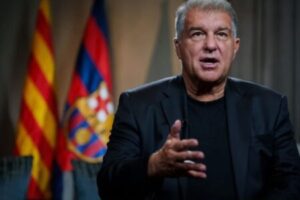


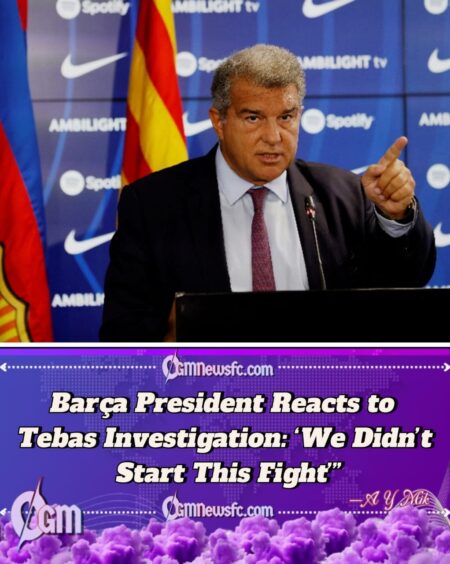
Barcelona president Joan Laporta arrived at the revamped Spotify Camp Nou with the enthusiasm of a man seeing his house after a long renovation. The stadium’s grand reopening ahead of the clash with Athletic Club sent a wave of excitement through players and supporters alike. But beneath the cheers and new floodlights, Laporta had more than football on his mind.
Speaking to Catalunya Ràdio, Laporta commented on the administrative storm surrounding La Liga president Javier Tebas, who is currently under investigation by the Spanish Administrative Sports Tribunal (TAD). The timing, he hinted, is “not good news” for the league nor for Barcelona’s delicate relationship with La Liga’s leadership.
Even in a celebratory atmosphere, Laporta appeared cautious—almost as if he didn’t want the fresh paint on Camp Nou’s walls to peel from political tension.
The Investigation: What Tebas Is Accused Of
The probe into La Liga president Javier Tebas centers on allegations that he disclosed confidential financial information relating to Barcelona, particularly concerning the club’s VIP box revenue and commercial dealings during renovation. The complaint was filed by Miguel Ángel Galán, a known figure in Spanish sports governance.
TAD’s investigation explores whether Tebas breached professional secrecy and violated Spain’s sports governance laws. Depending on the outcome, sanctions could range from a mild warning to a full disqualification from holding office for up to a year—or more.
For a man who has never shied away from controversy, Tebas now finds himself starring in a drama he probably didn’t script.
Joan Laporta’s Surprising Tone: Respectful, Cautious… Even Sympathetic?
Given the history of clashes between Laporta and Tebas—ranging from financial fair-play battles to public jabs—many expected Barcelona’s president to pop champagne once the investigation became public. Instead, he struck a surprisingly statesmanlike tone.
“It is not good news,” Laporta said, stressing that the investigation was not initiated by Barcelona. For once, he seemed more concerned about institutional stability than scoring political points. He also suggested that a “group with unclear intentions” may be driving the complaints, inserting just the right hint of football-political suspense.
In a rare twist, Laporta sounded less like Tebas’ long-time rival and more like a weary neighbor hoping the street drama ends soon.
Why This Matters: A League Already Walking on Thin Ice
Spanish football is already navigating a maze of controversies—from the Negreira refereeing probe to financial fair-play crackdowns—and this new investigation adds more turbulence. La Liga needs steady leadership, but the possibility of Tebas being sanctioned could disrupt critical decisions involving club finances, TV rights, and competitive structure.
Barcelona, still in a complex economic recovery, benefits from predictability at the top. Laporta’s comments reflect a recognition that removing Tebas now might create more chaos than relief—even if their rivalry resembles a long-running telenovela.
The president’s response seems aimed at avoiding another centralised administrative crisis at a time when Spanish football can least afford one.
What Joan Laporta Claims Barcelona Wants
Joan Laporta insisted that Barcelona had nothing to do with the complaint that triggered Tebas’ investigation. He emphasized transparency, repeating that the club was not behind any legal push. According to him, Barça prefer an “institutionally calm” environment—though critics may raise eyebrows at that phrasing.
He also conveyed that while conflicts between clubs and the league are natural, they should be resolved with dialogue rather than disciplinary warfare. In other words: he wants fewer press-conference battles and more boardroom peace talks.
If Laporta is playing peacemaker, then Spanish football may be in more trouble than anyone thought.
Political Undertones: Who Is “The Group”?
Joan Laporta’s most cryptic comment was his suggestion that a mysterious “group” is behind the attempts to destabilize La Liga leadership. While he declined to name names, the insinuation sparked speculation across Spanish media.
Some analysts believe he was hinting at political bodies within Spanish sports governance. Others think it could be factions within competing clubs, unhappy with Tebas’ handling of the league. Whatever the case, Joan Laporta’s comment added a new layer of intrigue to the already complex situation.
If Spanish football ever needed a Netflix documentary, this saga has provided the plot.
The Road Ahead for Tebas, TAD, and La Liga
TAD’s investigation could take weeks or months, depending on the complexity of the findings. Meanwhile, Tebas continues to operate as La Liga president and has denied wrongdoing. Barcelona will watch carefully, knowing that any leadership shakeup could reshape financial regulations and club-league politics.
For now, Joan Laporta has chosen diplomacy—at least publicly. Whether that tone remains consistent if the investigation deepens is anyone’s guess.
Spanish football’s political theatre rolls on, and Laporta has once again shown he knows how to play his part with humor, caution, and well-timed mystery.