


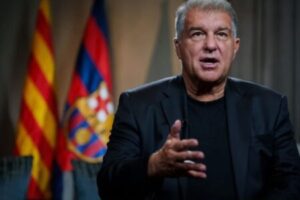







On Tuesday, February 17, 2026, Joan Laporta is set to officially present his re-election campaign for the presidency of FC Barcelona, marking a pivotal moment in the club’s political and institutional calendar. The launch, framed around the slogan “Let’s defend Barça!”, signals a campaign built on continuity, protection of club identity, and consolidation of recent progress.
Laporta’s decision to run again follows his formal resignation earlier in February, a procedural step required by club statutes to ensure neutrality during the electoral process. The move opened the path toward a highly anticipated vote scheduled for mid-March, in which tens of thousands of club members will decide the leadership guiding Barcelona’s future.
The campaign launch is expected to attract global attention, reflecting Barcelona’s unique status as a member-owned institution where governance decisions carry both sporting and cultural significance.
“Let’s Defend Barça”: A Slogan Rooted in Identity
The campaign slogan encapsulates Laporta’s central message: safeguarding Barcelona’s institutional identity during a period of transformation. By invoking defense rather than change, the phrase appeals to members who value stability after years of financial turbulence and administrative upheaval.
Laporta’s narrative emphasizes protecting the club’s values democratic ownership, youth development, and attacking football while continuing the rebuilding project initiated during his current tenure. The slogan also positions his candidacy as a shield against what he frames as potential disruption under alternative leadership.
Political messaging in Barcelona elections often blends sport with symbolism. In this case, “defending Barça” speaks not only to trophies but also to preserving the club’s social and cultural role in Catalonia and global football.
Laporta’s Record: Recovery, Reform, and Results
Laporta enters the race with a platform grounded in measurable achievements. His tenure has been defined by financial restructuring efforts aimed at stabilizing a club once burdened by debt and unsustainable wage commitments. Through sponsorship deals, cost controls, and strategic player management, the administration claims to have restored fiscal discipline.
On the sporting front, Barcelona have re-emerged as a competitive force domestically and in Europe. Under head coach Hansi Flick, the team has secured silverware and reestablished a recognizable playing identity, strengthening Laporta’s argument for continuity.
Supporters credit his leadership with guiding Barcelona through one of its most precarious eras. Critics, however, question whether the recovery is complete, ensuring that his record will remain central to campaign debates.
Challengers Promise Reform and Fresh Direction
Despite Laporta’s frontrunner status, opposition candidates are mobilizing members with promises of structural reform and greater transparency. Figures such as Víctor Font argue that Barcelona requires deeper governance changes to secure long-term sustainability.
Rival campaigns are expected to scrutinize key decisions made during Laporta’s tenure, including financial strategies and sporting appointments. They contend that while short-term stability has been achieved, systemic reforms are necessary to prevent future crises.
The presence of credible challengers ensures a competitive election, reinforcing Barcelona’s democratic tradition and offering members a genuine choice about the club’s direction.
Key Issues Shaping the Election Debate
Several critical issues are poised to dominate campaign discourse. Foremost among them is the redevelopment of the Camp Nou, a project seen as vital to the club’s financial future yet challenged by delays and rising costs. Laporta’s ability to deliver the project on time and within budget will be closely scrutinized.
Financial transparency and governance reforms also remain central concerns. Members are expected to demand clarity regarding debt management, commercial partnerships, and long-term sustainability strategies.
Additionally, the balance between investing in elite talent and promoting academy graduates will shape discussions about Barcelona’s sporting philosophy and financial prudence.
Sporting Momentum as a Campaign Advantage
Strong on-field performance often influences member sentiment in Barcelona elections, and Laporta’s campaign benefits from a competitive first team. Success in domestic competitions and credible European campaigns reinforce the perception of progress under his leadership.
The president’s public support for coach Hansi Flick, including assurances of long-term stability, further strengthens the narrative of continuity. Stability on the bench contrasts with past periods of frequent managerial changes, offering voters a sense of direction and coherence.
Ultimately, Laporta’s message hinges on the idea that Barcelona are moving forward and that altering course now could jeopardize hard-won gains.
A Vote That Will Shape Barcelona’s Future
The March election represents more than a routine leadership contest; it is a referendum on Barcelona’s recovery strategy and institutional priorities. Members must weigh the appeal of continuity against calls for deeper reform, making the campaign one of the most consequential in recent history.
Laporta’s launch on February 17 sets the tone for weeks of debate about governance, identity, and ambition. His slogan, “Let’s defend Barça!”, frames the election as a choice between safeguarding progress and venturing into uncertain territory.
As the campaign unfolds, one certainty remains: the decision of Barcelona’s members will shape not only the club’s leadership but also its trajectory in world football for years to come.