







Liverpool’s attacking plans have taken a painful hit after the club confirmed that striker Alexander Isak has undergone surgery following a fracture to his left leg. The 26-year-old Sweden international sustained the injury during a recent Premier League fixture and is now facing a lengthy spell on the sidelines.
In a brief but telling statement, Liverpool disclosed that Alexander Isak “successfully underwent surgery” on an ankle injury which included a fractured fibula. While the club stopped short of placing an exact return date on his recovery, medical expectations suggest the forward will be absent for several months, turning what began as a routine matchday into a long road back to fitness.
How the Injury Happened: A Goal That Came at a Cost
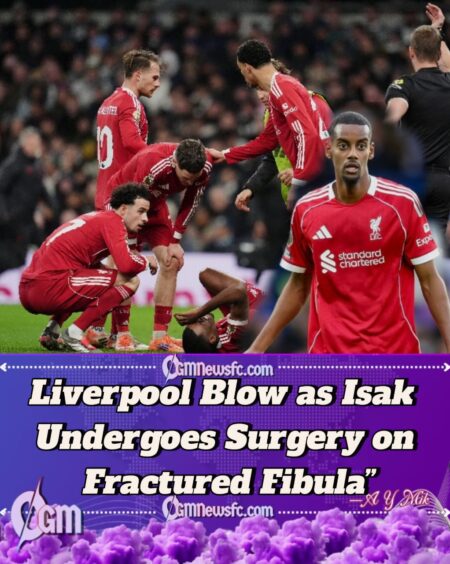
The injury occurred in dramatic fashion. Isak had just done what strikers are paid to do—find the back of the net—when the incident unfolded. As he finished his move, a heavy defensive challenge left his left foot trapped awkwardly, sending him to the ground in immediate discomfort.
Though the goal stood, celebrations were muted. Medical staff rushed onto the pitch, and Isak was eventually withdrawn, his body language leaving little doubt that this was more than a routine knock. Football can be cruel that way: one moment you are on the scoresheet, the next you are headed for the operating room.
Diagnosis and Surgery: What Liverpool Have Confirmed
Subsequent medical examinations revealed the extent of the damage. Liverpool confirmed that the injury involved the ankle and fibula, necessitating surgical intervention. The procedure was completed successfully, and Isak has now begun the rehabilitation phase of his recovery.
The club has deliberately avoided placing pressure on the player by setting a return deadline. Insiders suggest that the priority is full recovery rather than a rushed comeback—a sensible approach when legs, ankles, and future seasons are at stake.
Rehabilitation Timeline: Months, Not Weeks
Although Liverpool have not issued a timetable, medical experts note that fibula fractures typically require long-term rehabilitation, especially for elite athletes whose jobs depend on explosive movement. Recovery often involves weeks of immobilisation, followed by gradual weight-bearing, strength work, and match conditioning.
In practical terms, this means Isak is unlikely to be seen anytime soon. Optimistic projections suggest a return later in the season, while more cautious voices warn his absence could stretch deep into the campaign. Either way, Anfield will need patience—and perhaps creativity—while waiting for his return.
Impact on Liverpool’s Season: A Tactical Headache
Isak’s injury creates an immediate problem for Liverpool’s attacking depth. The striker has been an important focal point in recent weeks, offering pace, movement, and a clinical edge that does not grow on trees—or training grounds.
With fixtures piling up, Liverpool’s coaching staff may be forced to reshuffle their frontline or lean more heavily on rotation options. There is also quiet speculation that the injury could influence January transfer plans, as clubs rarely enjoy navigating congested schedules without fully fit forwards.
National Team Concerns: Sweden Watch and Wait
The consequences extend beyond club football. Isak is a key figure for the Sweden national team, and his absence casts uncertainty over upcoming international fixtures and qualification plans.
Sweden’s medical and coaching teams will be monitoring his rehabilitation closely, knowing that rushing him back could cause more harm than good. For now, both club and country are united by the same message: heal properly first, score goals later.
Setbacks, Surgery, and Second Chances
Injuries are an unfortunate but familiar chapter in football careers, and Isak is hardly the first striker to swap boots for crutches mid-season. What matters now is the recovery process—and history suggests that players who take their rehabilitation seriously often return stronger.
For Liverpool supporters, the hope is simple: that this chapter becomes a footnote rather than a turning point. The road back will be long, but if patience is a virtue, football fans may soon be rewarded.