




A new era at Manchester United began emphatically as Michael Carrick made a perfect start to his interim reign, guiding his side to a deserved 2–0 victory over Manchester City at Old Trafford. In a derby charged with intensity and consequence, Manchester United outworked, outthought, and ultimately outplayed Pep Guardiola’s champions to deliver a result that reshapes both the Premier League title race and the battle for Champions League qualification.
Carrick may only be in charge until the end of the season, but his first major test could hardly have been more convincing. Against a City side seeking to apply pressure on league leaders Arsenal, United produced a disciplined, courageous, and tactically intelligent display that underlined the potential of a refreshed direction under new leadership.
Carrick’s Immediate Impact on Manchester United’s Identity
Michael Carrick had barely a few days with the squad before this derby, yet Manchester United played with a clarity and purpose that had often been missing throughout a difficult 2025 campaign. From the opening exchanges, there was structure in their defensive shape and decisiveness in their attacking transitions.
Rather than dominate possession, United focused on organisation and intensity without the ball. The players responded by working relentlessly, retreating quickly when possession was lost and protecting the back four with determination. Casemiro, Harry Maguire, and Lisandro Martínez embodied this commitment, making crucial tackles and blocks that energised both teammates and supporters.
This was a performance built on effort and bravery. In moments where hesitation had previously crept in, United’s players stepped forward. The result was a display rooted in collective discipline, signalling that Carrick’s short tenure may still bring meaningful change.
Why Manchester City Fell Short
Manchester City never fully settled into their usual rhythm, largely due to United’s aggressive pressing and the hostile atmosphere inside Old Trafford. Guardiola’s side attempted to control the tempo by funnelling possession through Bernardo Silva and Rodri, but United’s compact shape restricted their influence.
Rodri, typically a pillar of City’s composure, endured an uncharacteristically loose first half, surrendering possession in dangerous areas. Although he improved after the break, City struggled to translate control into clear-cut chances, particularly around the penalty area where their decision-making lacked precision.
Even during spells of dominance, City’s ball circulation was slow and predictable. United’s defensive discipline ensured that City rarely found space to exploit, exposing an uncharacteristic bluntness in the visitors’ attack.
Haaland’s Substitution and a Symbolic White Flag
Erling Haaland’s withdrawal in the 80th minute was one of the most striking moments of the match. Normally, such a substitution signals comfort or rotation. This time, it suggested resignation. With Haaland limited to just 15 touches, Guardiola’s decision to remove his most potent striker indicated that City had run out of solutions.
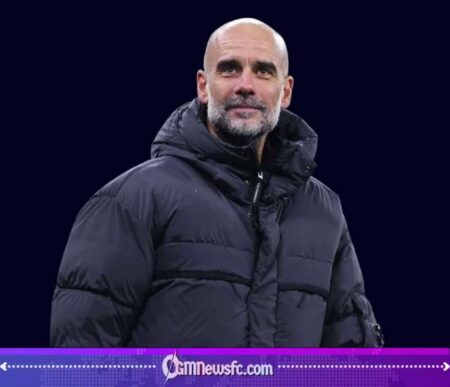
Guardiola is acutely aware of the psychological messages substitutions send. Replacing Haaland alongside Bernardo Silva and Jeremy Doku for more conservative options conveyed a clear signal to his players: the game was slipping beyond reach.
For observers, it was a rare sight—City accepting defeat before the final whistle. The substitution underlined how effectively United had neutralised City’s threat.
Manchester United’s Tactical Setup and Why It Worked
Carrick deployed a 4-2-3-1 formation that morphed into a 4-4-2 without the ball, with Bruno Fernandes orchestrating the press. United were content to cede possession, finishing the first half with just 28 per cent, but every pass had purpose.
The emphasis was on penetration rather than possession. Diogo Dalot and Amad Diallo consistently threatened runs in behind, while Martínez looked to exploit space with direct passes. United were compact defensively yet aggressive in transition, unsettling an uncertain City backline.
The foundations were laid in the first half, even though the goals arrived later. Maguire struck the woodwork early on, while Fernandes and Diallo both had efforts ruled out for offside. United’s persistence paid off in the second half, with Bryan Mbeumo opening the scoring before Patrick Dorgu’s relentless run sealed the victory.
Fernandes at the Heart of United’s Revival
Bruno Fernandes’ performance reinforced why he remains central to Manchester United’s ambitions. Freed from deeper responsibilities, he thrived in an advanced role, linking play and dictating transitions with intelligence and precision.
His assist for Mbeumo’s opener was perfectly weighted, splitting City’s defence on a rapid counterattack. Fernandes also demonstrated his creative range from set-pieces and open play, creating multiple clear chances and consistently breaking City’s defensive lines.
Since Carrick’s appointment, Fernandes has assisted in three consecutive matches. His influence highlighted the importance of building the team around his strengths—a lesson Carrick appears to have grasped immediately.
What Comes Next
Manchester United now face a crucial away fixture against Arsenal on Sunday, January 25, a match that will further test Carrick’s tactical approach and United’s Champions League aspirations.
Manchester City, meanwhile, turn their attention to the Champions League, travelling to face Bodo/Glimt on Tuesday, January 20, as they seek to quickly recover from a rare domestic setback.