








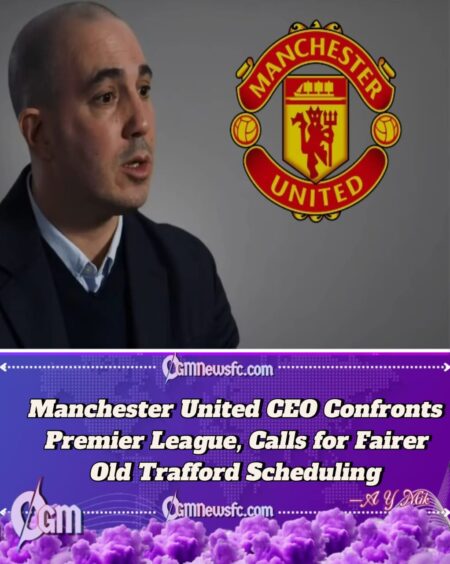
Manchester United CEO Omar Berrada has reportedly confronted the Premier League over what he describes as a concerning imbalance in the club’s upcoming home fixtures. Between now and Christmas, every Manchester United home match will take place on a midweek evening, a scheduling pattern that has left both the club and its supporters frustrated.
The issue came to light as United prepare to face Brighton & Hove Albion this Saturday at Old Trafford. Following that game, the Red Devils will not play another weekend home fixture until Boxing Day — which falls on a Friday this year — when they host Newcastle United. For a club with one of the largest fan bases in the world, the lack of traditional weekend matches at home has become a significant talking point.
Berrada’s concern stems from the fact that midweek games often clash with work schedules, making it difficult for local and traveling supporters to attend. The CEO’s decision to take the matter directly to the Premier League demonstrates Manchester United’s growing commitment to putting fans at the heart of club decisions — something supporters have been demanding for years.
Constructive Talks with Premier League Officials
According to reports from The Athletic, the discussion between Berrada and Premier League officials was “constructive,” indicating that both parties are open to reviewing the issue. During the meeting, Berrada highlighted “the cultural importance of match-going fans to the fabric of the English game.”
He reportedly urged the Premier League to recognize the impact fixture timing has on supporters, particularly around the festive season — a period when fans traditionally expect family-friendly weekend games. Many Manchester United fans, especially those who travel long distances to attend home games, have voiced frustration over the lack of weekend fixtures and the late-night midweek kick-offs.
Berrada’s proactive stance is being seen as part of a wider effort to rebuild the connection between the club’s leadership and its fanbase. The CEO has also pushed for the Premier League to finalize TV broadcast schedules earlier, ensuring supporters have ample time to plan their travel and Christmas commitments.
Balancing Broadcast Demands and Fan Experience
The fixture congestion issue has become a recurring problem in modern football, largely influenced by broadcasting contracts and the increasing number of competitions. Television rights deals now dictate a significant portion of the football calendar, leaving clubs like Manchester United in difficult positions when fan experience clashes with commercial scheduling.
Berrada reportedly acknowledged the complexities involved but maintained that the “supporters’ matchday experience must not be sacrificed for television convenience.” He emphasized that Old Trafford’s atmosphere is a core part of English football culture, and evening kick-offs during winter months often deter families and younger fans from attending.
While the Premier League has yet to make a formal statement on the issue, insiders suggest that fixture balancing will be reviewed more closely in future scheduling rounds. Manchester United’s stance could influence other top clubs to advocate for similar changes, especially those with large domestic followings who rely heavily on matchday revenue and fan engagement.
European Scheduling Complications Add to the Pressure
The Premier League’s congested schedule has also been affected by the expansion of European competitions. This season features a record number of clubs participating across the Champions League, Europa League, and UEFA Conference League, forcing domestic fixture lists to adapt to midweek commitments.
Interestingly, Manchester United are not competing in any European competition this season — yet they appear to be indirectly impacted by the rearranged calendar. This adds a layer of frustration for the club, who believe they should not be disproportionately affected by scheduling adjustments intended to accommodate European clubs.
Last season, United endured a grueling calendar that included 15 Europa League matches, culminating in a narrow 1-0 defeat to Tottenham Hotspur in the final. The experience exposed the toll that excessive fixture congestion can have on players, staff, and supporters alike — an issue Berrada now seems determined to address before it spirals again.
Berrada’s Fan-First Vision for Manchester United
Since assuming the CEO role, Omar Berrada has made it clear that he wants to prioritize fan engagement and restore Manchester United’s identity as a “club of the people.” His latest move to challenge the Premier League reflects this philosophy, emphasizing the importance of transparency, communication, and respect for supporters’ time and loyalty.
By advocating for earlier fixture announcements and a more balanced schedule, Berrada is positioning United as a leader in fan-centric governance within English football. The move also aligns with broader efforts to modernize club operations under new ownership influences, ensuring that decisions are guided by long-term sustainability and community value rather than short-term commercial gain.
Supporters’ groups have welcomed Berrada’s intervention, calling it a positive step toward rebuilding trust. The relationship between the club and its fanbase has been strained in recent years due to issues like ticket pricing, ownership controversies, and perceived detachment from supporters’ realities. Berrada’s approach could mark a turning point in that narrative.
Focus Returns to the Pitch as Brighton Awaits
While off-pitch discussions continue, attention now turns back to football as Manchester United host Brighton at Old Trafford this weekend. Manager Ruben Amorim, who recently guided the team to a 2-1 victory over Liverpool, will be seeking to extend his Premier League winning streak to three matches.
Despite the external distractions, United’s recent performances have sparked optimism among fans, with Amorim’s tactical adjustments breathing new life into the squad. The Portuguese coach is aware that consistent results are key to stabilizing the club both on and off the field, especially as Berrada and the board continue their behind-the-scenes efforts to improve fan relations and matchday experiences.
A win over Brighton could not only maintain United’s momentum in the league but also underscore the importance of strong leadership both in the boardroom and on the touchline. For now, Berrada’s firm stance against the Premier League sends a clear message — Manchester United are fighting for fairness, for fans, and for the future of Old Trafford.