
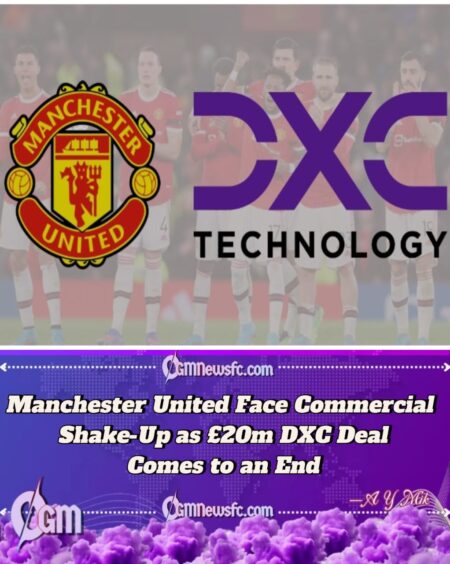
Manchester United are set to enter a new commercial chapter as their sleeve sponsorship deal with DXC Technology, worth an estimated £20 million per year, is due to expire at the end of the current 2025/26 season. The decision marks the conclusion of a four-year collaboration that saw the global tech giant prominently featured on United’s home, away, and third kits since 2022.
The partnership, announced in the summer of 2022, represented one of United’s most lucrative sleeve sponsorship deals. Beyond the visible branding, DXC leveraged its expertise in data and digital engagement to enhance how the club interacts with fans across online platforms. This innovative element made the partnership stand out among the Premier League’s commercial arrangements.
However, as the expiration date approaches, both parties appear set to move in different directions. While DXC gained significant global exposure through its association with one of the world’s most recognized football clubs, Manchester United are now preparing to find a replacement — one that aligns with their global brand and financial ambitions.
Manchester United’s Sponsorship Legacy: From Kohler to DXC
The sleeve sponsorship space is relatively new in football, only approved by the Premier League in the 2017/18 season. Manchester United were among the first to capitalize on this opportunity when they signed Kohler as their inaugural sleeve sponsor ahead of the 2018/19 campaign. That deal ran successfully until 2022, paving the way for DXC Technology’s entry.
Kohler’s partnership with United had been reported to bring in around £20 million annually, a figure matched by DXC’s subsequent deal. This consistent valuation reflects the enduring commercial power of Manchester United’s global reach, which remains among the strongest in world football despite mixed results on the pitch.
Now, with DXC’s exit confirmed, United’s commercial team — led by chief executive Richard Arnold’s successor — faces the challenge of securing an equally prestigious or even more profitable brand to fill the sleeve spot. For a club historically regarded as a marketing powerhouse, maintaining sponsorship strength is crucial for long-term financial sustainability, especially amid evolving competition across European football.
Tezos Exit Adds to United’s Commercial Reshuffle
The DXC news comes just months after United’s training kit sponsorship with Tezos, worth approximately £24 million per season, also came to an end in June. The blockchain company had been featured on the training kits of both the men’s and women’s teams for three years, becoming a regular presence at Carrington and in pre-match sessions.
Interestingly, the expiration of the Tezos deal was first reported by the Manchester Evening News, which revealed that the partnership would not be renewed. The final months of the contract saw some confusion, with new signing Matheus Cunha still pictured wearing Tezos-branded apparel, even though the agreement had technically expired before the arrival of Bryan Mbeumo.
Tezos had originally replaced AON as United’s training kit sponsor in 2022, stepping into a deal that was positioned as a symbol of United’s digital future. Its departure, along with DXC’s, indicates a broader reshuffling of United’s sponsorship portfolio as the club seeks fresh, high-value commercial partners amid shifting market trends.
Commercial Strength Remains: United Eye New Sponsorship Deals
Despite the double loss of DXC and Tezos, sources close to Old Trafford have indicated that Manchester United’s commercial department maintains a “strong pipeline” of sponsorship prospects. The club’s global fanbase — estimated at over 1.1 billion supporters worldwide — continues to attract multinational corporations eager to associate with the Red Devils’ iconic brand.
According to insiders, United are currently engaged in active discussions with potential partners for both sleeve and training kit sponsorships. While details remain confidential, it is understood that several tech, finance, and lifestyle companies have expressed strong interest. The goal is to finalize new agreements ahead of the 2026/27 season, ensuring no interruption in the club’s commercial revenue streams.
This is part of a broader effort by United’s leadership to maintain financial stability under the Sir Jim Ratcliffe-led INEOS minority ownership, which has been emphasizing operational efficiency and long-term revenue growth. With new commercial partners on the horizon, United aim to strengthen their off-field strategy to complement their on-field rebuilding efforts.
Marriott International Exit Adds to the Sponsorship Shuffle
Adding to the series of changes, Marriott International, United’s long-time hotel partner, also decided not to renew its contract earlier this year. The hospitality brand had been a visible presence across United’s marketing campaigns and player travel arrangements but opted to conclude its association upon the deal’s expiration.
This pattern of sponsorship turnover isn’t unusual for a global club like United, whose brand partnerships often evolve in line with market trends and brand positioning. Nonetheless, losing multiple commercial partners within a single year underlines the challenges modern football clubs face in maintaining premium sponsorships in an increasingly competitive global sports market.
With the sports marketing landscape now favoring dynamic, tech-driven partnerships, United’s next moves will likely focus on aligning with brands that not only provide financial returns but also enhance fan engagement and digital innovation — the kind of synergy DXC had initially offered.
Looking Ahead: United’s Next Commercial Chapter
As Manchester United look to replace both DXC and Tezos, the stakes are high. Each partnership represents not just a financial asset but also a statement of brand alignment and global appeal. The next sleeve sponsor will join a legacy of world-renowned companies that have adorned United kits, from Sharp to AIG, Chevrolet, TeamViewer, and beyond.
The club’s ability to command top-tier deals despite a transitional phase on the pitch reflects the enduring power of the Manchester United brand. While performances may fluctuate, the Red Devils remain one of football’s most marketable institutions — a status few clubs can rival.
Ultimately, United’s commercial refresh offers both a challenge and an opportunity: a chance to reimagine their partnerships, appeal to new global markets, and continue setting benchmarks in sports marketing. As negotiations advance, fans and industry observers alike will be watching closely to see which brand takes its place on the famous red sleeve next season.