








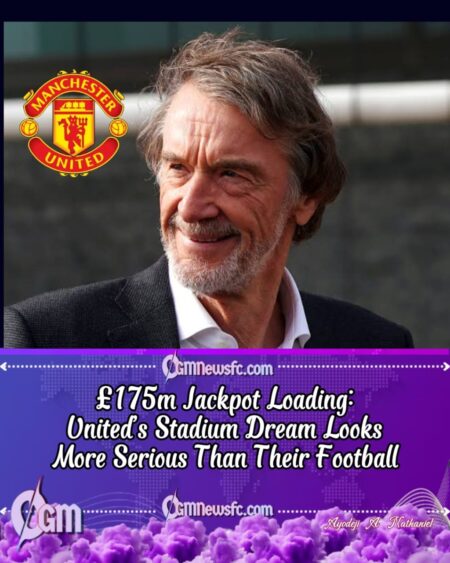
Manchester United’s plans for a proposed 100,000-seat “New Trafford” stadium are not just about bigger stands, shinier seats and louder match days — they’re about serious financial firepower. According to recent commercial valuations, the club could secure over £175 million from a 10-year stadium naming rights deal, potentially reshaping United’s revenue structure for the next decade.
In an era where football clubs operate like multinational companies (with the occasional midweek crisis meeting), the naming rights angle is emerging as one of the biggest economic wins attached to United’s stadium project. If executed properly, “New Trafford” could become a symbol not only of tradition evolving — but of a club monetising every brick with elite-level precision.
A Stadium Project With One Clear Message: Go Big or Go Home
Manchester United’s proposed stadium — widely referred to as “New Trafford” in early discussions — is designed to be a landmark. With a projected capacity of 100,000, it would instantly become the largest football stadium in the United Kingdom, placing United in direct competition with Wembley not just in size, but in prestige.
The project is also intended to be more than a stadium. It is being framed as a regeneration driver — a football cathedral that also functions as an economic engine, creating jobs, improving infrastructure and upgrading the wider Old Trafford area. In simple terms: United aren’t just building a stadium; they’re building a mini-economy with turnstiles.
But the real story is not the number of seats — it’s the number of zeroes. Because the stadium is expected to cost huge money, and United’s commercial department is already eyeing one of football’s most lucrative tools: selling the name.
Naming Rights: The £15m-a-Year Goldmine
The key commercial headline is this: Manchester United’s stadium naming rights are reportedly valued at around £15 million per year, making it the most valuable naming-rights asset in English football. That figure places United ahead of Wembley and Arsenal’s Emirates in annual valuation terms.
Over a 10-year deal, that valuation suggests United could bank around £150 million — but some estimates and projections indicate the final number could rise closer to £175 million or even £200 million, depending on the structure of the agreement, bonuses, inflation adjustments, and performance-related clauses.
And yes — this means Manchester United could potentially earn enough from naming rights alone to fund a small country’s transport budget… or at least cover the cost of a couple of Premier League defenders in today’s market.
Why United Can Charge More Than Wembley and Emirates
Manchester United’s commercial advantage comes from one thing above all: global reach. United remain one of the biggest brands in football, with massive international support that stretches far beyond England. A sponsor isn’t paying for a sign above the stadium entrance — they’re paying for visibility across global broadcasts, social media, press conferences, highlight clips and, most importantly, fan conversation.
The Premier League is the most watched domestic league in the world, and United — regardless of form — remain a club that attracts constant attention. Even when they’re not winning trophies, they still win headlines. For sponsors, that’s not a problem; it’s a feature.
There’s also the stadium factor. A 100,000-seat venue means more events, more high-profile games, more corporate hospitality, and potentially more non-football uses. Naming rights sponsors love multi-purpose arenas because their brand is constantly being shown — even when football takes a day off.
Football Finance Reality: A Stadium Name Is Now a Business Asset
Stadium naming rights have evolved into one of modern football’s most strategic revenue streams. It’s no longer seen as “selling out” — it’s seen as funding ambition. Clubs across Europe have used naming-rights deals to offset construction costs, stabilise finances and strengthen commercial partnerships.
For Manchester United, the naming rights deal would likely be positioned as part of a broader commercial master plan — potentially tied to global partnerships, technology integration, hospitality innovation, and international marketing expansion. In other words, it won’t just be “Company X Stadium.” It will be a full ecosystem of sponsorship.
And let’s be honest: football fans may complain about a new stadium name — but once the Wi-Fi works, the seats don’t leak, and the team starts winning… most people will adjust quickly. The real challenge is picking a name that doesn’t sound like a bank branch in an airport terminal.
What Could Affect the Deal: Performance, Timing and Project Delivery
Despite the attractive valuations, there are still conditions that will shape how big this deal becomes. The most obvious is performance. Sponsors pay top rates for clubs consistently playing Champions League football and competing at the top of the Premier League. If United are unstable on the pitch, the price tag may wobble.
The second factor is delivery. Stadium projects are notoriously complex. Planning permissions, land issues, construction timelines, inflation, supply chains — any delay increases costs and complicates commercial schedules. Sponsors may want guarantees: completion dates, exposure projections, and clarity on how the stadium will be marketed.
However, even with these risks, the naming-rights market continues to grow. The bigger the stadium and the bigger the club, the more attractive the deal. And Manchester United’s brand strength gives them leverage few English clubs can match.
The Verdict: New Trafford Could Become Manchester United’s Most Important Signing
Manchester United have spent decades chasing the perfect forward, the perfect midfielder, and the perfect manager. Ironically, their most impactful “signing” of the next decade may be a corporate partner whose name ends up on the stadium roof.
A naming rights deal worth £175m+ would provide major financial breathing room and could help fund squad building, infrastructure upgrades, and long-term stability. In modern football, trophies still matter — but revenue determines how often you can realistically compete for them.
So while fans will dream of titles, Manchester United’s board will also dream of something equally powerful: commercial dominance. And in this case, New Trafford isn’t just a stadium project — it’s a money-printing machine with floodlights.