







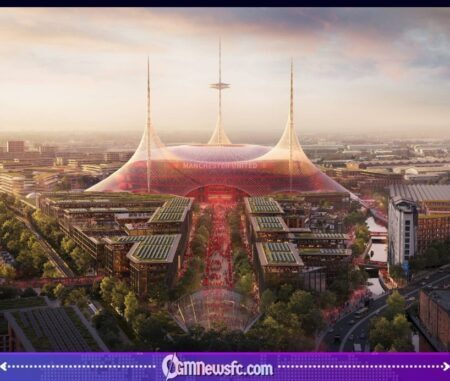
Manchester United’s long-anticipated plan to replace Old Trafford with a modern stadium has encountered fresh obstacles, with delays and land acquisition disputes pushing the projected cost of the project beyond £3 billion. The ambitious redevelopment initiative, championed by part-owner Sir Jim Ratcliffe, was initially estimated to cost around £2 billion when plans were first revealed. However, new estimates suggest the final figure could be significantly higher.
Manchester United has struggled to secure the land required for construction, particularly due to disagreements over the price demanded by the current landowner. These challenges, combined with rising construction costs and the scale of the project, could extend the timeline for completion to as long as a decade. The delays highlight the complexity of building one of Europe’s most advanced sporting venues while attempting to modernise infrastructure around one of football’s most historic clubs.
Land Acquisition Dispute Complicates Development Plans
A major hurdle facing the project is the acquisition of land required for the proposed stadium site. Freightliner, the company that owns a key parcel of land needed for construction, has reportedly demanded about £400 million for the property. This figure is dramatically higher than the £50 million offer reportedly made by Manchester United.
The large gap between the two valuations has created a stalemate that could significantly slow progress. Negotiations remain ongoing, but the disagreement has raised questions about whether the Manchester United may need to pursue alternative options to move the project forward.
One potential solution is the use of a compulsory purchase order, a legal mechanism that would allow authorities to determine the value of the land and force its sale if deemed necessary for development. However, such processes can take considerable time, potentially prolonging the already lengthy timeline for the project.
Rising Costs Push Project Beyond Initial Budget
When the redevelopment plan was first discussed publicly, the expected cost of the new stadium was around £2 billion. However, construction experts now suggest the total could exceed £3 billion due to inflation, increased material costs, and the scale of the proposed development.
According to a stadium expert cited in reports, large-scale projects of this magnitude rarely become cheaper over time. Instead, prices typically rise due to the limited number of firms capable of designing and constructing such complex facilities.
The same expert suggested that even under ideal circumstances, the project could take roughly ten years to complete. The extended timeframe further increases the likelihood that overall expenses will continue to grow before the stadium eventually opens.
Pressure Mounts as Manchester United Rival Clubs Modernise Their Facilities
Manchester United’s stadium redevelopment plans have been closely scrutinised partly because several rival clubs have already invested heavily in modern facilities. Tottenham Hotspur recently opened a state-of-the-art stadium widely considered one of the best football venues in Europe.
Meanwhile, Manchester City and Liverpool have undertaken major redevelopments of their existing stadiums, significantly improving fan experiences and commercial opportunities. Arsenal’s Emirates Stadium, which opened in 2006, also remains one of the most modern venues in English football.
Old Trafford, once widely regarded as the premier football stadium in England, has increasingly been viewed as outdated by comparison. The venue was notably overlooked as a host stadium for the Euro 2028 tournament, with Manchester City’s Etihad Stadium selected as the city’s representative venue instead.
Manchester United Ex Players Calls for Regeneration and Political Support
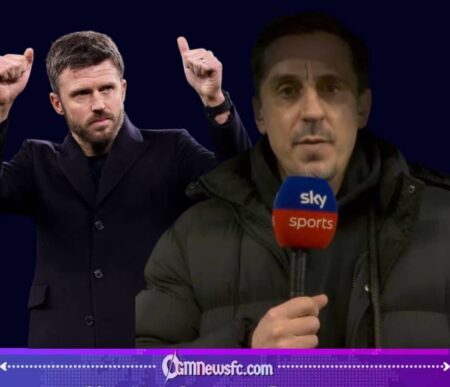
Former Manchester United defender Gary Neville has previously criticised the condition of Old Trafford, arguing that the stadium had been neglected for too long. Neville served on a task force created to examine the potential regeneration of the venue and surrounding area.
The group included prominent figures such as Olympic organiser Sebastian Coe, Greater Manchester Mayor Andy Burnham, and Trafford Council chief executive Sara Todd. Their involvement reflected the broader significance of the project for the region, beyond football alone.
Sir Jim Ratcliffe has also suggested that government support could play a role in financing infrastructure linked to the stadium project. He has argued that a new stadium would provide economic benefits to the wider North West of England through tourism, employment, and urban development.
However, Ratcliffe’s public criticism of national political leadership may complicate efforts to secure such support. Political cooperation could prove essential if the project is to move forward on the scale currently envisioned.