








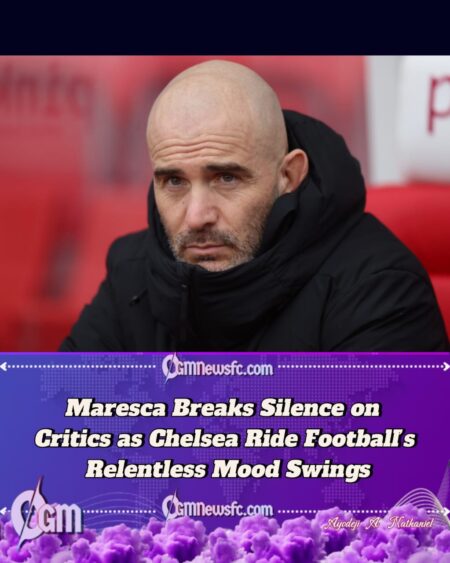
Enzo Maresca has addressed growing public criticism following a sudden shift in narrative around his team’s form. Speaking candidly, the Chelsea head coach acknowledged that external opinions—whether supportive or skeptical—remain beyond his control, describing the situation as an unavoidable feature of modern football.
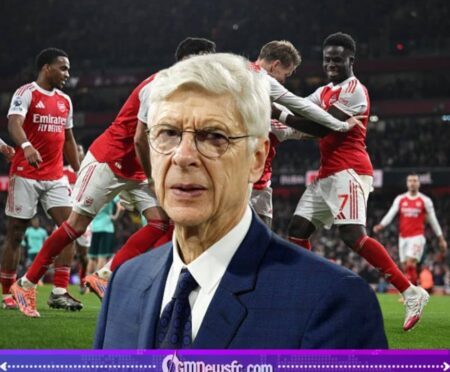
Only a week earlier, after a high-profile performance against Arsenal, Chelsea were being discussed as potential title contenders. The abrupt transition from praise to scrutiny has once again underlined how swiftly sentiment can change in elite football, particularly in the Premier League’s unforgiving media environment.
Maresca’s Perspective on Faith and Doubt
Maresca was direct in his assessment of the criticism, stating that he cannot control whether everyone has full faith in him. His remarks were not defensive but reflective, emphasizing acceptance rather than confrontation. For the Italian coach, doubt from the outside is neither new nor destabilizing.
He framed skepticism as a constant companion in football management, one that must be acknowledged but not allowed to dictate decision-making. In Maresca’s view, credibility is not earned through weekly opinion polls but through long-term adherence to process, structure, and performance standards.
The Arsenal Effect: How One Match Changed the Narrative
The Arsenal match served as a flashpoint for inflated expectations. A strong showing led to sweeping conclusions about Chelsea’s title credentials, conclusions that Maresca now suggests were premature. When subsequent results failed to align with that optimism, the backlash was immediate.
This cycle, Maresca implied, reflects a broader issue within football discourse: isolated performances often trigger exaggerated reactions. Success accelerates hype, while any stumble invites disproportionate criticism, leaving little room for measured analysis or patience.
Life at Chelsea Under the Microscope
Managing Chelsea FC brings a unique intensity, with every fixture magnified and every comment dissected. Maresca acknowledged that the scrutiny is part of the job description at a club with Chelsea’s stature, history, and expectations.
Rather than resisting this reality, he appeared to embrace it as a professional norm. According to those close to the club, Maresca’s internal focus remains fixed on training-ground execution, squad development, and tactical evolution, even as external noise grows louder.
Football as a Business of Extremes
Maresca’s most telling observation may have been his simplest: “It’s football, it’s our business.” With that remark, he summarized an industry driven by emotion, immediacy, and relentless judgment. In football, yesterday’s triumph offers no protection from today’s criticism.
His comments suggest a manager intent on emotional discipline—one who understands that survival and success depend on consistency of approach rather than reaction to public sentiment. As the season unfolds, Maresca’s challenge will be less about silencing critics and more about ensuring Chelsea’s performances speak with enough authority to shift the conversation once again.