









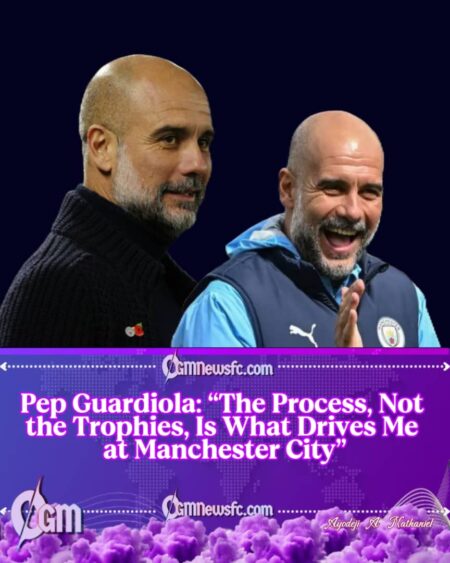
For a manager synonymous with trophies, Pep Guardiola offered a strikingly introspective explanation of what truly motivates him at Manchester City. While openly acknowledging his desire to win more league titles and European honours, Guardiola was emphatic that silverware is not the reason he wakes up each morning.
Instead, his comments revealed a philosophy shaped by longevity at the elite level. For Guardiola, the emotional high of lifting trophies is fleeting. Applause fades, parades end, and the football world immediately demands the next success. That reality, he argued, has fundamentally reshaped how he defines fulfillment.
Beyond the Premier League and the Champions League
Guardiola was clear that ambition has not diminished. He still wants to win another Premier League title and add to his UEFA Champions League successes. But crucially, those objectives no longer serve as his primary source of purpose.
He described the cyclical nature of elite football with blunt honesty. One moment brings celebration and validation; two days later, the question shifts abruptly to “What’s next?” In that relentless environment, Guardiola suggested, chasing trophies alone is an empty pursuit unless anchored to something deeper.
The Process as the Real Prize
At the core of Guardiola’s mindset is what he repeatedly referred to as “the process.” This encompasses training-ground work, tactical refinement, player development, and the daily pursuit of improvement. For him, success is measured less by medals and more by whether the team performs closer to his ideal vision.
This outlook explains the City’s sustained intensity even after historic achievements. Guardiola’s satisfaction comes from seeing patterns sharpen, players evolve, and collective understanding deepen. The journey of constant refinement, he insists, offers a more durable sense of meaning than any trophy lift.
How Philosophy Shapes Manchester City’s Culture
Guardiola’s comments provide insight into the culture he has built at Manchester City. By prioritizing development over celebration, he has fostered an environment where complacency is structurally discouraged. Each success becomes a checkpoint, not a destination.
Players operating under this philosophy are conditioned to think in terms of progression rather than entitlement. That mindset, observers argue, is central to the City’s ability to reset after triumphs and maintain hunger in seasons that follow historic success.
A Counterpoint to Football’s Results-Driven Obsession
In an era increasingly defined by instant judgment, Guardiola’s remarks stand in quiet contrast to football’s results-first culture. Managers are often evaluated exclusively on trophies, sometimes at the expense of context, growth, or sustainability.
Guardiola does not dismiss results, but he reframes them. Trophies are outcomes, not motivations. The deeper satisfaction, he suggests, lies in knowing that a team has improved, learned, and expressed football at a higher level than before.
Legacy, Longevity, and What Keeps Guardiola Going
As Guardiola advances further into a career already rich with honours, his words hint at why burnout has not overtaken him. By anchoring his motivation to the process rather than applause, he has insulated himself from the volatility of public praise and criticism.
Ultimately, Guardiola’s reflection is less about winning and more about purpose. For Manchester City’s manager, fulfillment comes from daily progress and the quiet satisfaction of development—a philosophy that may explain why, even after everything he has won, the journey still matters most.