









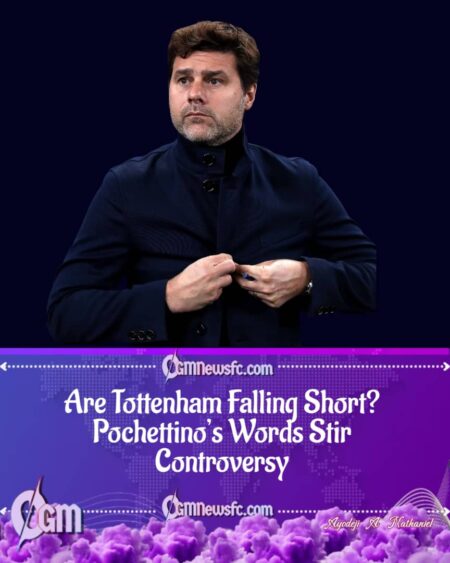
Remarks attributed to Mauricio Pochettino have reignited debate about the long-term ambitions of Tottenham Hotspur. The Argentine coach reportedly stated that winning the Europa League alone would not satisfy expectations at Tottenham, emphasizing that fans and players should aspire to compete for the Premier League and UEFA Champions League titles.
The statement reflects a philosophy Pochettino championed throughout his tenure in North London: success is not defined by isolated trophies but by sustained competitiveness at the highest level. For a club that has invested heavily in infrastructure and global branding, he believes ambition must match capacity.
His comments have resonated across football circles, reopening questions about Tottenham’s identity whether they are content with incremental progress or ready to establish themselves among Europe’s elite.
Europa League: Achievement or Ceiling?
Winning the Europa League would represent a significant accomplishment for many clubs, offering silverware and Champions League qualification. However, Pochettino’s perspective frames the competition as a stepping stone rather than an endpoint for a club of Tottenham’s stature.
Analysts note that Spurs’ consistent top-four finishes during Pochettino’s tenure reshaped expectations. Supporters who once celebrated European qualification began to measure success against domestic and continental titles.
By suggesting the Europa League is insufficient, Pochettino challenges the club to resist complacency. His message implies that settling for secondary honors risks reinforcing a ceiling rather than breaking through it.
The Power of Belief in Elite Sport
Central to Pochettino’s philosophy is the psychological transformation required to win major titles. He has long argued that players must believe they belong among champions before they can become one.
During his previous spell at Tottenham, he emphasized mentality as the decisive factor in crucial matches. Near misses in title races and the 2019 Champions League final illustrated how fine margins separate contenders from winners.
By stressing belief, Pochettino underscores a cultural shift rather than a tactical one. He views mindset as the foundation upon which tactical systems and technical quality can produce lasting success.
Fans’ Expectations Have Changed
Tottenham’s move to a world-class stadium and sustained presence in European competitions have elevated supporter expectations. Fans now demand not just participation but genuine contention for the biggest prizes.
The Champions League final appearance in 2019 served as a watershed moment, convincing many supporters that Spurs could compete with Europe’s elite. That belief has not faded, even during transitional periods.
Pochettino’s remarks acknowledge this evolution. He recognizes that Tottenham supporters no longer see themselves as outsiders but as stakeholders in a club capable of challenging the established order.
Financial Reality vs. Competitive Dreams
Despite growing revenues, Tottenham operate within a more restrained financial model than some Premier League rivals. Clubs backed by vast ownership resources can absorb transfer risks that Spurs typically avoid.
Pochettino has historically advocated for intelligent recruitment and youth development as tools to bridge the financial gap. His success in nurturing talents and building a cohesive squad demonstrated that strategic planning can rival spending power.
Nevertheless, sustaining title challenges requires depth and resilience. Balancing fiscal responsibility with competitive ambition remains one of Tottenham’s most complex challenges.
A Lasting Cultural Legacy
Even years after his initial tenure, Pochettino’s influence on Tottenham’s identity endures. He transformed the club from top-four hopefuls into Champions League finalists and instilled a belief that Spurs could challenge the Premier League’s traditional powers.
Subsequent managers have inherited not only a stronger squad and infrastructure but also heightened expectations. The cultural shift he initiated continues to shape how players, fans, and executives define success.
His latest remarks serve as both a reminder and a challenge: Tottenham’s journey is incomplete. To fulfill their potential, the club must aim beyond respectable achievements and embrace the relentless pursuit of football’s most prestigious titles.
The Road Ahead for Tottenham
Whether Tottenham can translate ambition into silverware remains uncertain. The Premier League’s competitiveness and Europe’s elite depth ensure that progress will be hard-fought.
Yet Pochettino’s message is clear: ambition must be uncompromising. For Tottenham to evolve from contenders to champions, belief, investment, and strategic clarity must align.
In modern football, identity shapes destiny. By declaring that the Europa League is not enough, Pochettino has once again challenged Tottenham to think and act like a club destined for greatness.